
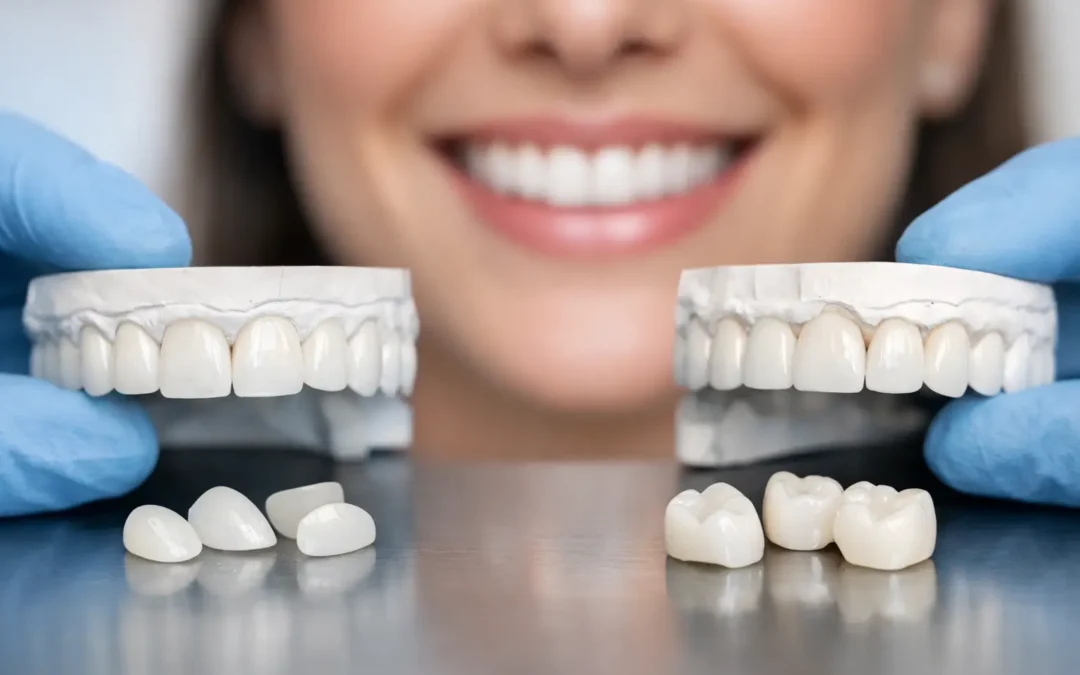
A small chip on a front tooth can make you hesitate before a photo. A tooth that hurts when you chew can make every meal feel uncertain. Both concerns may lead to the same question: veneers vs crowns smile treatment – which one will give you the result you want?
The answer depends on more than appearance. Veneers and crowns can both create a natural-looking, confident smile, but they solve different dental problems. A veneer is primarily a cosmetic enhancement for the visible front surface of a tooth. A crown is a full-coverage restoration designed to strengthen and protect a tooth that has been weakened, damaged, or heavily treated.
At Smile Perfection Dental & Orthodontics, we believe the best cosmetic result starts with a healthy foundation. Your dentist will look at your tooth structure, bite, gums, goals, and long-term comfort before recommending either option.
Veneers vs Crowns for Your Smile: The Core Difference
Think of a veneer as a custom-made shell that covers the front of a tooth. Usually made from porcelain or a high-quality ceramic material, it can improve the color, shape, size, or symmetry of teeth that show when you smile. Veneers are commonly considered for teeth with stubborn discoloration, small chips, minor gaps, uneven edges, or slightly irregular shapes.
A crown, sometimes called a cap, covers the entire tooth above the gumline. It restores a tooth that needs more than a cosmetic update. Crowns are often recommended after a root canal, for a tooth with a large filling, a deep crack, significant decay, or substantial wear. They can also improve appearance, but their first job is to rebuild strength and function.
The simplest distinction is this: veneers improve the look of a tooth with enough healthy structure remaining, while crowns protect a tooth that no longer has enough strength to safely function on its own.
When Veneers May Be the Better Choice
Veneers can be an excellent option when your teeth are generally healthy but the visible details of your smile do not reflect how you want to feel. Porcelain veneers are carefully color-matched and shaped so they can blend naturally with neighboring teeth. They also resist staining better than natural enamel, which can be helpful for patients whose teeth have not responded well to whitening.
A veneer may be appropriate if a front tooth has a small chip, mild wear, a gap, or discoloration that cannot be corrected with professional whitening. It can also help create a more balanced smile when one or two teeth appear shorter, narrower, or differently shaped than the others.
Because a veneer only covers the front surface, it generally requires less tooth preparation than a crown. Even so, treatment is permanent. A very thin layer of enamel may need to be adjusted to make room for the veneer and create a natural fit. Once a tooth has been prepared for a veneer, it will need ongoing restoration in the future.
Veneers are not always the right answer for teeth that are severely decayed, extensively fractured, or weakened by large old fillings. They may also be a poor fit for someone with untreated gum disease, active cavities, or a strong teeth-grinding habit that has not been addressed. In those situations, protecting oral health comes before changing appearance.
When a Crown Is the Better Choice
A crown is built for a tooth that needs support. If a large portion of the natural tooth is missing or compromised, placing a veneer over the front would not solve the underlying problem. A crown surrounds the tooth and distributes chewing forces more evenly, helping reduce the risk of further fracture.
For example, a tooth that has had root canal treatment can become more brittle over time. A crown is often used to protect it from breaking. Crowns are also common for back teeth with large fillings, because molars handle heavy chewing pressure every day.
Modern crowns can look remarkably natural. For visible front teeth, your dentist can select materials and shades that complement your smile, including ceramic options designed to reflect light much like enamel. While a crown requires more tooth preparation than a veneer, that additional coverage may be the safest choice when strength is the priority.
A crown can also be used as part of a larger restorative plan, such as supporting a bridge or completing a dental implant. In these cases, the goal is not only a beautiful smile but also reliable chewing function and long-term stability.
What the Treatment Process Looks Like
Both veneers and crowns begin with an examination and a conversation about what you would like to change. Digital imaging and detailed treatment planning can help your dentist assess the health of the tooth, the condition of the gums, and the way your upper and lower teeth meet.
For a traditional veneer or crown, the tooth is prepared and an impression or digital scan is used to create the restoration. You may receive a temporary restoration while a dental laboratory fabricates the final veneer or crown. At the final visit, your dentist checks the fit, color, bite, and appearance before bonding or cementing it in place.
The exact timeline varies. Some cases can be completed efficiently with modern technology, while others require more planning, especially if gum treatment, decay removal, orthodontic care, or bite adjustments are needed first. A careful plan may take a little longer, but it helps protect your investment in your smile.
Appearance, Durability, and Cost Considerations
Veneers and crowns are both custom dental restorations, so the cost can vary based on the material used, the complexity of the tooth, and whether additional treatment is needed. Insurance may help with a crown when it is medically necessary to restore a damaged tooth. Veneers are often considered cosmetic, so coverage is less common. Our team can help you understand your options and review available payment and insurance information before treatment begins.
In terms of durability, both restorations can last for many years with good home care and regular dental visits. A crown may be better suited to heavy chewing forces because it offers full coverage. A veneer can also be long-lasting, but it is thinner and may be more vulnerable if you bite hard objects, use your teeth as tools, or clench and grind at night.
Neither option is maintenance-free. Brush twice daily with a soft-bristled toothbrush, floss regularly, and keep up with professional cleanings and exams. If you grind your teeth, a custom nightguard may help protect your natural teeth, veneers, and crowns from excess pressure. Avoid chewing ice, opening packages with your teeth, or biting directly into very hard foods with front restorations.
Your Bite and Gum Health Matter More Than You May Think
A beautiful restoration can only perform well when the surrounding mouth is healthy. Gum inflammation can affect the appearance of the gumline around veneers and crowns. Untreated decay can also develop at the edges of any restoration if plaque is allowed to build up.
Your bite matters, too. If teeth are crowded, misaligned, or hitting unevenly, a veneer or crown may be exposed to forces it was not designed to handle. Some patients benefit from orthodontic treatment before cosmetic work, while others may need a minor bite adjustment or a nightguard. This is one reason a comprehensive dental evaluation is so valuable: it looks beyond the one tooth that caught your attention.
How to Decide Between Veneers and Crowns
It helps to come into your consultation with a clear sense of what bothers you most. Is the concern mainly color, shape, and symmetry? Is there pain when chewing, a large filling, a crack, or a tooth that has already had extensive treatment? These details point the conversation in different directions.
Your dentist will also evaluate how much healthy enamel remains. A strong tooth with a cosmetic concern may be a candidate for a veneer. A tooth that has lost structural integrity usually needs the reinforcement of a crown. Sometimes the best plan includes both treatments on different teeth, especially when a smile needs cosmetic refinement and restorative care at the same time.
The right restoration should feel comfortable, look like it belongs in your smile, and support your long-term oral health. A personalized evaluation gives you the clarity to move forward with confidence and choose care that helps you smile, speak, and eat comfortably for years to come.