
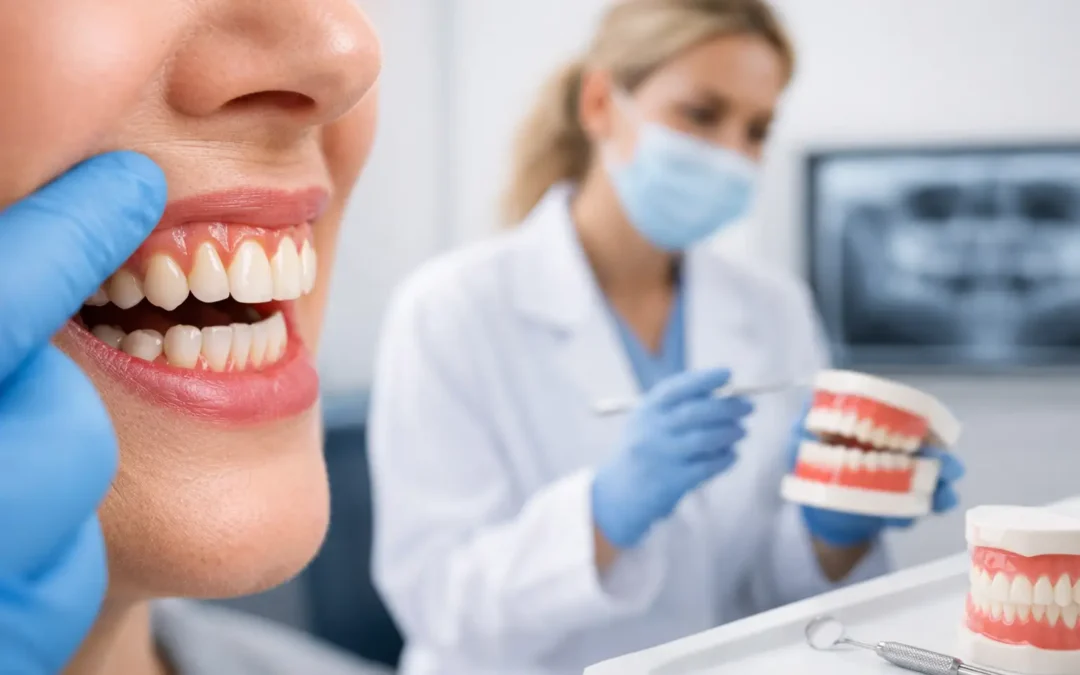
A tooth can look longer for a reason that has nothing to do with the tooth itself. When gum tissue pulls away from the tooth, more of the root becomes visible, often bringing sensitivity, changes in appearance, and concern about what happens next. So, can a dentist fix receding gums? A dentist can identify the cause, stop or slow further recession, and in many cases improve coverage and comfort with the right treatment.
The best approach depends on how much gum tissue has receded, whether gum disease is involved, the position of the teeth, and your everyday brushing habits. Receding gums do not always require surgery, but they do deserve an examination. Acting early can protect the roots of your teeth and help preserve your natural smile.
What Does Gum Recession Mean?
Gum recession occurs when the gumline moves down on a lower tooth or up on an upper tooth, exposing more of the tooth surface and sometimes the root. Unlike enamel, root surfaces are not designed to handle the same level of exposure to temperature, acids, and brushing friction. That is why a cold drink or sweet food may suddenly cause a sharp sensation near the gumline.
Recession may affect one tooth, several teeth, or the entire smile. It can progress gradually, so many patients first notice it in photos, while flossing, or when a hygienist points out that the gumline has changed.
Common causes include periodontal disease, brushing too aggressively, naturally thin gum tissue, teeth that are crowded or positioned outside the ideal bone support, tobacco use, and clenching or grinding. Orthodontic movement can also need careful planning when gums or bone are thin. In some people, genetics plays a real role even when they have taken good care of their teeth.
Can a Dentist Fix Receding Gums Without Surgery?
Sometimes, yes. While gum tissue that has already receded does not usually grow back on its own, non-surgical care can address the cause and prevent the problem from becoming worse. For mild recession, this may be the most appropriate and effective path.
Your dentist may recommend a gentler brushing technique and a soft-bristled toothbrush. Brushing harder does not mean brushing better. Small circular motions with light pressure can clean along the gumline without repeatedly injuring delicate tissue. An electric toothbrush with a pressure sensor can be helpful for patients who tend to scrub.
If plaque and hardened tartar have collected below the gumline, periodontal treatment may be needed. A deep cleaning, also called scaling and root planing, removes bacteria and deposits from areas regular brushing cannot reach. This does not replace lost gum tissue, but it can reduce inflammation and create a healthier foundation for the gums that remain.
For exposed roots that are sensitive or vulnerable to cavities, a dentist may also recommend fluoride treatment, desensitizing products, or tooth-colored bonding. Bonding can cover a worn or exposed root surface and improve the look of the tooth, though it does not recreate natural gum tissue. It is often a conservative option when recession is limited and sensitivity is the main concern.
When Gum Grafting May Be Recommended
For more noticeable recession, a gum graft may offer the most predictable way to rebuild coverage around the tooth. This periodontal procedure uses tissue from the roof of the mouth or carefully selected donor tissue to reinforce the receded area. The goal may be to cover exposed root surfaces, thicken thin gums, reduce sensitivity, or make future recession less likely.
A periodontist evaluates several details before recommending grafting. These include the amount of root exposure, the condition of the supporting bone, whether active gum disease is present, and whether the tooth is in a stable position. Not every case needs a graft, and complete root coverage is not always possible. Still, grafting can provide meaningful functional and cosmetic improvement for the right patient.
The procedure is performed with local anesthesia, and sedation may be available when appropriate. Recovery often includes temporary dietary changes, careful cleaning instructions, and follow-up visits so the team can monitor healing. Most patients are encouraged to avoid brushing the surgical area directly for a period of time and to follow the home-care directions closely.
Treat the Cause, Not Just the Gumline
A gumline can be improved cosmetically, but the result will be more lasting when the underlying reason for recession is addressed. If periodontal disease is causing bone and tissue loss, treatment focuses first on controlling infection. If a tooth is positioned too far outward, orthodontic planning may be part of the conversation. If nighttime grinding is placing excess force on the teeth, a custom night guard may help protect them.
This is why a complete exam matters. Digital imaging and periodontal measurements can show what is happening beneath the visible gumline. A tooth that appears healthy from the front may have deeper pockets, bone loss, or bite pressure that needs attention.
At Smile Perfection Dental & Orthodontics, patients can receive coordinated care from a team that includes general dental providers, orthodontic specialists, and periodontal and implant expertise. That means recommendations can consider your overall oral health, not just one symptom or one tooth.
Signs You Should Schedule a Gum Evaluation
Mild recession is often painless, but waiting until there is pain can allow the condition to advance. A professional evaluation is a good idea if you notice that teeth look longer, roots appear darker or yellower than enamel, or cold foods cause sensitivity near the gumline.
Bleeding gums, persistent bad breath, tenderness, loose teeth, or spaces developing between teeth should also be checked promptly. These can be signs of periodontal disease, which needs professional care to help protect the bone supporting your teeth.
Patients sometimes assume recession is simply a cosmetic issue. Appearance does matter, especially when you want to smile with confidence, but the health concerns are just as significant. Exposed roots are more prone to decay and wear, while progressing gum disease can affect the stability of teeth.
How to Keep Recession From Getting Worse
Daily care makes a difference after treatment and before it. Use a soft toothbrush, light pressure, and fluoride toothpaste. Clean between your teeth every day with floss, interdental brushes, or another tool recommended for your smile. The right method depends on the spacing of your teeth and the health of your gums.
Regular cleanings and exams allow your dental team to measure your gums over time. Those measurements are valuable because small changes are easier to manage than advanced recession. If you smoke or use tobacco, quitting is one of the strongest steps you can take for gum health and healing.
Do not ignore clenching, jaw soreness, or worn teeth. These concerns may be related to grinding and can place extra stress on the teeth and their supporting tissues. A dentist can assess your bite and recommend a protective solution when needed.
Questions Patients Often Ask
Can receding gums grow back naturally?
Generally, no. Once gum tissue has receded, it does not typically regenerate on its own. However, healthy habits and periodontal care can help stabilize the gumline, and gum grafting may restore coverage in suitable cases.
Is gum recession always caused by gum disease?
No. Gum disease is a common cause, but aggressive brushing, thin tissue, genetics, tooth position, and grinding can also contribute. An exam is the only way to determine which factors are affecting your gums.
Is gum grafting only for cosmetic reasons?
No. It can also reduce root sensitivity, protect exposed roots from decay and wear, strengthen thin tissue, and support long-term dental health. Cosmetic improvement is often an added benefit.
A changing gumline is worth checking, even if it is not painful. With personalized care, gentle daily habits, and treatment when needed, you can protect the foundation of your smile for years to come.