
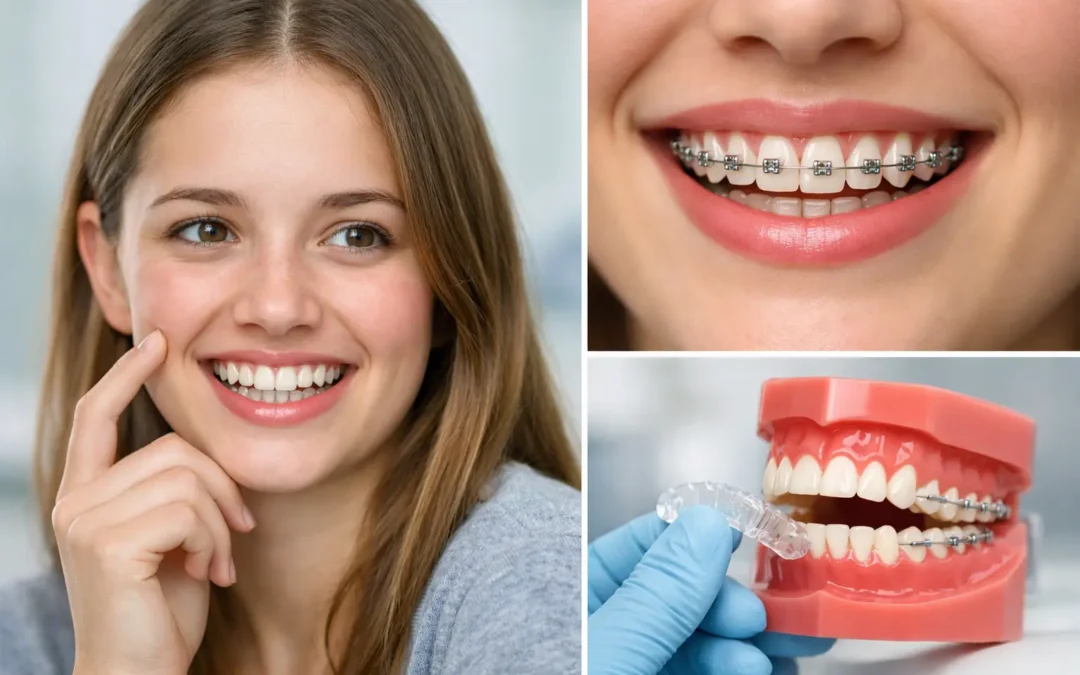
A smile can look straight at first glance and still have problems that affect comfort, chewing, speech, or long-term dental health. Knowing the top signs you need orthodontic treatment can help you make a confident decision for yourself or your child before a small concern becomes harder to manage.
Orthodontic care is not only about braces or creating a more polished smile. It is also about how teeth fit together, how the jaws function, and whether daily habits like eating and cleaning your teeth feel comfortable. At Smile Perfection Dental & Orthodontics, patients of all ages can receive a thoughtful evaluation and clear guidance on whether treatment is needed now, later, or not at all.
Top Signs You Need Orthodontic Treatment
Your teeth are crowded, overlapping, or difficult to clean
Crowding happens when there is not enough room in the mouth for teeth to sit in their ideal positions. Teeth may overlap, twist, or appear pushed forward or backward. It can be easy to think of crowding as a cosmetic issue, but tightly positioned teeth can also create areas where plaque and food particles are harder to remove.
Even with consistent brushing and flossing, crowded areas may be more prone to cavities, gum irritation, and tartar buildup. Orthodontic treatment can create healthier spacing and alignment, making at-home care and professional cleanings more effective.
Crowding does not always mean braces are the only answer. Depending on age, the amount of movement needed, and the health of the teeth and gums, options may include traditional braces, clear aligners, or phased treatment for younger children.
There are noticeable gaps between teeth
Some spaces are completely normal, especially while a child is losing baby teeth and permanent teeth are still coming in. However, persistent gaps can affect the way teeth meet, allow food to become trapped, or make a person feel self-conscious about smiling.
A gap may develop because of a mismatch between tooth and jaw size, a missing tooth, gum concerns, or habits such as thumb-sucking. An orthodontic evaluation identifies the cause rather than simply focusing on the space itself. That matters because closing a gap without addressing the underlying issue may not provide a lasting result.
For adults, spaces can sometimes appear later in life as teeth shift or gum disease changes the support around them. In those cases, orthodontics may be part of a larger treatment plan that also includes periodontal or restorative care.
Your bite feels uneven or your teeth do not meet correctly
When you close your mouth, your upper and lower teeth should meet in a balanced way. Bite problems are common and may not always be obvious in photos. A person may have an overbite, underbite, crossbite, open bite, or deep bite, each of which can affect comfort and function differently.
With an overbite, upper front teeth extend too far over lower front teeth. With an underbite, lower teeth sit in front of upper teeth. A crossbite occurs when some upper teeth close inside the lower teeth, while an open bite leaves a visible space between upper and lower teeth even when the mouth is closed.
These conditions can be mild or more complex. Some need early attention because jaw growth is still underway. Others can be treated successfully during the teen years or adulthood. The right timing depends on the individual, which is why an exam is more useful than comparing your smile to someone else’s.
Chewing feels uncomfortable or inefficient
You should be able to bite into food and chew without regularly shifting your jaw, avoiding certain foods, or feeling that one side works harder than the other. If chewing seems awkward, your bite may not be distributing pressure evenly.
Over time, uneven biting forces can contribute to excessive wear, chipped edges, or stress on certain teeth. Orthodontic treatment is not a cure for every chewing concern, since cavities, cracked teeth, missing teeth, and jaw conditions can also play a role. Still, an orthodontic assessment can determine whether tooth alignment is contributing to the problem.
Pay attention if your child cuts food into unusually small pieces, chews only on one side, or avoids foods that are not especially hard. These habits do not automatically mean orthodontic care is needed, but they are worth mentioning at a dental visit.
Jaw pain, popping, or frequent headaches are affecting your day
Jaw clicking, popping, tenderness, or headaches can have several causes. Stress-related clenching and grinding are common, as are temporomandibular joint concerns. In some cases, an uneven bite can place added strain on the jaw muscles and joints.
Orthodontic treatment may help when alignment is a contributing factor, but it is not the right answer for every patient with jaw discomfort. A careful evaluation is essential. Your dental team may recommend a nightguard, restorative treatment, stress-management strategies, orthodontics, or a combination of approaches based on what is actually causing the symptoms.
The key is not to ignore recurring pain. A jaw that pops once in a while may not require treatment, but persistent discomfort, locking, limited opening, or pain while chewing deserves professional attention.
Front teeth stick out or are easily injured
Prominent upper front teeth can be more vulnerable to injury during sports, playground falls, or everyday accidents. This is particularly important for children and teens, whose activities often come with a few unexpected bumps.
Orthodontic treatment may bring protruding teeth into a safer position while improving bite balance. If a child plays contact sports, a custom mouthguard also offers valuable protection, whether or not orthodontic treatment is underway.
This concern is often noticed early, but treatment timing varies. An orthodontist may recommend monitoring growth, beginning an early phase of treatment, or waiting until more permanent teeth have erupted. A recommendation to wait is not a missed opportunity. It can be the most appropriate plan for a healthier, more predictable outcome.
A child loses baby teeth very early or very late
The order and timing of baby tooth loss offer useful clues about developing alignment. Losing a baby tooth much earlier than expected can allow nearby teeth to drift into the open space, leaving less room for the permanent tooth. Losing teeth very late can sometimes signal that a permanent tooth is blocked, missing, or coming in at an unusual angle.
Parents do not need to track every change with concern, but regular dental visits make it easier to spot patterns early. An orthodontic evaluation around age 7 is often recommended because it allows a provider to assess jaw growth, incoming permanent teeth, spacing, and bite development while treatment options are still flexible.
Early evaluation does not mean every 7-year-old needs braces. Many children simply need periodic monitoring. When intervention is necessary, early care may guide growth, preserve space, or reduce the complexity of later treatment.
Teeth are shifting after previous braces or aligners
Orthodontic treatment can produce a beautiful, healthy result, but teeth naturally have a tendency to move throughout life. Retainers are designed to protect the new positions. If a retainer has been lost, stopped fitting, or has not been worn as directed, shifting can happen gradually.
You may notice a front tooth rotating, a new space forming, or old crowding returning. The good news is that minor relapse can sometimes be corrected with a shorter course of treatment than the first time. Waiting too long can allow the movement to progress, so it is wise to schedule an evaluation when you first notice a change.
Orthodontic Treatment Is for Adults, Too
Many adults assume orthodontics is only for teenagers. In reality, healthy teeth can be moved at nearly any age. Adults often seek treatment because their teeth have shifted, they want to improve cleaning around crowded areas, or they are preparing for cosmetic or restorative dentistry.
Clear aligners can be an appealing option for adults who want a less noticeable approach, while braces may be the better choice for more complex movements. There are trade-offs with both. Aligners require consistent wear and careful handling, while braces stay in place and can provide precise control in many cases. A consultation helps match the treatment to your bite, lifestyle, and goals.
When to Schedule an Orthodontic Evaluation
If you recognize one or more of these signs, an evaluation can replace uncertainty with a plan. Digital imaging and a close examination allow the orthodontic team to look beyond what is visible in the mirror, including tooth roots, jaw relationships, and developing teeth below the gums.
You do not need to wait until pain develops or a smile concern feels severe. A comfortable conversation now can clarify what your smile needs, what can wait, and which treatment path supports both your confidence and your long-term oral health.