
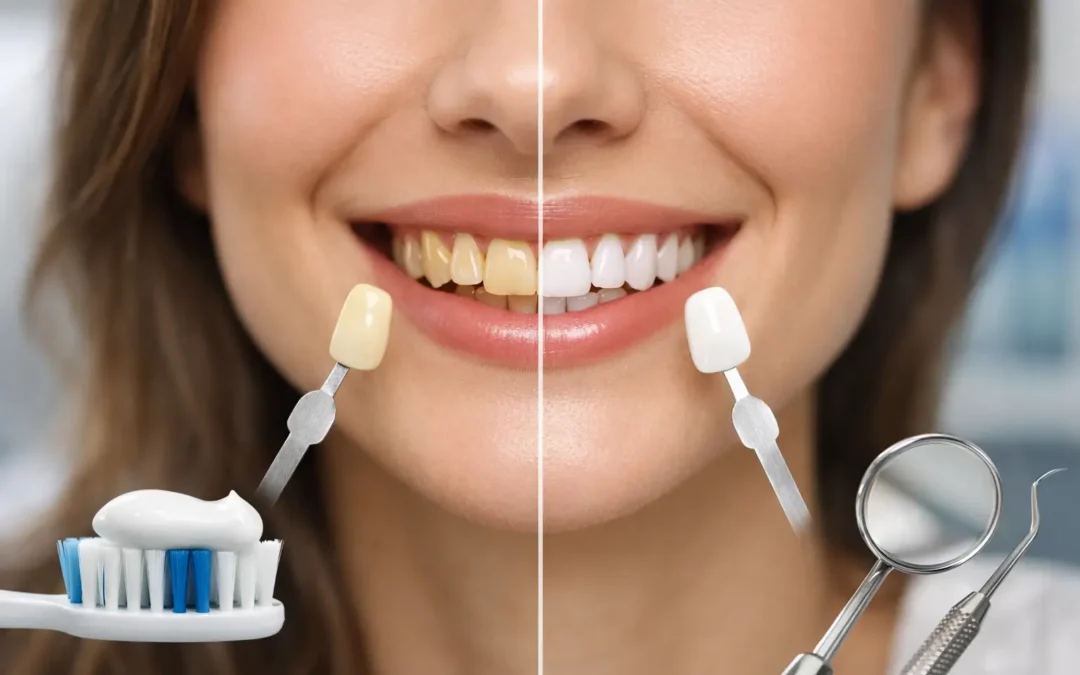
Coffee before school drop-off. Iced tea during a hot South Florida afternoon. A glass of red wine at dinner. These small routines can gradually leave a smile looking less bright than it once did. If you are wondering how to fix stained teeth, the best answer depends on what caused the discoloration and whether it is sitting on the surface or coming from inside the tooth.
The good news is that many stains can improve with the right combination of daily care and professional treatment. The key is avoiding quick fixes that irritate your gums, wear away enamel, or promise a shade of white that is not realistic for your smile.
Why Teeth Become Stained
Teeth are not naturally paper-white. Healthy enamel has subtle variations in color, and the layer beneath it, called dentin, has a naturally warmer tone. Over time, enamel can collect pigments or become thinner, making that warmer color more noticeable.
Surface stains, also called extrinsic stains, are especially common. Coffee, tea, cola, red wine, dark berries, tomato-based sauces, and tobacco can leave pigments on the outer enamel. Plaque and tartar can also make teeth look yellow or dull, particularly along the gumline and between teeth.
Some discoloration starts beneath the enamel. Aging, certain medications, excess fluoride exposure during childhood, tooth injury, and past root canal treatment may change a tooth’s internal color. A single tooth that turns gray, brown, or noticeably darker deserves a dental evaluation rather than a whitening strip. It may be a cosmetic concern, but it can also be a sign of trauma or an issue affecting the tooth’s nerve.
How to Fix Stained Teeth Safely at Home
For mild surface stains, consistent oral hygiene is the right place to start. Brush twice a day for two minutes with a fluoride toothpaste, clean between your teeth daily, and schedule regular cleanings. These habits remove plaque before it hardens into tartar, which cannot be brushed away at home.
Whitening toothpaste can help lift some surface discoloration, but it works differently from bleaching treatment. Most formulas rely on mild polishing ingredients rather than ingredients that change the internal shade of the tooth. They can be useful for maintenance, yet they are unlikely to create a dramatic change on their own.
Be thoughtful about abrasive products. Charcoal powders, acidic rinses, and aggressive scrubbing are often marketed as natural whitening solutions. In reality, they can roughen or weaken enamel. Once enamel is worn away, teeth may look more yellow because more dentin shows through. Lemon juice, baking soda mixtures, and other social media remedies can create more problems than they solve.
If you use an over-the-counter whitening kit, follow the instructions exactly. Do not leave trays or strips on longer than directed, and take a break if you develop persistent sensitivity or gum irritation. Store-bought options may help with mild, even staining, but results vary because the trays are not customized and the whitening formula is generally less concentrated than professional treatment.
Professional Options for Fixing Stained Teeth
A professional cleaning is often the first and most useful step when stains are caused by plaque, tartar, or everyday food and drink. Your dental team can remove hardened buildup and polish away many surface stains safely. For some patients, a cleaning alone makes the smile look noticeably fresher.
For deeper, more widespread yellowing, professional teeth whitening may be a better fit. Whitening treatment uses peroxide-based gel to break down stain molecules within the enamel and dentin. It can brighten natural teeth more effectively than toothpaste and many retail products while allowing your dentist to assess your oral health, discuss your goals, and help manage sensitivity.
Results are personal. The starting shade of your teeth, the type of stain, and your enamel all matter. Yellow-toned teeth often respond well to whitening, while grayish discoloration can be more challenging. Whitening also does not change the color of crowns, veneers, fillings, bridges, or implants. If you have visible dental work, your dentist can help you plan treatment so your smile has a balanced, natural-looking color.
When a tooth has deep discoloration that whitening cannot correct, cosmetic dentistry may offer another path. Veneers can cover stains along with concerns such as chips, uneven edges, or minor gaps. A crown may be recommended when a tooth also needs structural protection. For a dark tooth that has had root canal treatment, internal whitening or a restoration may be considered based on its condition.
At Smile Perfection Dental & Orthodontics, a cosmetic consultation can help identify the reason for discoloration before recommending the treatment that makes the most sense for your teeth, timeline, and comfort.
When Staining Needs a Dental Exam
Not every dark spot is simply a stain. Cavities can appear brown or black, especially in grooves or near old fillings. Tartar can look yellow, tan, or brown around the gumline. A tooth that suddenly changes color after a fall, sports injury, or biting accident should be checked promptly, even if it is not painful.
Make an appointment if you notice one tooth becoming darker than the others, discoloration paired with sensitivity or pain, bleeding gums, persistent bad breath, or a spot that does not improve after a cleaning. Addressing the underlying issue protects more than your appearance. It can help prevent a small concern from becoming a more involved restorative treatment later.
Keep New Stains From Taking Over
You do not have to give up coffee or your favorite foods to maintain a brighter smile. A few practical habits can make a real difference. Rinse with water after dark drinks or highly pigmented foods, and avoid slowly sipping coffee, soda, or tea for hours. Using a straw for cold beverages can reduce contact with the front teeth, although it is not a substitute for brushing and routine care.
Wait about 30 minutes to brush after acidic drinks or foods. Acid temporarily softens enamel, and brushing immediately can increase wear. Drinking water, chewing sugar-free gum, or simply waiting gives saliva time to help rebalance the mouth.
Tobacco is one of the strongest sources of stubborn staining and also increases the risk of gum disease and oral cancer. Cutting back or quitting supports both the color of your teeth and your long-term oral health. If you smoke or use tobacco, regular dental visits are especially valuable for monitoring your gums and oral tissues.
If you have completed whitening, ask your dental team how to maintain your result. Some people benefit from occasional touch-ups, while others can preserve their shade with good home care and regular cleanings. The right schedule depends on your eating and drinking habits, sensitivity level, and the whitening method used.
A Brighter Smile Should Still Look Like You
The goal is not necessarily the brightest shade on a chart. A healthy, even, natural-looking smile often feels more confident and lasts better than a rushed whitening plan. Before treating stains, make sure your teeth and gums are healthy, choose a method suited to the cause of discoloration, and give yourself room for realistic expectations.
A dentist can help you move beyond guessing, especially when stains are stubborn, uneven, or tied to an old injury or dental restoration. With personalized care and a sensible maintenance routine, a cleaner, brighter smile can be a comfortable part of your everyday life.