
Losing a tooth changes more than your smile. You notice it when you chew, when you speak, and sometimes when you catch yourself smiling less in photos. The good news is that modern missing teeth solutions are more comfortable, natural-looking, and personalized than many people expect.
If you have one missing tooth, several gaps, or you are tired of dealing with loose dentures, the right treatment depends on your health, goals, budget, and timeline. There is no one-size-fits-all answer. What matters most is choosing an option that restores function, protects your oral health, and helps you feel confident again.
Why replacing missing teeth matters
A gap in your smile is not only a cosmetic issue. When a tooth is missing, nearby teeth can begin to shift into the open space. That can affect your bite, create areas that are harder to clean, and increase wear on other teeth. Over time, missing teeth can also contribute to jawbone loss in the area where the tooth root used to be.
For many patients, the day-to-day impact shows up first. Chewing may feel uneven. Certain foods become harder to enjoy. Speech can change, especially if front teeth are missing. Even one missing tooth can create a chain reaction, which is why it is worth talking with a dentist sooner rather than later.
Missing teeth solutions for one or several teeth
The best treatment starts with a close look at your mouth as a whole. Your dentist will consider the condition of your gums, the strength of surrounding teeth, bone support, your bite, and whether you want the most fixed, long-term option or something more budget-friendly.
Dental implants
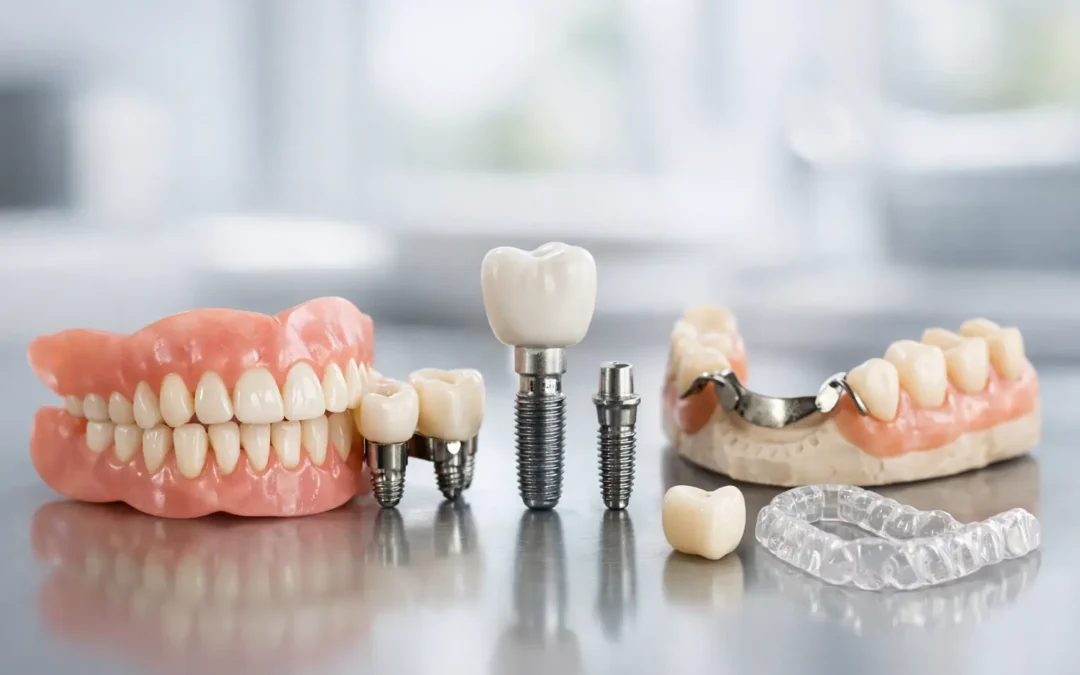
Dental implants are often considered the closest replacement to a natural tooth. A small titanium post is placed in the jawbone, where it acts like an artificial root. Once it heals, a custom crown is attached on top.
For patients missing a single tooth, an implant can be an excellent option because it does not rely on neighboring teeth for support. That helps preserve healthy tooth structure. Implants also help stimulate the jawbone, which can reduce bone loss over time.
The trade-off is that implants usually take longer than other options and may involve a higher upfront investment. Some patients also need bone grafting before placement if bone loss has already occurred. Still, many adults choose implants because they want a secure, natural-feeling solution that can last for many years with proper care.
Dental bridges
A bridge replaces one or more missing teeth by anchoring an artificial tooth to the teeth on either side of the gap. In many cases, bridges are a reliable and attractive restorative option that can be completed faster than an implant process.
A bridge may be a strong choice if the neighboring teeth already need crowns or if a patient wants a fixed solution without surgery. It restores appearance and chewing function well, and modern materials can look very natural.
The main consideration is that a traditional bridge depends on adjacent teeth for support. That means those teeth often need to be reshaped. Bridges also do not replace the tooth root, so they do not provide the same bone-preserving benefit as an implant.
Partial dentures
If you are missing several teeth in different areas, a partial denture may make sense. It is a removable appliance designed to fill multiple gaps while working around your remaining natural teeth.
Partial dentures can be a practical choice for patients who want to restore function and appearance at a lower cost than multiple implants or bridges. They can also be made relatively quickly.
That said, removable appliances can take time to get used to. Some patients notice movement while eating or speaking, especially at first. Fit matters a great deal, and regular follow-up helps keep the appliance comfortable as your mouth changes over time.
Missing teeth solutions for full-arch tooth loss
When many or all teeth are missing, treatment planning becomes a bigger conversation. Comfort, stability, appearance, and long-term maintenance all matter.
Full dentures
Traditional full dentures remain an effective solution for many patients. They replace all teeth in the upper arch, lower arch, or both. For people who have experienced widespread tooth loss, dentures can restore facial support, improve speech, and make everyday eating easier than going without teeth.
Dentures are often the most accessible option financially, and they can provide a dramatic improvement in appearance. For some patients, especially those with health or budget limitations, they are the right place to start.
The challenge is stability. Lower dentures in particular can shift because they rest on the gums rather than being anchored into bone. As the jawbone changes over time, dentures may also need adjustments or replacement.
Implant-supported dentures
For patients who want more security than traditional dentures alone can offer, implant-supported dentures are often a very appealing middle ground. A denture can be attached to dental implants placed in the jaw, which helps reduce slipping and improves chewing strength.
This option can be life-changing for people who have struggled with loose dentures, sore spots, or limited food choices. It also offers more confidence in social settings because the prosthetic is more stable.
Implant-supported treatment does require adequate bone and a longer treatment process. The cost is higher than conventional dentures, but many patients feel the improvement in comfort and function is worth it.
How to choose between missing teeth solutions
The right choice is not always the most advanced treatment on paper. It is the one that fits your health, lifestyle, and priorities.
If you want the most natural feel and strongest long-term bone support, implants are often worth discussing first. If you need a fixed option on a shorter timeline, a bridge may be more practical. If you are replacing multiple teeth and want to keep costs more manageable, partial or full dentures may be the better fit. And if you already wear dentures but want more stability, implant support may be the next step.
Age alone does not decide what you can or cannot do. Many healthy adults are good implant candidates well into later life. What matters more is gum health, bone support, medical history, and habits such as smoking. That is why a personalized exam and digital imaging are so valuable. They help your dental team recommend treatment based on what is actually happening in your mouth, not guesses.
What to expect during the process
Every case is different, but most tooth replacement treatment begins with a consultation, exam, and imaging. This is where your dentist looks at your oral health, reviews your concerns, and explains which solutions make the most sense.
If you are considering implants, treatment may happen in phases. A tooth may need to be removed first, followed by healing time, implant placement, and later the final crown or denture attachment. Bridges and dentures usually move faster, though they still require careful planning to get the fit and bite right.
For anxious patients, comfort matters just as much as the treatment itself. A caring, experienced team can walk you through each step, explain what to expect, and discuss options that make care easier. At Smile Perfection Dental & Orthodontics, many families appreciate being able to receive restorative care in a familiar, supportive setting.
Cost, maintenance, and long-term value
Cost is a real part of the conversation, and patients deserve honest guidance. The least expensive option upfront is not always the least expensive over time. A removable appliance may cost less initially but require more adjustments, relines, or replacement later. Implants usually cost more at the start, yet they may offer better long-term stability and comfort.
Maintenance matters too. Implants still need excellent home care and routine dental visits. Bridges require careful cleaning around and under the restoration. Dentures must be cleaned daily and checked regularly for fit. No matter which option you choose, long-term success depends on follow-up care.
That is why comprehensive practices can be especially helpful. When general dentists, restorative providers, and specialists work together, treatment planning tends to be more coordinated and easier for patients to understand.
When to schedule an evaluation
If you recently lost a tooth, timing matters. The longer a space is left untreated, the more likely nearby teeth and bone levels are to change. If you have been missing teeth for years, it is still not too late. Many patients are surprised to learn they have more options than they thought.
A consultation can answer the questions that online searches cannot. Are you a candidate for implants? Would a bridge protect the surrounding teeth? Are dentures likely to feel stable enough for your daily life? Those answers depend on you, not just the category of treatment.
Replacing missing teeth is about more than filling a gap. It is about eating comfortably, speaking clearly, protecting your long-term oral health, and feeling like yourself again. The best next step is not to guess. It is to sit down with a trusted dental team, talk through your goals, and choose the solution that feels right for your life.