
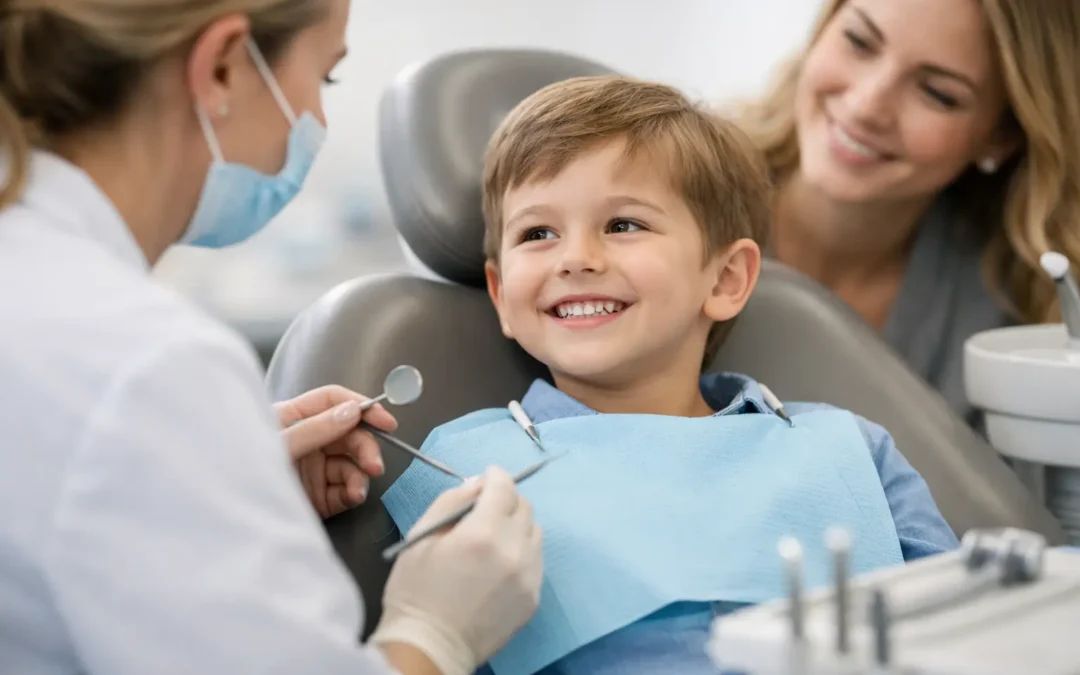
A child’s first dental visit is often much simpler than parents expect: a gentle look at new teeth, practical guidance, and a chance to make the dental office feel familiar. A dental checkup for children is not only for finding cavities. It helps build healthy routines early, monitors how the teeth and jaws are developing, and gives parents clear answers before a small concern becomes a stressful one.
For families in Pembroke Pines, Boynton Beach, Royal Palm Beach, and nearby South Florida communities, regular visits can also make dental care feel like a normal part of growing up – not something that only happens when a tooth hurts.
When should children have their first dental visit?
Children should see a dentist by their first birthday or within six months of the first tooth coming in. That may sound early, especially when there are only one or two tiny teeth to examine. But decay can begin soon after teeth erupt, and an early visit gives families a helpful starting point for home care, feeding habits, and future appointments.
The first visit is typically short and relaxed. Depending on your child’s age and comfort level, they may sit on a parent’s lap while the dentist checks their teeth, gums, bite, and oral development. The goal is to create a positive experience while identifying anything that needs attention.
After that, many children benefit from checkups every six months. The right schedule can vary. A child with frequent cavities, weakened enamel, orthodontic concerns, or a medical condition that affects oral health may need more frequent monitoring. Your dental team can recommend a schedule that fits your child rather than treating every smile exactly the same.
What happens during a dental checkup for children?
A child-friendly checkup moves at a pace that helps young patients feel secure. The dental team will explain what they are doing in simple language, encourage questions, and celebrate cooperation – even if your child is shy or needs extra time to warm up.
The visit generally includes an exam of the teeth and gums, a review of how the bite is developing, and a professional cleaning when appropriate. The dentist looks for early signs of cavities, plaque buildup, gum irritation, enamel wear, and changes in the way the teeth are coming in. They may also check for habits such as thumb-sucking, prolonged pacifier use, teeth grinding, or mouth breathing that can affect dental development.
Dental X-rays are not automatically needed at every visit. They are recommended when they will provide useful information that cannot be seen during a visual exam, such as decay between teeth, the position of developing permanent teeth, or changes below the gumline. Digital imaging allows the dental team to make informed recommendations while keeping exposure low.
Parents are also encouraged to talk about daily routines. A dentist can help with common questions, including how much toothpaste to use, whether a child is brushing effectively, which snacks are easier on teeth, and how to handle a loose baby tooth. These conversations are often where families gain the most confidence.
Why routine visits matter before there is pain
Children do not always recognize or communicate dental discomfort clearly. A cavity can grow without obvious symptoms, particularly when it develops between back teeth. By the time a child complains of pain, treatment may be more involved than it would have been if the concern had been caught earlier.
Routine care also gives the dentist a chance to watch the transition from baby teeth to permanent teeth. Crowding, crossbites, missing teeth, delayed eruption, and jaw-growth patterns can sometimes be identified early. Early observation does not always mean early orthodontic treatment. In many cases, the best approach is simply monitoring growth until the timing is right. When treatment is recommended, addressing an issue at the appropriate stage may make care more efficient and protect a child’s bite and confidence.
Just as valuable, familiar checkups can reduce dental anxiety. A child who has only visited the dentist during an emergency may associate the office with pain or fear. A child who comes in for calm, routine appointments learns that the dental chair is a safe place where adults explain what is happening and help them take care of their smile.
Preparing your child for a positive visit
A little preparation can make a meaningful difference, especially for toddlers and first-time patients. Describe the appointment in positive, matter-of-fact terms. You might say, “The dentist will count your teeth and help us keep them strong.” Avoid using words such as “shot,” “drill,” or “hurt,” even if you are trying to reassure your child. Let the dental team introduce unfamiliar tools in an age-appropriate way.
Choose an appointment time when your child is usually rested and comfortable. For many younger children, a morning appointment works best because they are less likely to be tired or hungry. Bring a comfort item if it helps, such as a small stuffed animal or favorite blanket, but keep the visit simple. A calm parent often helps a child feel calm, too.
If your child cries, refuses to open their mouth, or needs breaks, do not view the visit as a failure. New environments can be overwhelming, and trust may take more than one appointment. A patient-centered dental team will adjust the pace, offer encouragement, and help your child build confidence one step at a time.
Healthy habits between checkups
Professional visits work best alongside consistent care at home. From the first tooth, parents should brush twice a day using a tiny smear of fluoride toothpaste for children under age 3. Children ages 3 to 6 should use a pea-sized amount. Because young children tend to swallow toothpaste and do not have the coordination to brush thoroughly, an adult should brush or closely supervise until the child can do a reliable job independently.
Flossing becomes necessary once teeth touch. This is often missed because children may brush well on visible surfaces while plaque remains between teeth. Water is the best everyday drink, particularly between meals. Milk is nutritious, but putting a child to bed with a bottle or sippy cup of milk, juice, or another sweetened drink can leave sugars on teeth for hours.
Rather than trying to eliminate every treat, focus on frequency. Repeated sipping and grazing expose teeth to sugar and acids more often than having a sweet item with a meal. Fresh fruit, cheese, yogurt without added sugar, vegetables, and water are practical choices for school days and busy afternoons.
Signs your child should be seen sooner
Do not wait for the next routine appointment if your child has a toothache, facial swelling, a broken tooth, persistent bad breath, bleeding gums, or sensitivity to hot and cold foods. Call promptly if a permanent tooth is knocked out. A baby tooth that is injured also deserves an evaluation, even though it will eventually fall out, because trauma can affect the gums or the developing permanent tooth beneath it.
Changes in eating, sleep, or behavior can also be clues. A child who avoids chewing on one side, wakes at night, or suddenly becomes irritable during meals may be experiencing discomfort they cannot fully describe. Early evaluation gives the dental team more options for keeping your child comfortable.
At Smile Perfection Dental & Orthodontics, families can receive ongoing preventive, pediatric, and orthodontic care in one familiar setting as their children grow. The most helpful next step is often the simplest one: schedule the checkup before there is a problem, then let each positive visit make the next one easier.