
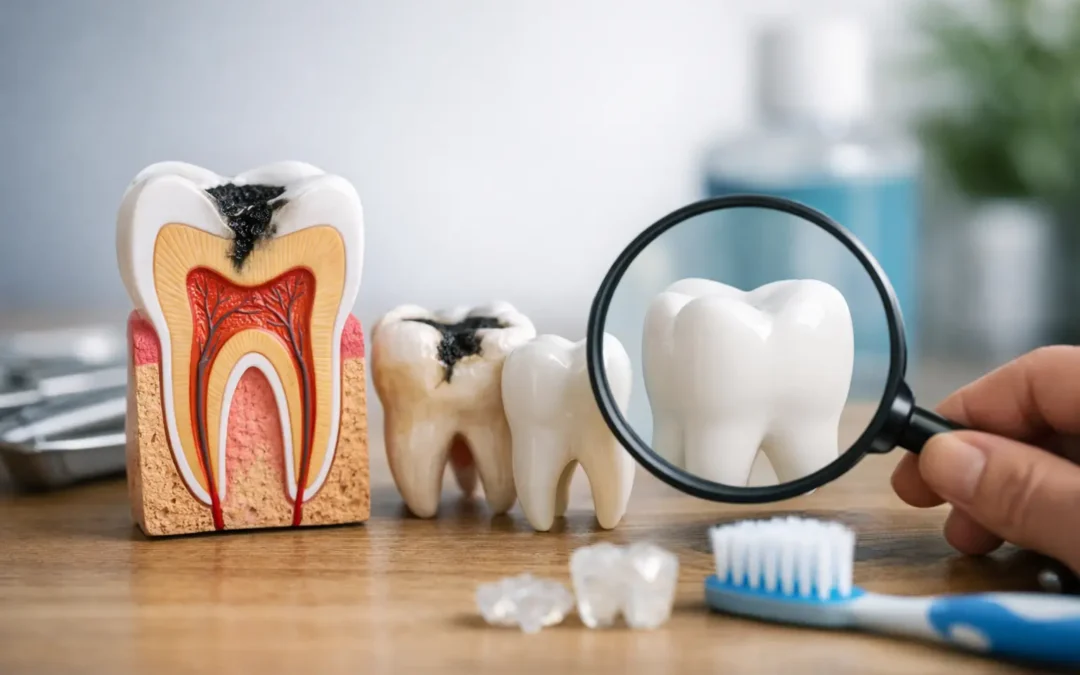
You notice a chalky white spot on a tooth, or maybe your child mentions sensitivity when eating something cold. That is usually when the question comes up – can cavities be reversed? The honest answer is yes, sometimes, but only at a very early stage. Once decay creates a true hole in the tooth, it cannot grow back on its own and needs professional treatment.
That distinction matters because many people wait too long, hoping the problem will settle down. Early tooth decay can often be managed and even stopped before it becomes a cavity that needs a filling. Later-stage decay is different. Knowing where that line is can save you time, discomfort, and more extensive dental work.
Can Cavities Be Reversed at Any Stage?
Not every cavity is reversible, and this is where the wording gets confusing. Dentists often use the term tooth decay to describe a process that starts before a physical hole appears. In the earliest stage, minerals are being pulled from the enamel by acids produced by bacteria. This is called demineralization.
At that point, the enamel may look dull or white, but the surface is still intact. With the right care, minerals like calcium and phosphate can move back into the enamel, especially with fluoride support. That is the stage where the answer to can cavities be reversed is sometimes yes.
Once the enamel breaks down and a cavity forms, the tooth cannot rebuild that lost structure by itself. If decay moves deeper into the dentin, or closer to the nerve, treatment becomes more involved. A simple filling may be enough in some cases, while larger areas of damage may need a crown or root canal therapy.
What Reversal Actually Means
When people hear reversal, they sometimes picture damaged tooth structure fully regrowing. That is not quite how it works. Reversal means the decay process is stopped and early weakened enamel is strengthened before a hole forms.
Think of it as catching a problem while the tooth still has a chance to recover. The goal is to restore mineral balance in the enamel and reduce the conditions that allowed decay to start in the first place. It is a real improvement, but it depends on timing.
This is one reason regular exams matter so much. Early decay may not hurt, and it may not be visible in the mirror. Digital imaging and professional exams can catch changes long before they turn into a bigger problem.
Signs You May Be in the Early Stage
Early tooth decay does not always cause pain. In fact, many patients are surprised to learn they have an area of concern because it feels completely normal.
A few signs can suggest enamel is under stress. White spots near the gumline, mild sensitivity to sweets or cold, and rough areas on the tooth can all point to early demineralization. In children and teens with braces, these white spots can show up more easily because plaque tends to collect around brackets.
Still, symptoms alone do not tell the whole story. Staining is not always decay, and sensitivity can come from several causes. The only reliable way to know whether a tooth can be monitored, remineralized, or treated with a filling is to have it evaluated by a dental professional.
How Early Decay Can Be Reversed
If a dentist finds that the enamel is weakened but not broken through, treatment usually focuses on reducing bacteria, lowering acid exposure, and helping the tooth remineralize. Fluoride plays a major role because it strengthens enamel and makes it more resistant to future acid attacks.
At home, that often means brushing carefully twice a day with fluoride toothpaste, flossing daily, and being more consistent about routine care. Diet matters too. Frequent snacking, sipping sugary drinks, and acidic beverages like soda or sports drinks can keep the mouth in a cycle of enamel loss. It is not just how much sugar you have. It is how often your teeth are exposed.
Professional fluoride treatments may also help, especially for children, teens, and adults who are more cavity-prone. In some cases, your dentist may recommend products designed for dry mouth or high-risk patients, since saliva is one of the mouth’s natural defenses against decay.
When a Cavity Cannot Be Reversed
Once the surface of the enamel has collapsed and there is a true opening, the tooth will not repair itself. That is the point where treatment is needed to remove the decayed area and restore the tooth.
This is why online advice can be misleading. You may see claims that supplements, oils, or special diets can heal all cavities naturally. While better nutrition and good oral hygiene absolutely support oral health, they do not close up an existing hole in a tooth. Delaying care usually gives bacteria more time to travel deeper.
If decay is limited, a filling may be all that is needed. If more of the tooth has been weakened, a crown may offer better protection. If infection reaches the inner pulp, root canal treatment may be necessary to save the tooth. The earlier decay is addressed, the simpler treatment tends to be.
What Increases Your Risk of Cavities?
Some patients do everything they can and still seem to get cavities more often. That can be frustrating, but it does not mean you are doing something wrong. Cavity risk depends on several factors.
Diet is one piece of the puzzle, but so are dry mouth, crowded teeth, inconsistent home care, certain medications, gum recession, and past dental history. Children can be more vulnerable because they are still building brushing habits. Adults with restorations, orthodontic appliances, or reduced saliva may also have a harder time keeping decay away.
There is also a strong prevention angle for families. When parents stay on top of checkups, cleanings, sealants, fluoride, and home care routines, children usually develop better long-term habits. For busy households, having one trusted dental home can make ongoing care much more manageable.
Can Cavities Be Reversed in Children and Teens?
In many cases, yes – if the decay is caught early enough. Children and teens often benefit especially well from preventive care because their enamel changes can be detected and addressed before deeper damage develops.
That said, younger patients can move from early decay to a larger cavity fairly quickly, especially if sugary snacks, juice, sports drinks, or inconsistent brushing are part of the picture. Orthodontic patients need extra attention too. Braces create more places for plaque to hide, which can increase the risk of white spots and cavities if home care slips.
For families in growing communities like Pembroke Pines, Boynton Beach, and Royal Palm Beach, convenience matters. Keeping up with routine visits makes it much easier to catch small issues early, before they interrupt school, work, or family schedules.
The Best Next Step if You Are Unsure
If you think you may have a cavity, it is worth getting it checked sooner rather than later. Waiting to see whether it gets worse can turn a reversible early lesion into a filling, or a small filling into a larger restoration.
A dental exam can tell you exactly where things stand. Sometimes the best news is that a spot only needs monitoring and preventive care. Other times, treating a small cavity now can help you avoid discomfort and more expensive care later.
At Smile Perfection Dental & Orthodontics, patient education is a big part of care because people make better decisions when they understand what is happening in their mouth. Whether the answer is fluoride, a filling, or a more advanced restoration, the goal is the same – protect your tooth, keep you comfortable, and help you maintain a healthy smile.
The good news is that tooth decay does not always start with a drill, and it does not always end with one either. The earlier you act, the more options you usually have.