
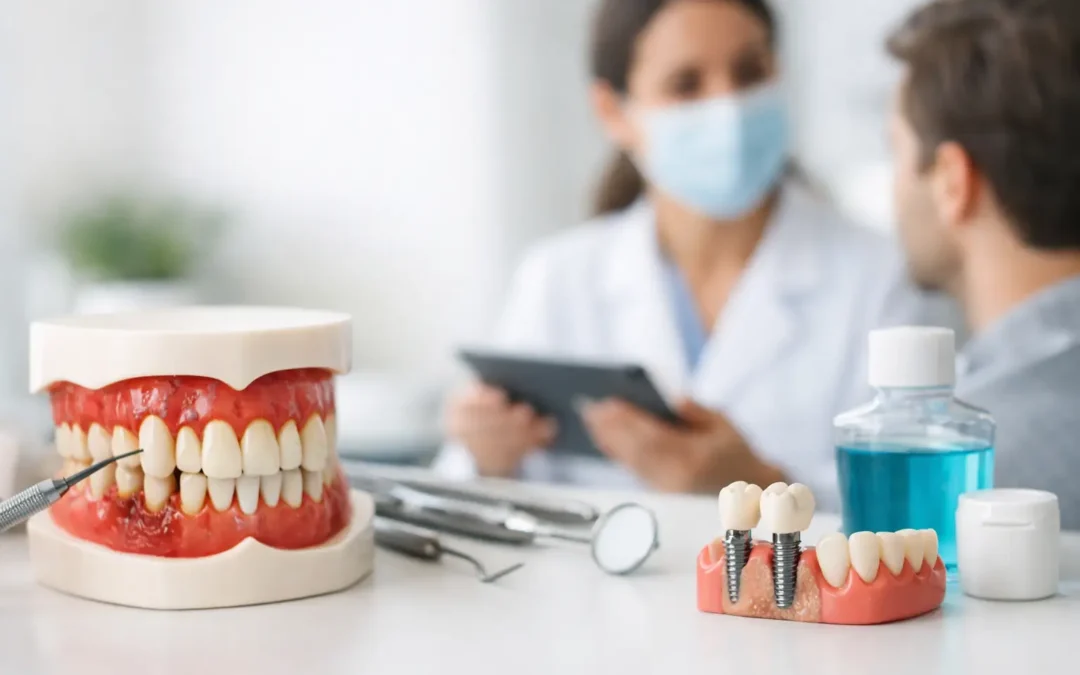
Bleeding when you brush is easy to dismiss, especially when life is busy. But healthy gums generally should not bleed, feel tender, or pull away from your teeth. This guide to gum disease treatment explains what may be happening, which treatments can help, and why early care can make a meaningful difference for your comfort, smile, and long-term oral health.
Gum disease is common, but it is not something you have to simply live with. With the right treatment plan and consistent home care, many patients can control the infection and protect the teeth they have. The best approach depends on how far the disease has progressed, your overall health, and how your gums respond to care.
What Gum Disease Looks and Feels Like
Gum disease begins when plaque, a sticky film of bacteria, is not fully removed from around the teeth and gumline. Over time, plaque can harden into tartar, which cannot be brushed away at home. The gums may become irritated and inflamed, creating an environment where bacteria can collect below the gumline.
The earliest stage is called gingivitis. You may notice bleeding during brushing or flossing, swollen gums, redness, or persistent bad breath. Gingivitis can often be reversed with professional cleaning and improved daily habits because the infection has not yet damaged the bone supporting the teeth.
When untreated inflammation progresses, it can become periodontitis. At this stage, the gums can begin to pull away from the teeth, forming pockets that trap more bacteria. Bone loss may occur, teeth may shift or feel loose, and chewing can become uncomfortable. Periodontitis cannot be reversed in the same way as gingivitis, but it can often be managed successfully to slow or stop further damage.
Not every case feels painful. In fact, gum disease is often quiet in its early stages. That is why routine exams and gum measurements matter, even if your smile looks healthy in the mirror.
A Guide to Gum Disease Treatment by Stage
A dental exam is the starting point for effective treatment. Your dentist or periodontist will evaluate the gums, measure the spaces between the teeth and gums, check for bleeding and mobility, and use digital X-rays when needed to assess bone support. This information helps determine whether you need a routine cleaning, deeper periodontal care, or more advanced treatment.
Gingivitis: Professional Cleaning and Better Daily Care
For gingivitis, a professional cleaning may be enough to remove plaque and tartar from above the gumline. Your dental team can also show you where buildup tends to collect and recommend brushing and flossing techniques that fit your needs.
A soft-bristled toothbrush, fluoride toothpaste, and daily cleaning between the teeth are usually the foundation of home care. Some patients benefit from an electric toothbrush or an interdental cleaner, particularly if they have crowded teeth, bridges, braces, or limited dexterity. The best tool is the one you will use correctly and consistently.
Periodontitis: Scaling and Root Planing
When bacteria and tartar have collected beneath the gumline, a standard cleaning is usually not sufficient. Scaling and root planing, sometimes called a deep cleaning, removes buildup from below the gums and smooths the root surfaces. Smoother roots make it harder for bacteria to attach and give the gums a better opportunity to heal.
This treatment is often completed in sections of the mouth and may involve local anesthetic to keep you comfortable. Your gums can feel tender for a short time afterward, but many patients notice that bleeding and swelling improve as healing begins.
Scaling and root planing is highly effective for many cases, but results depend on the depth of the pockets, the amount of bone loss, tobacco use, diabetes control, and daily plaque removal. Follow-up periodontal visits are not optional extras. They are how your dental team monitors healing and removes bacteria before the condition can become active again.
Advanced Gum Disease: Specialist Care and Surgical Options
If deep pockets remain after nonsurgical treatment, a periodontist may recommend additional care. Depending on your situation, this can include localized antimicrobial treatment, pocket reduction procedures, bone grafting, or gum grafting.
Pocket reduction treatment gives the specialist access to areas that are difficult to clean beneath the gums. Bone grafting may be considered when bone loss has weakened support around a tooth. Gum grafting can help cover exposed roots, reduce sensitivity, and strengthen areas where the gum tissue has receded.
These procedures are not necessary for every patient with periodontitis. The goal is always to choose the least invasive option that can protect your oral health. A clear conversation about expected benefits, healing time, cost, and maintenance needs will help you make an informed decision.
What Happens After Treatment
Gum disease treatment does not end when the appointment is over. Periodontal disease is a chronic condition for many patients, meaning it needs ongoing attention to stay controlled. After deep cleaning or specialist treatment, your dentist may recommend periodontal maintenance visits more often than the typical six-month cleaning schedule. For some patients, visits every three or four months are appropriate.
At home, brush twice a day for two minutes and clean between your teeth once a day. Be gentle but thorough along the gumline. If you have dental implants, crowns, bridges, or orthodontic appliances, ask which cleaning aids are most appropriate. Those restorations can last beautifully, but they still need careful plaque control around the surrounding gums.
Smoking and vaping can make gum disease harder to treat because they affect healing and can mask common warning signs, such as bleeding. Diabetes can also influence gum health, especially when blood sugar is not well controlled. If either factor applies to you, your dentist may recommend closer monitoring and coordination with your medical care.
Can Loose Teeth Be Saved?
It depends on why the teeth are loose and how much support remains. A tooth with mild mobility may become more stable once inflammation is controlled and biting forces are adjusted. In other cases, severe bone loss means the tooth may not have a predictable long-term prognosis.
When a tooth cannot be saved, replacing it can help protect your bite, speech, and appearance. Options may include a bridge, denture, or dental implant. Implant planning should only begin after gum disease has been brought under control, since implants also depend on healthy gums and bone for lasting support.
This is one reason comprehensive care can be helpful. At Smile Perfection Dental & Orthodontics, general dentists, a periodontist, and an implant specialist can help patients understand both the immediate treatment needs and the long-term plan for their smile.
When to Schedule an Exam Soon
Do not wait for your next routine visit if you have gums that bleed repeatedly, swelling that does not improve, pus around a tooth, worsening bad breath, gum recession, a loose tooth, or a change in how your teeth fit together. These signs deserve a professional evaluation.
Seek prompt dental care for severe swelling, facial swelling, fever, or difficulty swallowing or breathing. Those symptoms can signal an infection that needs urgent attention.
A healthy smile is built on healthy gums, not just clean-looking teeth. If something feels different when you brush, floss, or bite, scheduling an evaluation now can give you more treatment choices and a better chance of preserving your natural smile.