
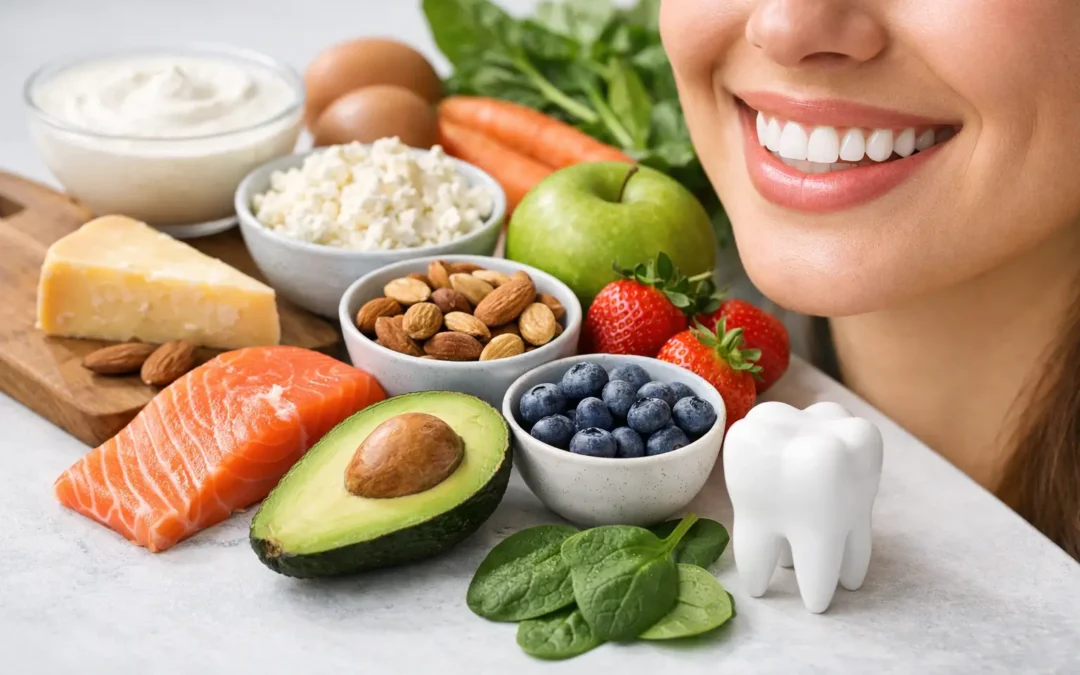
A tooth-friendly diet does not need to look like a strict meal plan. For most families, the best foods for strong teeth are familiar foods that help protect enamel, support healthy gums, and limit the frequent sugar exposure that can lead to cavities. What matters most is not finding one “perfect” food, but building everyday meals and snacks that work with your oral hygiene routine.
Teeth are living structures supported by minerals, saliva, gums, and bone. Children need nutrients for developing teeth and jaws, while adults benefit from choices that help preserve enamel and support gum health. The right foods can help, but they cannot replace brushing twice daily with fluoride toothpaste, cleaning between teeth, and regular dental visits.
Why Food Choices Matter for Your Teeth
Every time you eat or drink something containing sugar or starch, bacteria in plaque can produce acids. Those acids temporarily soften the outer enamel layer. Saliva gradually helps restore a healthier balance, especially when meals and snacks are spaced out rather than sipped or grazed on all day.
That is why frequency matters as much as quantity. A sweet treat with a meal is generally easier on teeth than sipping a sugary drink for hours. Foods rich in calcium, phosphorus, protein, fiber, and key vitamins can support the body systems that keep teeth and gums healthy. They are helpful partners to good dental care, not substitutes for it.
Best Foods for Strong Teeth at Every Age
1. Milk, yogurt, and cheese
Dairy foods provide calcium and phosphorus, two minerals associated with strong teeth and bones. Milk and plain yogurt are practical choices for children, teens in orthodontic treatment, and adults alike. Cheese can also be a satisfying snack that does not coat teeth in sugar.
Choose unsweetened or lower-sugar yogurt when possible. Many flavored yogurts and drinkable yogurts contain enough added sugar to make them more like a dessert than an everyday oral-health food. If your family avoids dairy, ask your dentist or physician about appropriate calcium and vitamin D sources, including fortified alternatives.
2. Crunchy vegetables
Carrots, celery, cucumbers, bell peppers, and broccoli add fiber, water, and nutrients to meals. Their crisp texture requires chewing, which encourages saliva flow. Saliva is one of the mouth’s natural defenses because it helps rinse away food particles and buffer acids.
Raw vegetables are not a replacement for a toothbrush, despite the popular idea that crunchy foods “clean” teeth. Think of them as a smart snack choice, especially compared with crackers, candy, or sticky snack bars. For young children or anyone with chewing concerns, cut vegetables into safe, age-appropriate pieces.
3. Leafy greens
Spinach, kale, collard greens, and other leafy vegetables supply vitamins and minerals that support overall health, including healthy gum tissue. They also contain calcium, although the amount your body absorbs can vary by vegetable.
Leafy greens are easy to work into family meals. Add spinach to eggs, serve a side salad with dinner, or blend greens into a smoothie with no added sugar. If you are wearing braces, chop salad ingredients into smaller pieces and avoid biting into large, firm vegetables with the front teeth.
4. Eggs, fish, poultry, and beans
Protein-rich foods are valuable for maintaining tissues throughout the body, including gums. Eggs, chicken, turkey, fish, lentils, chickpeas, and beans also provide different combinations of phosphorus, iron, zinc, and B vitamins.
Fatty fish such as salmon can be especially useful because it provides vitamin D, which helps the body use calcium effectively. For families who do not eat fish, eggs and fortified foods may contribute vitamin D, though individual needs vary. A physician can offer guidance when there is concern about a nutritional deficiency.
5. Nuts and seeds
Almonds, cashews, pumpkin seeds, and sesame seeds offer protein, healthy fats, and minerals. They can be a better choice than sugary vending-machine snacks, and nut butters without added sugar can be a filling option with apples, celery, or whole-grain toast.
There are a few practical exceptions. Whole nuts can be a choking hazard for young children, and hard nuts or seeds may be uncomfortable for someone with a cracked tooth, new dental work, or active jaw pain. They can also damage brackets or wires for patients in traditional braces. In those situations, choose smooth nut butter or another softer protein source.
6. Fresh fruit, especially water-rich options
Fruit contains natural sugars, but it also brings fiber, water, and vitamins. Apples, pears, berries, melon, and oranges can fit comfortably into a smile-friendly diet. Whole fruit is usually a better everyday choice than juice because chewing and fiber slow consumption, and juice exposes teeth to sugars and acids without the same benefits.
Citrus fruits are nutritious, but they are acidic. You do not need to avoid them entirely. Enjoy them as part of a meal, then drink water afterward. Wait about 30 minutes before brushing if you have eaten or drank something very acidic, since brushing immediately after acid exposure may be harder on softened enamel.
7. Whole grains
Oatmeal, brown rice, whole-grain bread, and quinoa can provide nutrients and steady energy. They are not cavity-proof foods, however. Starchy foods can still be broken down by bacteria in the mouth, and some crackers or chips stick in grooves of teeth for a long time.
Pair whole grains with protein, vegetables, and water rather than constantly snacking on dry crackers or pretzels. For children, a balanced snack such as plain yogurt with berries or cheese with sliced cucumber may be gentler on teeth than repeated handfuls of crackers.
8. Water
Water may be the simplest oral-health choice on the list. It helps rinse the mouth after meals, supports saliva production, and keeps a reusable bottle from becoming a source of frequent sugar exposure. In communities with fluoridated tap water, drinking tap water can also provide a small but meaningful layer of cavity prevention.
Still water is best between meals. Sparkling water is typically less harmful than soda or sports drinks, but its acidity means it is not ideal for sipping all day. Add a reusable water bottle to backpacks, sports bags, and work desks, particularly in South Florida’s heat.
Foods and Habits That Can Work Against Enamel
No food has to be permanently off limits for most people. The goal is to be aware of the choices that create repeated acid attacks or stay on teeth for extended periods. Sticky candies, dried fruit, caramel, sweetened coffee drinks, soda, sports drinks, and frequent juice can be especially challenging.
Sour candies deserve special attention because they often combine sugar with acid. Even foods that sound healthy, such as gummy vitamins or fruit snacks, can cling to chewing surfaces. If a sweet food is part of the day, offer it with a meal, follow with water, and return to normal brushing and flossing rather than letting it become an all-afternoon snack.
Make Tooth-Friendly Eating Realistic for Your Family
The most sustainable plan is one your family will actually follow. Keep easy options available: cheese sticks, plain yogurt, hard-boiled eggs, cut vegetables, fresh fruit, and water. At meals, aim for a simple mix of protein, produce, and a calcium-rich or fortified food when it fits your family’s needs.
For parents, consistency matters more than perfection. A birthday party, vacation treat, or occasional soda will not determine a child’s dental future. Daily routines do. Help children brush with fluoride toothpaste for the appropriate amount of time, supervise as needed, and make dental checkups a familiar part of caring for their smile.
If you notice tooth sensitivity, frequent cavities, bleeding gums, or discomfort when chewing, food changes alone may not address the cause. A dental exam can identify concerns early and provide a plan that fits your needs. At Smile Perfection Dental & Orthodontics, our team is happy to help families make practical choices that protect healthy smiles between visits.
Trackbacks/Pingbacks