
A retainer can look clean and still collect plaque, bacteria, saliva proteins, and mineral deposits. That is why knowing how to clean retainers properly matters just as much as remembering to wear one. A clean retainer feels better, smells fresher, and helps protect the healthy smile you worked hard to achieve with braces or clear aligners.
Whether you wear a clear plastic retainer, a traditional wire retainer, or a bonded retainer behind your teeth, the right routine depends on the appliance. The good news is that daily care takes only a few minutes and can help you avoid stains, odors, warping, and unnecessary replacement costs.
How to Clean Retainers Every Day
The best time to clean a removable retainer is right after you take it out of your mouth. Rinse it under cool or lukewarm running water to remove saliva and loose debris before it has time to dry onto the surface. Hot water is never a good choice, especially for clear plastic retainers. Heat can warp the material, changing the fit and making the retainer less effective.
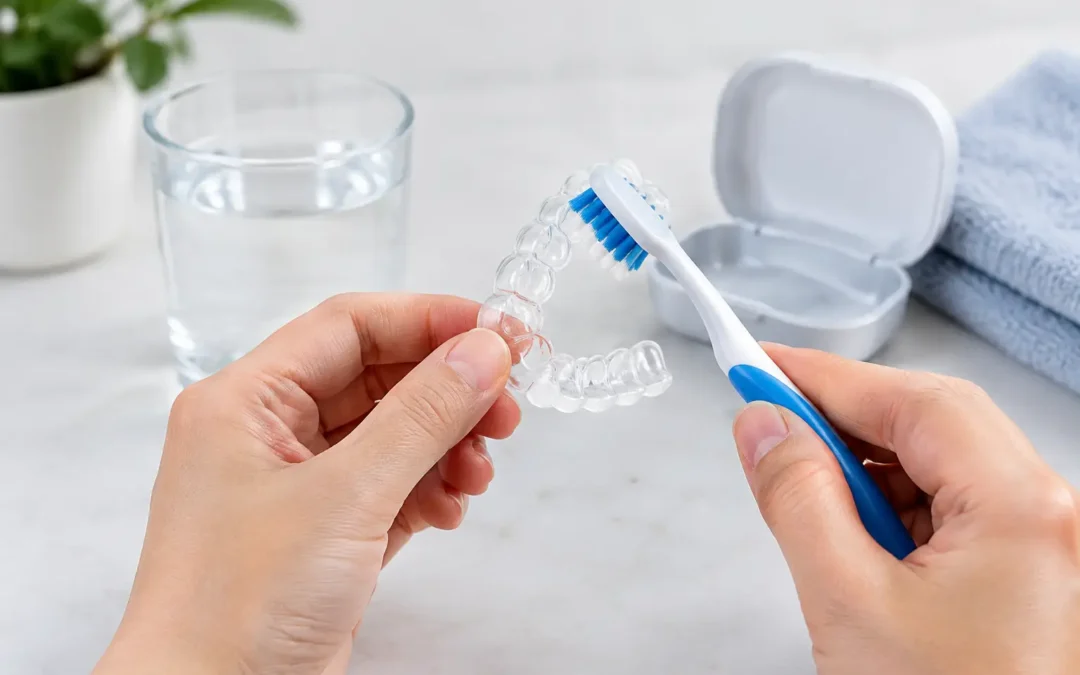
After rinsing, gently brush the retainer with a soft-bristled toothbrush that you use only for the appliance. A small amount of clear, mild liquid soap is usually enough. Brush the inside, outside, and edges carefully, paying extra attention to grooves and areas around wires where buildup can collect.
Rinse thoroughly before placing the retainer back in its case or wearing it again. Soap residue can leave an unpleasant taste, so take a moment to make sure it is completely rinsed.
Avoid using regular toothpaste on most clear retainers. Toothpaste can be abrasive, creating tiny scratches in the plastic. Those scratches can make a retainer look cloudy and give bacteria more places to cling to. If you have a traditional acrylic-and-wire retainer, your orthodontic team may give you more specific cleaning instructions based on its materials.
Give Your Retainer a Weekly Deep Clean
Daily brushing removes surface buildup, but a deeper clean once or twice a week helps keep your retainer fresh. Retainer cleaning tablets are a convenient option when used exactly as directed. These products are designed to loosen deposits without the harsh scrubbing that can damage plastic.
Soak the retainer for the recommended amount of time, then brush it gently and rinse it well. Do not leave it soaking all day or overnight unless your dental professional specifically tells you to. More time is not always better, and extended soaking may affect some materials.
A mild mixture of cool water and a small amount of clear liquid soap can also work for a simple soak. Follow it with gentle brushing and a thorough rinse. If you notice stubborn white or yellow deposits, do not scrape them off with a sharp object. That can damage the retainer or bend its wire. Bring it to your dentist or orthodontist so the appliance can be evaluated and professionally cleaned if needed.
Products and Methods to Avoid
Some popular home remedies can do more harm than good. Skip bleach, alcohol-based mouthwash, harsh household cleaners, and boiling water. These products can discolor, weaken, dry out, or warp a retainer.
Be cautious with denture cleaners as well. Some can be too strong for clear retainers or leave behind a taste. Baking soda may be gentle in some situations, but it should not replace your orthodontist’s recommended cleaning routine. When in doubt, choose a cleaner made for retainers and ask your dental team what is safest for your particular appliance.
Keep Your Mouth Clean, Too
A clean retainer cannot stay clean for long if it goes back onto unbrushed teeth. Brush and floss before reinserting it, especially at night. This reduces the amount of plaque and food particles that can transfer from your teeth to the appliance.
It is also smart to remove your retainer before eating. Chewing with a clear retainer in place can stain or crack it, while food can get trapped beneath the plastic. Water is generally fine to drink while wearing a retainer, but remove it before coffee, tea, soda, sports drinks, or juice. Dark or sugary drinks can stain the appliance and feed bacteria against your teeth.
If you are away from home, rinse the retainer and place it in its protective case. Wrapping it in a napkin is one of the most common ways retainers get accidentally thrown away at restaurants, school, or work.
Caring for Clear, Hawley, and Fixed Retainers
Not all retainers need the same approach. Clear retainers, including many Essix-style retainers, are thin and smooth. They are especially vulnerable to heat and scratches, so cool water, gentle brushing, and approved cleaning products are the safest choices.
A Hawley retainer has an acrylic base and visible wire. Clean the acrylic gently, then use the soft brush to reach around the wire. Do not twist or bend the wire while cleaning it. Even a small change in shape can affect how the retainer fits.
A fixed retainer is bonded behind the front teeth and cannot be removed for soaking. Instead, clean around it carefully every day with floss threaders, super floss, or an interdental brush. A water flosser can be a helpful addition, but it should not replace regular brushing and flossing. If floss repeatedly catches, the wire feels loose, or you notice tartar building behind your teeth, schedule an appointment promptly.
Signs Your Retainer Needs Professional Attention
A retainer does not need to be replaced at the first sign of a small stain, but certain changes should not be ignored. Contact your dental or orthodontic office if the appliance cracks, feels sharp, smells bad even after cleaning, becomes severely discolored, or no longer fits comfortably.
A retainer that feels tight after you have skipped wear time may mean your teeth have shifted. Do not force it into place. Forcing a retainer can crack it or put unhealthy pressure on your teeth. Your orthodontist can check the fit and explain whether an adjustment or replacement is needed.
Parents should also check younger children’s retainers regularly. A child may be wearing the appliance consistently while overlooking a crack, bent wire, or buildup that is easy for an adult to spot.
Make Retainer Care Easy to Remember
The most successful routine is the one you can repeat without much effort. Keep a soft retainer brush and approved cleaner near your toothbrush. Give the retainer a quick rinse every time it comes out, brush it daily, and choose a regular day each week for a deeper clean.
Always store it in its case when it is not in your mouth. Pets are surprisingly attracted to retainers, and a retainer left on a counter, bedside table, or car seat can be damaged quickly. A clean, labeled case is simple protection for an appliance that plays a major role in maintaining your smile.
At Smile Perfection Dental & Orthodontics, we encourage patients to bring their retainers to routine visits if they have questions about fit, cleaning, or wear. A few minutes of care each day can help your retainer do its job comfortably for years – keeping your smile where it belongs.