
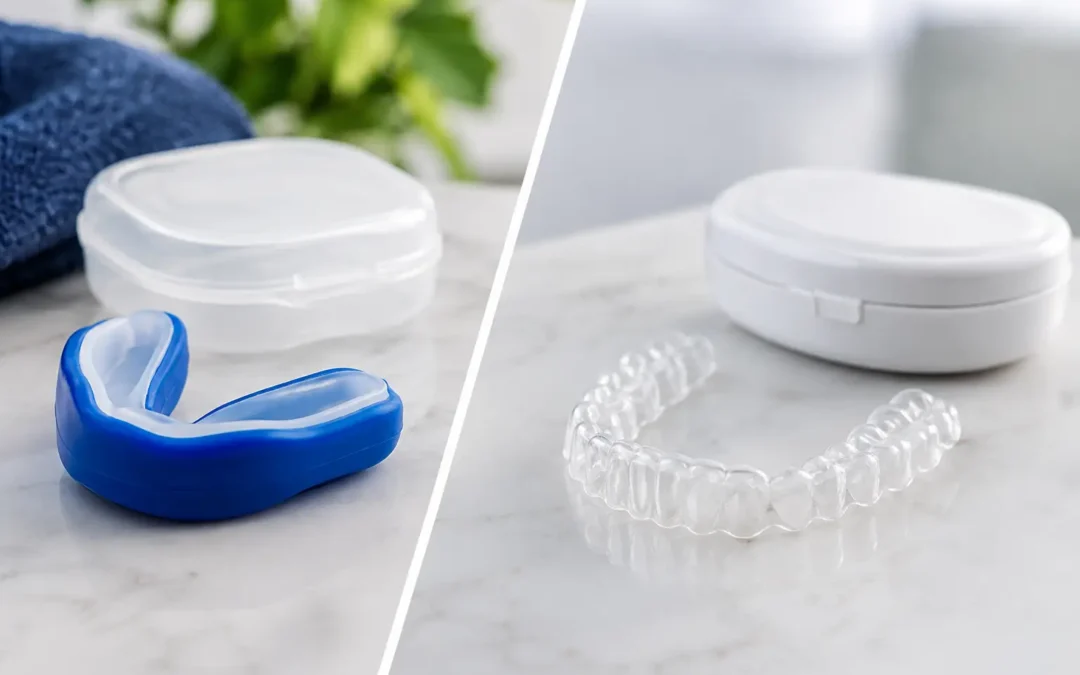
A cracked tooth after a hard hit on the field and a sore jaw after a restless night may both involve a dental appliance, but they call for very different protection. In the mouthguard vs night guard conversation, the key question is not which option is better overall. It is what your teeth, jaw, and daily routine need protection from.
A mouthguard is designed to cushion your teeth and mouth during sports or activities with a risk of impact. A night guard, also called an occlusal guard, is designed to create a protective barrier between your upper and lower teeth when you clench or grind during sleep. They may look similar at first glance, but using one in place of the other can leave you less protected or less comfortable.
Mouthguard vs Night Guard: The Core Difference
The simplest distinction is timing and purpose. You wear a sports mouthguard while you are active. It helps absorb and spread the force of a blow to the face, reducing the chance of broken teeth, lip and cheek injuries, and certain jaw injuries.
You wear a night guard while you sleep, usually because of bruxism, the habit of clenching or grinding your teeth. Grinding can slowly wear down enamel, chip restorations, strain the jaw muscles, and leave you with morning headaches or tooth sensitivity. A properly fitted night guard helps prevent your teeth from rubbing directly against each other.
Neither appliance treats every underlying issue on its own. A night guard can protect teeth from the effects of grinding, for example, but it may not eliminate the stress, bite imbalance, medication effect, or sleep concern contributing to the habit. That is why a dental evaluation is valuable when symptoms are frequent or getting worse.
What a Sports Mouthguard Is Made to Do
A mouthguard is generally thicker and more shock-absorbing than a night guard. Its job is to stay in place while allowing you to breathe and communicate as comfortably as possible during activity. It should cover the teeth securely without feeling bulky enough to distract from the game.
Sports mouthguards are a smart choice for contact sports such as football, hockey, basketball, lacrosse, martial arts, and boxing. They are also recommended for activities where falls, collisions, or fast-moving equipment are possible, including skateboarding, gymnastics, mountain biking, and baseball or softball.
For children and teens, a mouthguard matters even more when permanent teeth are still developing and orthodontic treatment is involved. A child wearing braces needs a mouthguard designed to fit over brackets and wires. It can help protect both the mouth and the orthodontic appliance from an unexpected impact.
Store-bought boil-and-bite guards can provide some protection, especially when a custom option is not immediately available. However, they often feel loose, bulky, or uneven after molding. A custom sports mouthguard made from a dental impression or digital scan typically offers a more secure fit and better comfort, which makes it more likely to be worn consistently.
What a Night Guard Is Made to Do
A night guard is made for the very different pressure created by clenching and grinding. These forces can be surprisingly strong, and they often happen without you realizing it. Some people wake with jaw fatigue. Others notice flattened teeth, small chips at the edges, tenderness when chewing, or a partner who hears grinding at night.
Custom night guards are made to fit your bite and can be designed with the right thickness and material for your needs. A person who lightly clenches may need a different appliance than someone who has heavily worn teeth or frequently breaks fillings and crowns. Your dentist may recommend a softer material, a firmer material, or a layered design based on your teeth, jaw joint, and bite.
Over-the-counter night guards can be useful as a short-term option for mild symptoms, but they are not one-size-fits-all. A poorly fitting guard can feel uncomfortable, fall out during sleep, or put uneven pressure on teeth. In some cases, it can make jaw discomfort worse. If you are waking with pain, headaches, or a guard that no longer fits, it is time for a professional assessment.
Can You Use a Mouthguard as a Night Guard?
It is generally not a good idea. A sports mouthguard is built to absorb impact, not to manage the repeated, concentrated pressure of nighttime grinding. It may be too thick for sleeping comfortably, may interfere with your bite, and may not provide the even contact needed for a clenching habit.
The reverse is also true. A night guard is not a substitute for a sports mouthguard. Even a durable custom night guard is not designed to cushion the force of a ball, elbow, fall, or other sports impact. It may crack, shift, or fail to protect the lips and cheeks as well as a sports-specific guard.
If you both play sports and grind your teeth, you may need two separate appliances. That may sound inconvenient, but each is designed around a different risk. Keeping each guard in its own labeled case makes the routine simple.
How to Tell Which One You Need
Think about when the problem happens. If your concern is injury during practice, games, or recreational activity, choose a mouthguard. If your concern is tooth wear, jaw soreness, headaches, or grinding sounds during sleep, ask about a night guard.
A few signs deserve a dental visit rather than guesswork. These include a cracked or loose tooth, persistent jaw clicking or locking, pain that affects eating, frequent headaches, worn or chipped teeth, or a change in how your teeth come together. Grinding symptoms can overlap with temporomandibular joint disorders, tooth decay, sinus issues, and other concerns, so an accurate diagnosis matters.
Parents should also keep an eye on children who grind their teeth. Occasional grinding can occur in childhood, but regular symptoms, tooth wear, pain, or disrupted sleep should be discussed with a dentist. The best approach depends on the child’s age, teeth, growth stage, and overall oral health.
Getting the Best Fit for Comfort and Protection
Whether you need a mouthguard or a night guard, fit is what turns an appliance from something you own into something that genuinely helps. A well-fitting guard should feel secure without pinching, making you gag, or requiring you to bite down constantly to keep it in place.
At Smile Perfection Dental & Orthodontics, a dentist can evaluate your teeth, gums, bite, and jaw symptoms before recommending the right appliance. Digital imaging and custom treatment planning can be especially helpful if you have crowns, veneers, implants, braces, or other dental work that needs added protection.
Caring for either type of guard is straightforward. Rinse it with cool water after use, clean it gently with a soft toothbrush and mild soap or a cleaner made for dental appliances, and let it air-dry fully before putting it in its case. Avoid hot water, which can warp many materials. Bring it to regular dental visits so your dentist can check for wear, cracks, or changes in fit.
A guard that is chewed through, cracked, loose, or noticeably worn has done its job and may need replacement. Children and teens may also outgrow a mouthguard as their teeth and jaws change, particularly during orthodontic treatment.
Your smile should not have to absorb the impact of an active lifestyle or the strain of nighttime grinding. The right appliance can make a meaningful difference, and a quick conversation with your dental team can help you choose protection that fits your life as well as your teeth.