
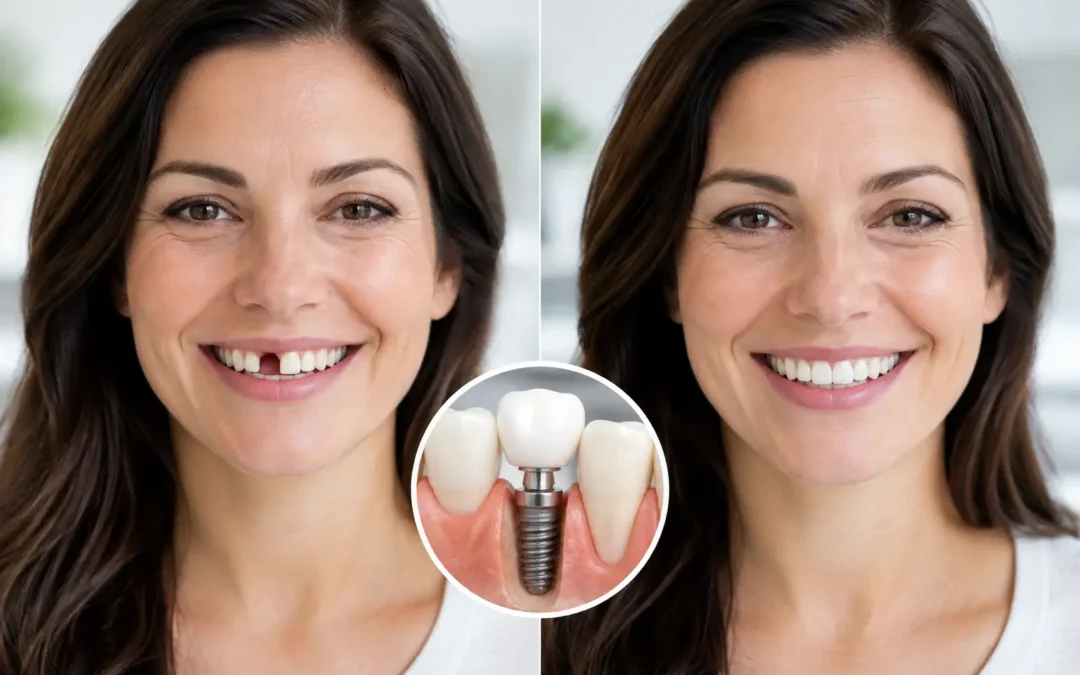
A missing tooth can change more than a photo. It can make chewing feel uneven, affect the way you speak, and cause you to hide a smile that once came naturally. A before after dental implant example helps show what treatment may improve, but the most useful examples reveal more than a dramatic cosmetic change. They show how a carefully planned replacement tooth can restore comfort, support surrounding teeth, and bring balance back to a patient’s smile.
What a Before and After Dental Implant Example Can Show
A dental implant replaces the root of a missing tooth with a small titanium post placed in the jawbone. After the area heals and the implant integrates with the bone, a custom crown is attached to create the visible tooth. The result should look, feel, and function like a natural part of the smile.
In a meaningful before-and-after example, the before image may show a gap, a broken tooth that cannot be restored, or a tooth that has been removed because of infection, decay, or injury. The after image may show a complete smile, but it should also reflect careful work around the gumline, bite, tooth color, and shape.
The goal is not simply to fill an empty space. A well-designed implant crown should complement the teeth beside it rather than look brighter, wider, or flatter than the rest of the smile. That attention to detail matters whether the implant replaces a front tooth that is visible when you laugh or a back tooth that does most of the chewing.
Looking Beyond the Finished Crown
The final crown often receives the most attention in implant photos, understandably. Yet the strongest results begin long before the crown is placed. Your dentist evaluates the health of the gums, the amount and quality of available jawbone, the condition of nearby teeth, and the way your upper and lower teeth meet.
A healthy foundation changes the result
If gum disease is present, it may need treatment before implant placement. If bone has shrunk after a tooth has been missing for a long time, bone grafting may be recommended to provide a stable foundation. These extra steps can extend the treatment timeline, but they can also help protect the long-term result.
That is why two patients with a similar-looking gap may have different treatment plans. Someone replacing a recently lost tooth may be ready for an implant sooner than someone who has worn a partial denture for years. Digital imaging and a detailed exam allow the dental team to plan around your individual anatomy instead of relying on a one-size-fits-all approach.
The gumline should look natural
For a front-tooth implant, the gum tissue is especially important. A beautiful crown can still look unnatural if the gums are uneven, inflamed, or have receded. In many before-and-after cases, the improvement comes from a combination of implant placement, healthy gum contours, and a crown created to match the neighboring teeth.
This is also why the shade of the final crown deserves a thoughtful conversation. Implant crowns do not respond to whitening treatments the way natural enamel does. If you are considering whitening, veneers, or other cosmetic treatment, it may make sense to coordinate those decisions before selecting the final crown color.
What the Treatment Process Usually Looks Like
Dental implant treatment is a process, not a same-day cosmetic cover-up. After an examination and imaging, your dentist determines whether the damaged tooth needs to be removed and whether the site needs time to heal. In some situations, an implant may be placed at the time of extraction. In others, healing or grafting first is the safer choice.
Once the implant post is placed, the jawbone needs time to bond with it. This healing period often takes several months, though the exact timing depends on the location of the implant, bone health, and the type of restoration planned. A temporary tooth may be an option for some patients, particularly when a front tooth is involved.
After healing, the dentist takes precise records to create the abutment and custom crown. At the final placement visit, the crown is checked for comfort, appearance, and bite. Small adjustments may be made so the tooth feels natural when you chew and speak.
The after photo is only the last chapter. The careful planning, healing, and fitting that happen before it are what help make the result dependable.
Realistic Results Depend on Your Starting Point
A before after dental implant example can be encouraging, but it should not be treated as a promise that every case will look exactly the same. Natural tooth color, gum shape, facial features, bite forces, and the number of teeth being replaced all affect the final result.
A single implant in the smile zone may require additional cosmetic planning because the crown needs to blend with highly visible teeth. Replacing several teeth may involve individual implants, an implant-supported bridge, or a full-arch solution. Each option has trade-offs involving treatment time, maintenance, cost, and how much support is needed from the jawbone.
For example, an implant-supported bridge can replace multiple missing teeth without placing one implant for every tooth. A full-arch restoration can provide stability for someone who has lost most or all of their teeth. The right approach depends on your health, goals, and the condition of your remaining teeth, not just on what appears in a photo.
It is also reasonable to ask what is not visible in an example. Was bone grafting needed? How long did healing take? Is the photo showing a temporary or final crown? How will the patient maintain the implant? Clear answers help you understand the full treatment experience rather than focusing only on the cosmetic finish.
How to Protect an Implant Result
Dental implants cannot get cavities, but the gums and bone around them still need consistent care. Plaque and inflammation around an implant can lead to peri-implant disease, which can threaten the support holding the implant in place. Brushing twice a day, cleaning between teeth, and keeping regular dental visits are essential.
If you clench or grind your teeth, a nightguard may be recommended to reduce stress on the crown and implant. Tobacco use can also affect healing and gum health, so your dental team may discuss steps that support a stronger outcome before and after treatment.
With good home care and professional monitoring, implants can be a lasting tooth-replacement option. The crown may eventually need repair or replacement from normal wear, but the implant itself is designed to provide long-term support.
Questions Worth Asking at Your Consultation
A consultation should leave you feeling informed, not pressured. Ask whether an implant is the best option for your specific tooth loss, whether grafting or periodontal treatment is needed, and what the anticipated timeline will be. You can also ask how the final crown will be matched to your smile and what follow-up care is recommended.
At Smile Perfection Dental & Orthodontics, patients can receive an implant consultation with a team that considers both the health and appearance of the entire smile. The best result is not a copy of someone else’s before-and-after photo. It is a comfortable, healthy restoration planned around you – so you can eat, speak, and smile with confidence again.