
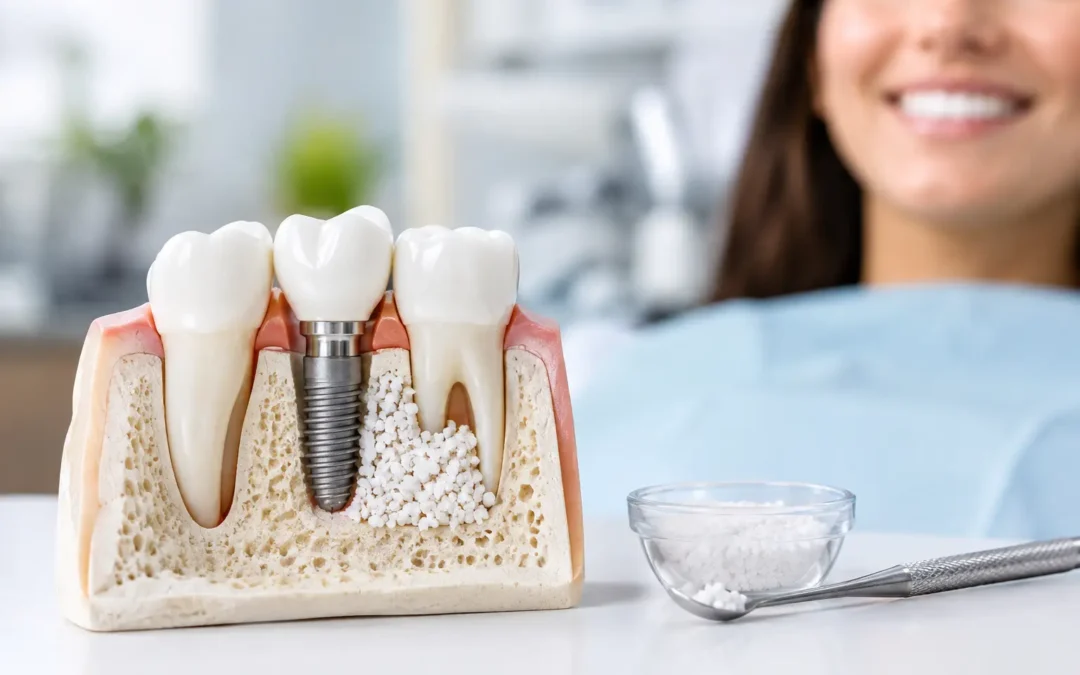
A missing tooth can change more than the appearance of a smile. Over time, the jawbone in that area can lose volume because it no longer receives the stimulation of a tooth root. This implant bone graft example shows how a carefully planned graft can rebuild support for a dental implant and help create a stable, natural-looking result.
For many patients, hearing the words bone graft can feel intimidating. In reality, grafting is a common part of implant planning when there is not enough healthy bone to hold an implant securely. The purpose is not to add an extra step without reason. It is to give your new tooth the foundation it needs for long-term function.
A Realistic Implant Bone Graft Example
Imagine a patient who lost a lower back tooth several years ago. At first, the space did not cause much trouble. They could still chew on the other side, and the missing tooth was not very visible when smiling. Eventually, food began collecting in the area, nearby teeth started shifting slightly, and the patient decided to ask about a dental implant.
Digital imaging showed that the jawbone beneath the missing tooth had become narrower than ideal. An implant might still fit in the space, but placing it without rebuilding the area could compromise its stability or affect the final shape of the gumline. Rather than rushing to place an implant, the dentist or implant specialist recommends a ridge graft.
What Happens During the Graft
After numbing the area, the specialist gently opens the gum tissue to access the bone. Bone graft material is placed where additional volume is needed. The material may come from a natural mineral source, a processed donor source, or a synthetic material designed to support new bone growth. In many cases, a protective membrane is placed over the graft to help keep the material in position while the body heals.
The gum tissue is then closed with sutures. The appointment is usually much more comfortable than patients expect, especially when they understand the process ahead of time and follow post-treatment instructions carefully. Sedation options may also be available for patients who feel nervous about dental procedures.
Over the next several months, the body gradually builds new bone around and within the grafted area. The graft acts as a framework, while the patient’s own healing process creates the stronger foundation needed for implant placement.
When the Implant Is Placed
Once imaging confirms that the area has healed well, the implant can be placed in the rebuilt bone. The implant is a small titanium post that replaces the root of the missing tooth. It needs time to bond with the jawbone, a process called osseointegration.
After the implant is stable, the final crown is designed to match the surrounding teeth in color, shape, and bite. The goal is a tooth that looks natural and allows the patient to eat, speak, and smile with confidence again.
Why Bone Loss Happens After Tooth Loss
Bone loss after an extraction is a normal biological response. The roots of natural teeth stimulate the jawbone every time you bite and chew. When a tooth is gone, that stimulation stops, and the body may gradually resorb bone in the empty area.
The amount of bone loss varies. A recent extraction may leave enough bone for an implant, while a tooth that has been missing for years may require additional support. Gum disease, infection, facial trauma, ill-fitting dentures, and certain health conditions can also affect bone volume and quality.
This is why an implant consultation includes more than looking at the empty space. Your provider evaluates the gums, bite, neighboring teeth, medical history, and detailed images of the jaw. A personalized plan protects both the health of the area and the appearance of your final smile.
Not Every Implant Patient Needs a Graft
An implant bone graft is not automatically required. Some patients have enough healthy jawbone to receive an implant without grafting, particularly if the tooth was removed recently and there was no significant infection or bone damage.
In other situations, a small graft can be placed at the time of extraction. This is often called socket preservation. Its purpose is to reduce bone shrinkage as the extraction site heals, which may make a future implant easier to place.
Patients with more advanced bone loss may need a larger ridge graft before implant surgery. For missing upper back teeth, the sinus may have expanded downward into the space where bone is needed. A sinus lift can create room for graft material and future implant support. The right approach depends on the location of the missing tooth, the amount of available bone, and the overall treatment goal.
What Healing Usually Feels Like
Most patients experience mild to moderate soreness, swelling, or tenderness for a few days after a graft. Some bruising can occur, especially with a more extensive procedure. Your dental team may recommend prescription or over-the-counter medication, depending on your needs and medical history.
Soft foods are typically best at first. Avoid chewing directly on the grafted area, smoking or vaping, and forceful rinsing during the initial healing period. These habits can interfere with healing or disturb the surgical site. If a membrane or sutures are used, your provider will explain when they should be checked or removed.
Healing time is not identical for every patient. A small socket graft may heal in a few months, while a larger graft can require more time before the implant is placed. Although the waiting period may feel frustrating, it is part of building a dependable result rather than taking a shortcut.
Questions to Ask at Your Consultation
A clear conversation can make implant treatment feel far more manageable. Ask whether a graft is necessary in your case, what type of graft is recommended, and whether it can be completed at the same time as an extraction or implant placement. You can also ask how long healing is expected to take and what the final treatment timeline may look like.
It is also helpful to discuss habits and health factors that can affect healing. Smoking, uncontrolled diabetes, active gum disease, and poor oral hygiene can raise the risk of complications. These concerns do not always rule out implants, but they may need to be addressed before or during treatment.
At Smile Perfection Dental & Orthodontics, implant planning is approached with the full picture in mind. That includes your comfort, the condition of your gums and bone, your bite, and the look you want from your completed smile. Digital imaging and specialist care help make recommendations based on what your mouth truly needs.
A Graft Is an Investment in the Foundation
It can be tempting to focus only on the final crown because it is the visible part of a dental implant. Yet the bone beneath it is what helps the implant stay secure when you chew and speak. When grafting is recommended, it is generally because the foundation needs reinforcement before the visible restoration can succeed.
If you have been living with a missing tooth, a consultation can replace uncertainty with a clear plan. Whether you need a graft, can receive an implant right away, or would benefit from another restorative option, understanding your choices is a positive first step toward a healthier, more comfortable smile.