
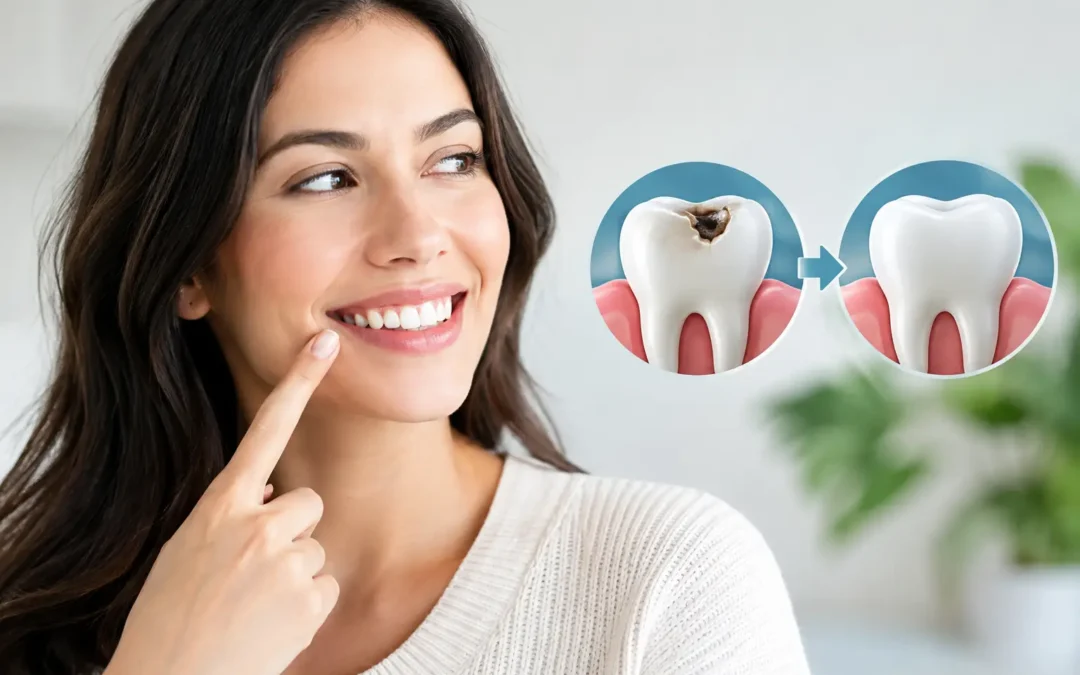
A tiny white or brown spot on a tooth can raise a big question: can cavities heal on their own? The honest answer is encouraging, but it has limits. Very early tooth decay can sometimes be stopped and even reversed before a true hole forms. Once decay has created a cavity in the tooth, however, the lost tooth structure cannot grow back. It needs professional treatment to prevent a bigger problem.
Knowing the difference can help you act early, avoid unnecessary worry, and protect your family’s smiles with the right care at the right time.
Can Cavities Heal Before a Hole Forms?
Tooth decay begins when bacteria in dental plaque use sugars and starches from food and drinks to produce acids. Those acids pull minerals out of the enamel, the hard outer layer of the tooth. In its earliest stage, this mineral loss may show up as a chalky white spot, a faint brown area, or a change your dentist can see on an X-ray before you notice anything at home.
At this point, the enamel surface may still be intact. Saliva, fluoride, and minerals such as calcium and phosphate can help restore some of what the enamel has lost. This process is called remineralization. It does not mean a tooth regenerates like skin after a scrape. It means early damage can be strengthened before it turns into a physical opening in the tooth.
That is why routine checkups matter so much. Early decay often does not hurt. By the time a toothache starts, the decay may have already moved beyond the stage where prevention alone is enough.
When a Cavity Cannot Heal on Its Own
When enamel breaks down enough to form a hole, brushing well and using fluoride toothpaste cannot close that hole. The cavity can continue collecting plaque and bacteria, allowing decay to move deeper into the dentin, the softer layer beneath enamel.
A dentist may recommend a filling to remove the decayed material and restore the tooth. If decay is larger, a crown may offer better protection. When bacteria reach the inner pulp of the tooth, where nerves and blood vessels are located, root canal treatment may be needed to save the tooth and relieve infection.
Waiting is rarely the gentler option. A small filling is generally simpler, more comfortable, and less costly than treating advanced decay. The goal is always to preserve as much healthy tooth structure as possible.
What Helps Reverse Early Tooth Decay?
If your dentist identifies an early, non-cavitated area of decay, they may recommend a prevention-focused plan rather than a filling right away. The right approach depends on the tooth, the location of the weak area, your cavity history, diet, dry mouth risk, and ability to keep the area clean.
Fluoride is often a central part of that plan. Fluoride toothpaste helps strengthen enamel during daily brushing, while professional fluoride treatments can deliver a stronger application when a patient has a higher risk of decay. Your dentist may also recommend a prescription-strength fluoride product in certain situations.
Daily habits matter just as much. Brushing twice a day with fluoride toothpaste and cleaning between teeth once a day remove the plaque that fuels decay. Limiting frequent sipping or snacking on sugary drinks, sports drinks, candy, crackers, and other carbohydrate-rich foods gives saliva more time to neutralize acids between meals.
Chewing sugar-free gum after a meal can help stimulate saliva for some people, especially when brushing is not possible right away. Drinking water, particularly after snacks or sweet drinks, can also help rinse the mouth. These habits support enamel, but they are not substitutes for an exam when you suspect a cavity.
Why Cavities Can Be Hard to Spot at Home
Not every cavity looks like a dark hole. Decay can develop between teeth, beneath old fillings, along the gumline, or in the grooves on the chewing surfaces of molars. Some areas are visible only on dental X-rays or with a close clinical exam.
Sensitivity to cold, sweets, or biting pressure may be a clue, but it is not a reliable measure of how serious decay is. Some deep cavities cause little discomfort, while a small area of exposed dentin can feel quite sensitive. Pain that lingers after hot or cold foods, swelling, a bad taste, or facial tenderness deserves prompt dental attention.
For children, parents should watch for complaints about chewing, changes in eating habits, tooth sensitivity, or visible spots on teeth. Baby teeth need care, too. They help children chew, speak clearly, and hold space for permanent teeth. Treating decay in baby teeth can protect both comfort and long-term oral development.
A Dentist’s Approach: Watch, Prevent, or Restore
There is no one-size-fits-all answer to early decay. A dentist considers whether the enamel is still intact, whether the area is changing over time, and whether it can be kept clean. An early spot in a low-risk area may be monitored with fluoride and follow-up exams. A weak area in a deep groove or between teeth may call for a sealant, resin treatment, or filling depending on its condition.
Dental sealants are thin protective coatings placed on the chewing surfaces of back teeth. They are especially helpful for children and teens, but adults with deep, cavity-prone grooves may benefit as well. Sealants do not repair a cavity that has already advanced, but they can block food and bacteria from settling into vulnerable grooves.
Digital imaging helps dentists detect changes that cannot be seen from the outside. It also allows your care team to track an early area over time and recommend treatment when it is truly needed. This careful approach avoids both undertreating active decay and placing restorations before they are necessary.
How to Lower Your Family’s Cavity Risk
A few consistent habits make a meaningful difference over time:
- Brush for two minutes twice daily with fluoride toothpaste. Young children should use an age-appropriate amount and be supervised until they can brush effectively.
- Clean between teeth every day with floss, floss picks, or another dentist-recommended tool. Toothbrush bristles cannot reach the tight spaces where many cavities begin.
- Choose water more often than sweetened drinks, and keep sugary treats and acidic beverages to mealtimes when possible.
- Schedule regular checkups and cleanings, even when teeth feel fine. Preventive visits are where early decay is most often found.
People with dry mouth, frequent snacking, braces, gum recession, certain medications, or a history of repeated cavities may need more frequent preventive care. Orthodontic treatment can create extra places for plaque to collect, but a personalized brushing plan and regular visits can keep teeth healthy throughout treatment.
Do Natural Remedies Heal Cavities?
Online claims about reversing cavities with oils, supplements, or home remedies can be appealing, particularly if you are anxious about dental treatment. Some healthy habits may support saliva flow or improve your diet, but no home remedy can rebuild a hole in a tooth or remove bacteria from deep decay.
Avoid placing aspirin directly on a painful tooth or gum tissue. It can burn the soft tissues and does not treat the source of pain. Temporary sensitivity products may provide some relief, but they should not delay an appointment if discomfort persists.
The safest path is a professional evaluation. Your dentist can tell you whether an area is early enough for remineralization support, whether it needs monitoring, or whether a small restoration is the best way to protect the tooth.
A Small Spot Deserves a Timely Look
Hearing that you may have a cavity does not automatically mean extensive dental work. Often, finding decay early gives you the most conservative options. At Smile Perfection Dental & Orthodontics, families can receive clear explanations, digital evaluation, and care designed around their individual needs and comfort.
If you notice sensitivity, see a change in a tooth, or have gone longer than usual between checkups, scheduling a visit is a practical next step. The sooner a developing cavity is assessed, the better the chance of keeping treatment simple and your smile comfortable.