
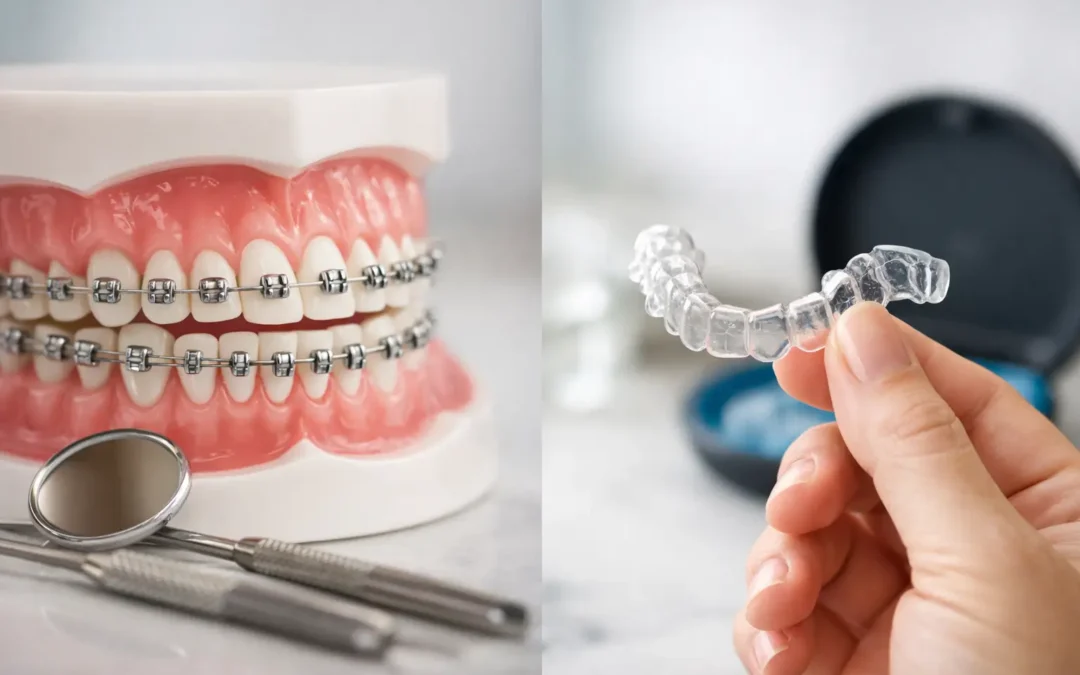
Choosing between braces vs Invisalign treatment usually comes down to real life, not just straight teeth. A middle school student who plays sports, a busy adult with client meetings, and a parent comparing options for two children may all need something different. Both treatments can create a healthier, more confident smile, but they work in different ways and ask different things from the patient.
The good news is that this is not a choice between a good option and a bad one. Traditional braces and Invisalign are both proven orthodontic treatments. The better question is which one fits your smile goals, your schedule, and your day-to-day habits.
Braces vs Invisalign treatment: what is the difference?
Traditional braces use brackets attached to the teeth and connected by wires. Over time, those wires are adjusted to move teeth into better alignment. Because braces stay in place around the clock, they work continuously without relying on the patient to remember anything beyond routine care and appointments.
Invisalign uses a series of clear, custom-made aligners that fit over the teeth. Each set is worn for a prescribed period before moving to the next one. The aligners are removable, which gives patients more flexibility with meals and brushing, but also means the treatment works best when they are worn as directed for most of the day.
At a glance, the biggest difference is simple. Braces are fixed. Invisalign is removable. That one difference affects appearance, comfort, hygiene, convenience, and sometimes treatment speed.
Appearance and confidence in daily life
For many teens and adults, appearance is the first concern. Braces are more noticeable, even with smaller or more modern bracket designs. Some patients do not mind that at all. In fact, many kids and teens see braces as a normal part of growing up.
Invisalign is popular because the aligners are clear and much less visible in everyday conversation, photos, and work settings. Adults often prefer this option if they want a more discreet treatment. Teens may also like the confidence that comes with a less noticeable orthodontic solution.
That said, clear does not mean invisible in every situation. Aligners can still be seen up close, and some patients notice a slight change in speech during the adjustment period. Most people adapt quickly, but it is worth knowing that every option has a learning curve.
Comfort and adjustment
Neither braces nor Invisalign is completely pain-free. Any time teeth are being moved, some pressure and soreness are normal, especially after adjustments or when switching to a new set of aligners.
Braces can cause irritation on the lips and cheeks, particularly in the beginning. Broken wires or loose brackets can also create uncomfortable spots that need attention. Orthodontic wax often helps, but fixed appliances do require some patience.
Invisalign aligners have smooth edges, so many patients find them more comfortable overall. There is still pressure when a new tray begins moving the teeth, but there are no brackets or wires rubbing against the inside of the mouth. For patients who are sensitive to that kind of irritation, Invisalign can feel easier.
Comfort also depends on personality. Some people would rather deal with a fixed appliance and not think about it. Others strongly prefer the smoother feel of removable aligners. It really can go either way.
Which treatment works better for complex cases?
This is where the answer becomes more individualized. Braces have been used for decades to treat mild, moderate, and complex orthodontic issues. They are often very effective for significant crowding, larger bite problems, rotated teeth, and cases that need precise control over movement.
Invisalign can treat a wide range of cases too, including many mild to moderate alignment concerns and some more advanced issues. Clear aligner technology has come a long way. Still, there are situations where braces may offer better control or a more predictable path, especially when tooth movement is more complicated.
That is why a proper orthodontic evaluation matters. Digital imaging, bite analysis, and an in-person exam can show whether both treatments are good options or whether one is clearly the stronger choice. The most appealing treatment is not always the most appropriate one.
Braces vs Invisalign treatment for teens
Teens are often good candidates for either option, but lifestyle matters a lot. Braces can be a strong fit for younger patients who may not reliably wear removable aligners for the required number of hours each day. Since braces stay on, treatment keeps moving whether the patient is focused on it or not.
Invisalign can be a great choice for responsible teens who want a less noticeable treatment and are willing to follow instructions carefully. It may also appeal to teens who play instruments or sports and prefer not to have brackets in the mouth. However, forgotten trays, lost aligners, or inconsistent wear can delay progress.
Parents are often balancing more than appearance. They are also thinking about compliance, school routines, after-school activities, and overall value. In many cases, the best option is the one the teen is most likely to follow correctly.
Braces vs Invisalign treatment for adults
Adults often choose Invisalign because it fits better with professional and social life. The ability to remove aligners for meals, photos, or important events can feel like a major advantage. Adults also tend to be more consistent with wear time, which can make them excellent candidates.
Braces are still a very strong option for adults, especially when the case is more complex or when the patient would rather not keep track of aligners throughout the day. Some adults actually prefer braces because they do not want the responsibility of removing, cleaning, and reinserting trays after every meal.
There is no age limit on wanting a healthier smile. Whether the goal is correcting crowding, improving bite function, or feeling more confident at work and in photos, both treatments can be highly effective when planned well.
Eating, brushing, and everyday convenience
Braces require a few more food restrictions. Sticky candy, hard foods, popcorn, and anything that can damage brackets or wires usually need to be avoided. Cleaning also takes more effort because food can get trapped around the appliance. Brushing and flossing are absolutely manageable, but they take more time and attention.
Invisalign allows patients to remove aligners before eating, so there are no food restrictions in the same way. That flexibility is a real benefit for many families and working adults. Oral hygiene is usually easier too, since brushing and flossing happen without brackets in the way.
The trade-off is discipline. Aligners must be removed before meals and drinks other than water, then cleaned and put back in afterward. For some patients, that routine feels simple. For others, it becomes inconvenient over time.
Cost and value
Cost is one of the most common questions, and the answer depends on case complexity, treatment length, and the details of the plan. In some situations, braces and Invisalign are priced similarly. In others, Invisalign may cost more.
What matters most is value, not just the sticker price. A treatment that fits the patient well is more likely to stay on track and lead to a strong result. Insurance benefits may also help with orthodontic care, and many families appreciate practices that explain fees clearly and offer flexible payment options.
A free consultation can be especially helpful here because it turns a general online comparison into a real treatment recommendation with actual numbers.
How to decide with confidence
If you are comparing braces vs Invisalign treatment, start with three practical questions. First, how complex is the orthodontic issue? Second, how important is a low-visibility option? Third, how confident are you or your child about wearing aligners exactly as instructed?
From there, the decision usually becomes clearer. If the case is more involved or compliance may be an issue, braces may be the better path. If appearance, flexibility, and easy brushing matter most and the patient is reliable, Invisalign may be the better fit.
At Smile Perfection Dental & Orthodontics, patients and families often feel relieved once they learn they do not have to figure this out alone. A personalized exam can show what is happening below the surface, what each option can realistically achieve, and which treatment makes the most sense for your goals.
A straighter smile should fit your life, not complicate it. The right orthodontic treatment is the one that supports your health, feels manageable day to day, and helps you move forward with confidence.