
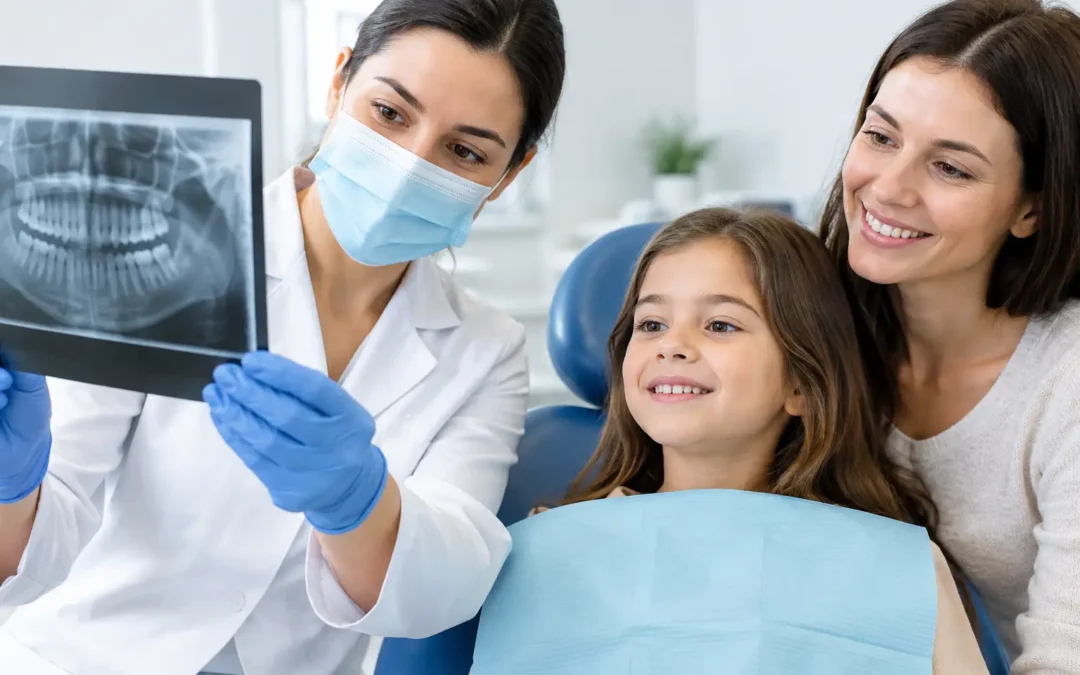
A cavity can form quietly between two teeth, beneath an older filling, or below the gumline where even the most careful brushing cannot reveal it. That is why patients often ask, are dental x-rays safe when they are recommended during a checkup? For most patients, the answer is yes. Modern dental X-rays use very low levels of radiation, and they give your dentist information that a visual exam alone cannot provide.
At Smile Perfection Dental & Orthodontics, we understand that questions about radiation can feel especially personal when they involve your child, pregnancy, or ongoing dental treatment. You deserve a clear explanation of why an image is needed, how it will be taken, and what your care team is looking for.
Are Dental X-Rays Safe With Modern Technology?
Dental X-rays are considered safe when they are prescribed appropriately and taken with current safety practices. Digital imaging has significantly reduced the radiation needed to create clear diagnostic images compared with older film-based systems. The exposure from a dental X-ray is small, but it is never treated casually.
Dentists follow the principle of using the lowest amount of radiation needed to obtain useful diagnostic information. In practical terms, that means X-rays are recommended based on your individual oral health needs rather than automatically taking the same images at every visit.
The benefit is early detection. An X-ray can help your dentist find decay between teeth before it becomes painful, identify infection around a tooth root, evaluate bone levels affected by gum disease, check the development of permanent teeth, and plan procedures such as braces, implants, root canals, or extractions. Finding these concerns early often makes treatment simpler, more comfortable, and less costly.
Why a Dentist Cannot Always See Everything During an Exam
A thorough dental exam is essential, but the visible surfaces of your teeth tell only part of the story. Your dentist cannot directly see between back teeth, under restorations, inside the jawbone, or around tooth roots without imaging.
For example, a small cavity between molars may cause no discomfort at all. By the time it becomes sensitive to cold or begins to hurt, it may be much larger and closer to the nerve. An X-ray can reveal that hidden area while the problem may still be treatable with a smaller filling.
X-rays also help children and teens. They can show whether adult teeth are developing normally, whether there is enough room for teeth to erupt, and whether teeth are blocked beneath the gums. For orthodontic planning, these details help the dentist or orthodontist recommend treatment with greater confidence.
How Dental Teams Keep Radiation Exposure Low
Dental offices use several layers of protection to keep exposure as low as reasonably achievable. Digital sensors are highly sensitive and require less radiation than traditional film. Modern equipment is also designed to aim the beam precisely at the area being examined.
Your dental team will select the type and number of images based on your needs. Bitewing X-rays, for instance, are often used to check for cavities between teeth. A panoramic X-ray provides a broad view of the jaws and developing teeth. A three-dimensional CBCT scan may be helpful for certain implant, surgical, orthodontic, or complex root canal cases, but it is not necessary for every patient.
Protective measures, including thyroid collars and lead aprons when appropriate for the imaging system and clinical situation, may also be used. Just as meaningful is the decision-making that happens before an image is taken. Your dentist should review available recent X-rays and avoid repeating images that are still diagnostically useful.
How Often Should You Have Dental X-Rays?
There is no single schedule that fits every patient. The right frequency depends on your age, cavity risk, gum health, symptoms, dental history, and the type of treatment you may need.
Someone with a history of frequent cavities, dry mouth, extensive dental work, or active gum disease may need imaging more often than someone with excellent oral health and no symptoms. Children may need periodic X-rays to monitor tooth development, while an adult with stable teeth and gums may need them less frequently.
If you are a new patient, images may be recommended to establish a complete picture of your oral health. If you are having pain, swelling, a cracked tooth, or an emergency, targeted X-rays can help identify the cause quickly. The key is that the recommendation should have a reason. Feel comfortable asking what the X-ray will show and whether it is needed now.
Are Dental X-Rays Safe for Children?
Yes, dental X-rays are safe for children when they are clinically necessary and taken using appropriate modern techniques. Children are still growing, so dentists are particularly careful about limiting exposure and only taking images that will guide care.
At the same time, avoiding necessary X-rays can create its own problems. Tooth decay is one of the most common childhood health concerns, and it can progress faster in baby teeth than many parents expect. X-rays may identify hidden decay before a child develops pain, infection, trouble eating, or a need for more involved treatment.
Parents can help by sharing their child’s dental history and asking what type of image is recommended. A caring pediatric-focused dental team will explain the process in kid-friendly language and help your child feel relaxed throughout the visit.
What If You Are Pregnant or Think You May Be Pregnant?
Tell your dentist if you are pregnant, trying to become pregnant, or think there is a possibility you could be pregnant. This allows the team to consider the timing and urgency of any imaging.
Routine X-rays that can safely wait may be postponed. However, pregnancy does not mean urgent dental concerns should be ignored. Severe tooth pain, swelling, infection, trauma, or a suspected abscess may require diagnostic imaging so that appropriate treatment can be provided. Untreated infection can be harmful to your overall health, so your dentist and physician can help weigh the safest path forward.
With proper technique and modern dental imaging, needed dental X-rays can generally be performed during pregnancy. The decision should be based on your specific situation, not fear alone.
When a Dental X-Ray Is Especially Worthwhile
The value of an X-ray is highest when it answers a clinical question that cannot be answered another way. Your dentist may recommend one when you have new or unexplained pain, sensitivity that persists, swelling, a broken tooth, signs of gum disease, or a concern beneath an existing crown or filling.
Imaging is also a key part of planning more advanced care. Before placing a dental implant, for example, the care team needs to assess bone volume and identify important structures in the jaw. Before orthodontic treatment, images can help evaluate tooth position, root development, and jaw relationships. In these situations, a detailed image supports safer, more predictable treatment.
Questions You Can Ask Before an X-Ray
You never need to feel rushed into a procedure you do not understand. A quick conversation can provide reassurance and help you participate in your care. You might ask why the image is recommended, what your dentist is checking for, whether prior images can be used, and how the result could affect your treatment plan.
A trusted dental team will welcome those questions. The goal is not to take more X-rays than necessary. It is to gather the right information at the right time, so small concerns do not become painful emergencies.
If you have delayed a checkup because of uncertainty about X-rays, bring up your concerns at your next visit. A thoughtful conversation and individualized imaging plan can help you protect your smile with confidence.