
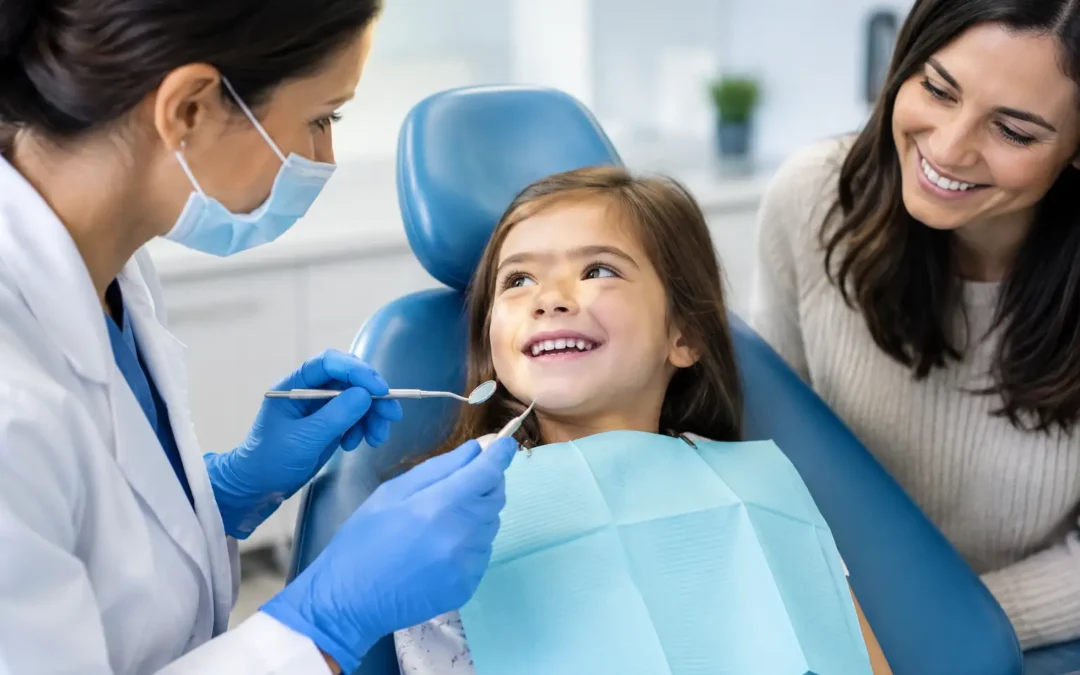
A child’s first dental appointment may involve a favorite stuffed animal, a few cautious questions, and sometimes a firm grip on a parent’s hand. That is completely normal. This guide to pediatric dental visits helps South Florida parents know what to expect, how to prepare, and how a positive early experience can shape a child’s comfort with dental care for years to come.
Why Early Dental Visits Matter
Baby teeth may be temporary, but they have a meaningful job. They help children chew, speak clearly, and hold space for permanent teeth to come in properly. Cavities, early tooth loss, or untreated discomfort can affect eating, sleep, school focus, and confidence.
Regular visits also give your child a chance to become familiar with the dental office before there is a problem. A child who has only seen a dentist during tooth pain may associate care with fear or discomfort. A child who visits for gentle checkups and encouragement learns that the dental team is there to help.
For many children, the first visit is less about extensive treatment and more about building trust. The dentist can assess oral development, explain age-appropriate hygiene, and identify concerns while they are smaller and often easier to address.
When Should Your Child See a Dentist?
A child should generally have a first dental visit by their first birthday or within six months of the first tooth appearing. That can feel early to parents, especially when only one or two tiny teeth are visible, but early guidance can prevent common issues such as baby bottle tooth decay and help families establish healthy routines from the beginning.
After that, most children benefit from checkups every six months. The ideal schedule can vary based on cavity risk, orthodontic development, medical history, diet, and home care habits. Your dental team may recommend more frequent visits if your child has active decay, weak enamel, or other concerns.
Do not wait for a routine appointment if your child has a toothache, facial swelling, a chipped or knocked-out tooth, bleeding that does not stop, or a bump or sore that does not improve. Children often cannot explain exactly what hurts, so changes in eating, sleep, mood, or willingness to brush deserve attention too.
How to Prepare for a Pediatric Dental Visit
Preparation does not need to be elaborate. In fact, keeping it calm and matter-of-fact usually works best. Tell your child they will meet a friendly dentist who will count their teeth, look at their smile, and help keep it strong.
Avoid promising that nothing will happen or that a visit will not hurt. Parents mean well when they say this, but those statements can make a child worry that there is something to fear. Instead, use reassuring, simple language: “The dentist will look at your teeth and show us how to take good care of them.”
Choose an appointment time that works with your child’s natural rhythm. A well-rested child who has had a light meal is typically more comfortable than one who arrives hungry, tired, or rushed. Bring their insurance information, a list of medications, and any relevant health history. For younger children, a comfort item such as a small toy or blanket can help.
Keep Dental Language Positive
Children take emotional cues from adults. Speak positively about dental care, even if you have had difficult experiences yourself. Reading a child-friendly book about a dental visit or playing “dentist” at home can make the setting feel more familiar.
It also helps to let the dental team lead the explanation once you arrive. Pediatric dental professionals use age-appropriate words and a gentle show-and-tell approach to help children understand each step without becoming overwhelmed.
What Happens During a Child’s Checkup?
The pace of a pediatric appointment depends on your child’s age, comfort level, and dental needs. For an infant or toddler, the visit may begin with your child sitting on your lap while the dentist checks the gums, erupted teeth, bite, and overall oral development.
For older children, a routine appointment often includes a gentle examination, cleaning, flossing where appropriate, and fluoride treatment when recommended. The dentist may evaluate how the teeth and jaws are developing, look for signs of cavities, and discuss brushing and eating habits. Digital X-rays may be recommended when they can provide useful information that cannot be seen during an exam, such as decay between teeth or the position of developing permanent teeth.
Parents should expect practical guidance, not judgment. Some children resist brushing, snack frequently, or struggle with flossing. These are common family challenges. A caring dental team can suggest realistic adjustments based on your child’s age, temperament, and risk factors.
Fluoride, Sealants, and X-Rays: Why Recommendations Differ
Not every child needs the same preventive care at the same time. Fluoride can strengthen enamel and lower the risk of tooth decay, particularly for children who are more cavity-prone. Dental sealants are thin protective coatings commonly placed on the chewing surfaces of permanent molars, where grooves can trap food and bacteria.
X-rays are used thoughtfully, not automatically. Their timing depends on your child’s age, spacing between teeth, cavity history, and what the dentist sees during the exam. If you have questions about any recommendation, ask. Understanding the reason behind a treatment helps you make informed decisions for your child.
Helping an Anxious Child Feel Comfortable
Some children walk into the office curious and chatty. Others need time to observe the room, stay close to a parent, or warm up gradually. Both responses are normal.
Try not to apologize for your child’s anxiety or label them as “difficult.” Instead, let the team know what tends to help. Maybe your child responds well to a favorite character, clear choices, praise, or a few quiet minutes before getting started. Small choices can give children a helpful sense of control: “Would you like to sit up first or lean back first?”
For children with significant anxiety, sensory sensitivities, or a history of challenging dental experiences, the approach may need to be slower. Depending on the treatment needed, options may include shorter visits, behavior guidance techniques, or sedation dentistry. The right choice depends on the child, the procedure, and their ability to receive care safely and comfortably.
At Smile Perfection Dental & Orthodontics, families can find comprehensive care in a familiar, community-focused setting, with providers who understand that a child’s comfort is part of quality care.
Build Healthy Habits Between Visits
The most effective dental routine is the one your family can repeat consistently. Brush your child’s teeth twice a day with a soft toothbrush and a fluoride toothpaste appropriate for their age. Young children need an adult to do the brushing or help closely, since they do not yet have the coordination to clean thoroughly on their own.
A rice-sized smear of fluoride toothpaste is generally used for children under age 3. Children ages 3 to 6 typically use a pea-sized amount and should be encouraged to spit it out rather than swallow it. Floss once teeth are touching, because a toothbrush cannot clean the spaces between them.
Food and drinks matter too. Frequent sipping on juice, sports drinks, soda, or sweetened beverages exposes teeth to sugar over and over throughout the day. Water is the best everyday choice, especially between meals. Treats can still fit into family life, but serving them with meals rather than offering repeated snacks can be kinder to teeth.
Watch for Orthodontic Development
Pediatric dental visits are also an opportunity to monitor the way your child’s teeth and jaws are growing. Crowding, crossbites, prolonged thumb-sucking, mouth breathing, and early loss of baby teeth can all influence future orthodontic needs.
That does not mean every child needs braces early. Often, the best recommendation is simply to watch growth and reassess over time. However, an orthodontic evaluation around age 7 can help identify concerns that may benefit from early attention. Early evaluation gives families information and options, even when treatment is not needed right away.
A Positive Visit Starts With Patience
Your child does not have to sit perfectly still, love every part of the appointment, or leave without a single question for the visit to be successful. Success can be as simple as walking through the door, opening wide for a few seconds, or learning that the dental chair is a safe place.
With regular care, supportive guidance, and a team that treats children with patience, each visit can make the next one easier. A healthy smile begins with small, steady steps – and your child’s next checkup is a good place to take one.