
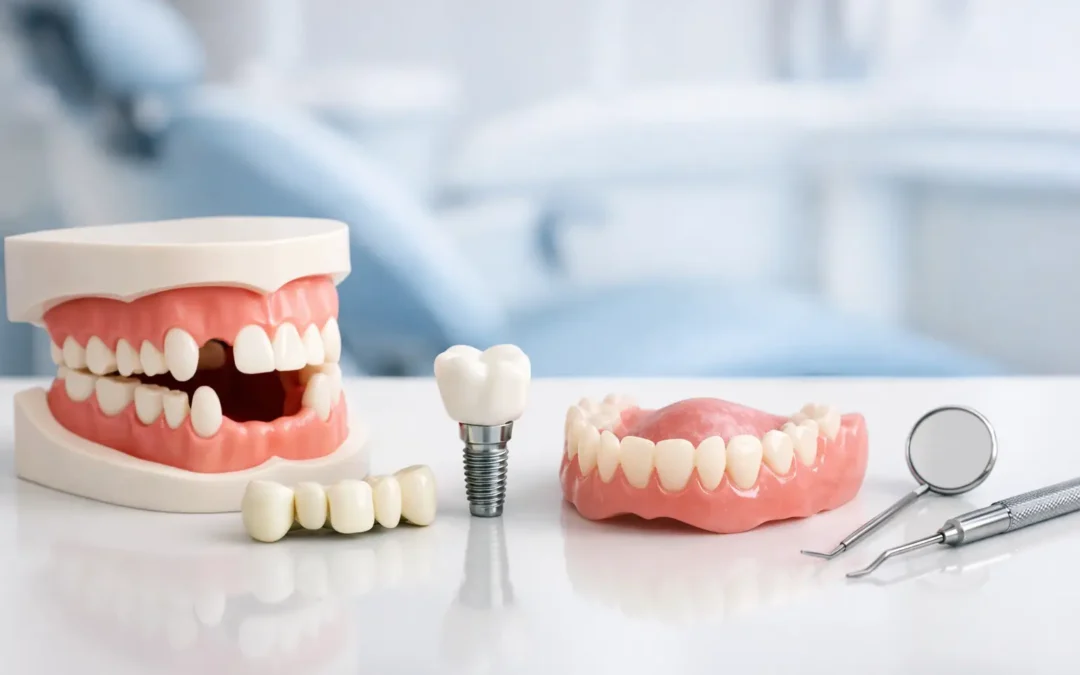
A missing tooth can change more than the way your smile looks in photos. It can make chewing uncomfortable, affect how clearly you speak, and leave nearby teeth without the support they need. The best treatments for missing teeth restore function and confidence while protecting your long-term oral health. The right choice depends on how many teeth are missing, where they are located, the health of your gums and jawbone, and what feels realistic for your lifestyle and budget.
For many patients, replacing a missing tooth is not something to put off. Teeth can shift toward an empty space over time, changing your bite and making daily cleaning harder. A personalized dental exam and digital imaging can show what is happening below the gumline and help identify the treatment that will serve your smile best.
Why Replacing Missing Teeth Matters
Every tooth has a role in keeping your bite balanced. When one is lost, the surrounding teeth may gradually tilt or drift into the gap. This can create areas that trap food and plaque, raising the risk of decay and gum disease. If several teeth are missing, chewing certain foods may become difficult, which can affect nutrition as well as comfort.
Tooth loss can also lead to bone loss in the jaw. The roots of natural teeth stimulate the bone when you chew. Without that stimulation, the jawbone in that area can slowly shrink. This is one reason early treatment often gives patients more options.
Of course, every situation is different. Some patients need a single front tooth replaced after an injury. Others have worn dentures for years and want a more secure fit. A thoughtful treatment plan should address the health of your mouth first, then balance appearance, durability, treatment time, and cost.
Best Treatments for Missing Teeth: Your Main Options
Dental implants
Dental implants are often considered the closest replacement for a natural tooth. An implant is a small titanium post placed in the jawbone to act like a tooth root. Once it has healed and integrated with the bone, a custom crown can be attached to create a natural-looking, functional tooth.
An implant can replace one tooth, support a bridge when several teeth are missing, or help secure a full arch of replacement teeth. Because it replaces the root as well as the visible portion of the tooth, an implant helps preserve jawbone and does not require reshaping the healthy teeth beside the gap.
Implants are a strong long-term solution, but they do require healthy gums and enough supporting bone. Some patients may need periodontal treatment or bone grafting before implant placement. The process also takes time, since healing is essential for a stable result. For patients who want a fixed restoration that looks and feels very natural, the investment can be well worth it.
Fixed dental bridges
A dental bridge replaces one or more missing teeth by anchoring a replacement tooth, called a pontic, to crowns placed on the teeth next to the space. In some cases, a bridge may be supported by implants instead of natural teeth.
A traditional bridge can be an excellent option when the neighboring teeth already need crowns because of large fillings, cracks, or wear. It is fixed in place, so there is no need to remove it for cleaning. Many patients also appreciate that treatment is usually completed faster than an implant procedure.
The trade-off is that a traditional bridge requires preparation of the adjacent teeth, even when they are otherwise healthy. It also does not stimulate the jawbone beneath the missing tooth in the same way an implant does. With consistent brushing, flossing under the bridge, and regular dental visits, a well-made bridge can provide years of comfortable service.
Partial dentures
A removable partial denture replaces several missing teeth while using your remaining natural teeth for support. It may be made with a lightweight metal framework, flexible material, or acrylic base, depending on your needs and treatment goals.
Partial dentures are often a practical choice for patients missing teeth in different areas of the mouth or for those who are not ready for implant treatment. They can restore the ability to chew more comfortably and fill visible gaps in the smile without the higher upfront cost of multiple implants.
Because they are removable, partial dentures need daily cleaning and should be taken out at night unless your dentist advises otherwise. They may require adjustments over time as the shape of your gums and jaw changes. A properly fitted partial should feel secure, but it may take a short adjustment period to get used to speaking and eating with it.
Full dentures
Full dentures replace all teeth in the upper arch, lower arch, or both. Modern dentures can create a natural-looking smile and restore important daily function for patients with extensive tooth loss. They are custom designed around your facial features, bite, and comfort needs.
Traditional full dentures rest on the gums and are removable. They can be an accessible treatment option, particularly when several teeth need to be removed or when bone support is limited. Adhesives may help some patients feel more secure, especially with lower dentures, which tend to have less natural suction than upper dentures.
The challenge with conventional dentures is that they do not stop jawbone loss. As the bone changes, dentures may loosen and need to be relined, adjusted, or replaced. Patients should also know that chewing strength is typically lower than with natural teeth or implant-supported options.
Implant-supported dentures
For patients who want more stability than a traditional denture can offer, implant-supported dentures can be life-changing. A removable overdenture attaches to implants with special connectors, helping it stay firmly in place. A fixed full-arch restoration is secured to implants and can only be removed by a dental professional.
This option can reduce slipping, clicking, sore spots, and the worry of dentures moving while talking or eating. It also gives the jawbone more stimulation than conventional dentures alone. The number of implants needed varies by patient, jawbone condition, and the type of restoration selected.
Implant-supported dentures have a higher initial cost and require surgery, but many patients value the added stability, stronger bite, and confidence they provide. A consultation with an implant specialist can clarify whether this approach is a good fit.
How to Choose the Right Tooth Replacement
There is no single best option for everyone. An implant may be ideal for a healthy adult missing one tooth, while a bridge may make more sense when nearby teeth already need crowns. A partial denture can be a smart, cost-conscious solution for multiple gaps, and implant-supported dentures may offer the stability a traditional denture wearer has been missing.
Your dentist will consider the condition of your gums, amount of jawbone, bite alignment, medical history, and daily habits. Smoking, uncontrolled diabetes, teeth grinding, and untreated gum disease can affect treatment planning and healing. These factors do not automatically rule out implants or other restorations, but they should be addressed honestly before moving forward.
It is also reasonable to ask about maintenance. Implants, bridges, and dentures all need professional care. An implant crown still needs brushing and flossing around it. Bridges need special flossing techniques to clean underneath. Dentures require daily cleaning and periodic fit checks. The best restoration is one you can maintain consistently.
What to Expect From Your Consultation
A missing-tooth consultation should feel clear, not overwhelming. Your dental team will examine your teeth and gums, review digital X-rays or 3D imaging when needed, and discuss what you want to improve. You may be concerned about appearance, chewing, speech, loose dentures, or all of the above.
From there, you should receive a straightforward explanation of the available treatments, the expected timeline, and the costs involved. If you are considering implants, the conversation should include bone support, healing time, and whether temporary teeth may be available while treatment is underway. If dentures or a bridge are the better fit, you should understand how they will feel, how to care for them, and when future adjustments may be needed.
At Smile Perfection Dental & Orthodontics, patients can explore restorative options with a team that understands both the clinical details and the personal side of rebuilding a smile. The goal is not to pressure you into one treatment. It is to help you make a confident choice for your health, comfort, and future.
A missing tooth does not have to become the part of your smile you hide. With the right care plan, you can return to eating, speaking, and smiling with greater ease.
Trackbacks/Pingbacks