
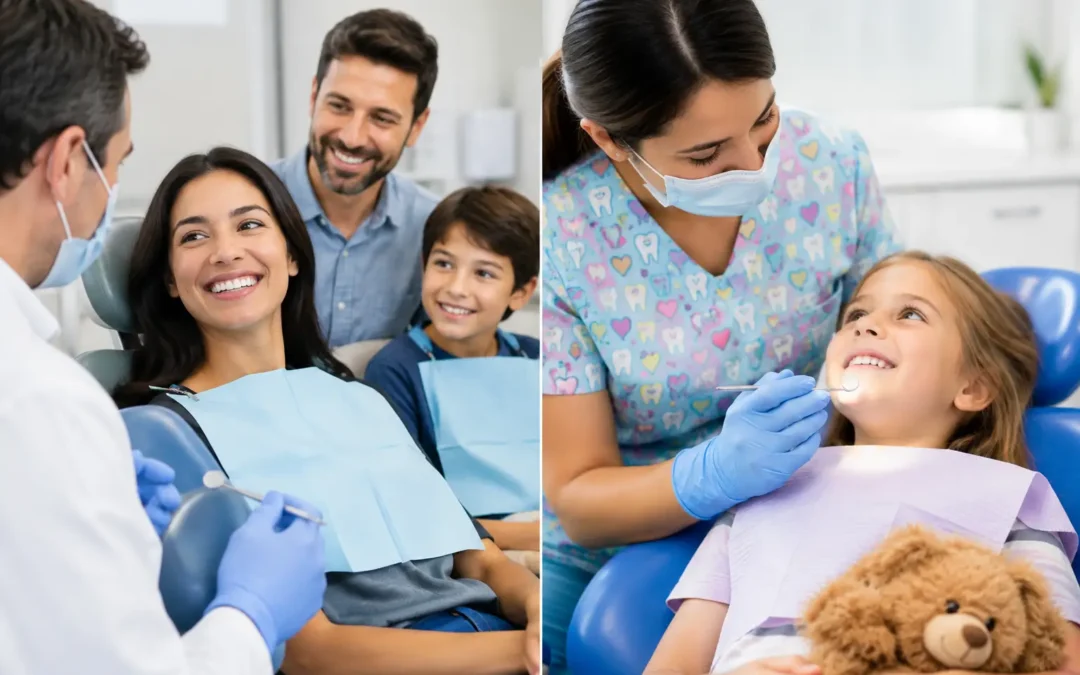
A child’s first dental experiences can shape how they feel about oral health for years. When parents compare a family dentist vs pediatric dentist, the best choice is not always about which office has more colorful walls or treats the youngest patients. It is about finding care that matches your child’s age, comfort level, dental needs, and your family’s routine.
Both types of practices can play an important role in a healthy smile. The right fit may be a pediatric-focused office during the early years, a family practice that can care for everyone under one roof, or a combination of both at different stages.
Family Dentist vs Pediatric Dentist: The Main Difference
A family dentist provides general dental care for patients across many life stages, from young children through adults and seniors. They typically offer preventive exams and cleanings, fluoride treatments, fillings, crowns, gum care, extractions, and restorative solutions. Many family practices also coordinate or provide orthodontic, cosmetic, and specialty care.
A pediatric dentist is a dentist who completes additional training focused on infants, children, teens, and patients with certain special healthcare needs. That training centers on developing teeth and jaws, childhood dental conditions, behavior guidance, growth patterns, and helping young patients feel safe during treatment.
Neither option is automatically better for every child. A family dentist can be an excellent choice for a child with routine needs, especially when parents appreciate the convenience of scheduling appointments for multiple family members at one practice. A pediatric dentist may be particularly valuable for a very young child, a child with significant anxiety, complex developmental needs, or a dental concern that benefits from a child-focused setting.
What a Pediatric Dentist May Offer
Pediatric dental offices are designed around the needs of children. The team is accustomed to explaining care in simple, reassuring language, using positive behavior techniques, and moving at a pace that helps children feel in control. This can make a meaningful difference for a child who is nervous, sensitive to new environments, or facing an unfamiliar procedure.
Pediatric dentists also closely monitor the changes that happen as baby teeth appear, permanent teeth emerge, and the bite develops. They can identify issues such as early childhood cavities, enamel weaknesses, crowding, bite concerns, prolonged thumb-sucking effects, and teeth that are not erupting as expected.
For some children, this dedicated focus is exactly what they need. A toddler who struggles to sit still for an exam, for example, may respond well to a team that works exclusively with young patients every day. A pediatric dentist can also be a strong referral choice when a child needs more advanced behavior support or has extensive treatment needs.
Why Families Choose a Family Dentist
A family dentist offers continuity. Your child can see a familiar care team while parents, siblings, and grandparents receive care in the same practice. That consistency often reduces stress, especially when children see their parents confidently attending routine cleanings and treatment visits.
Convenience matters, too. Rather than managing appointments at separate offices across town, a family may be able to schedule back-to-back visits or coordinate care in one place. For busy parents in Pembroke Pines, Boynton Beach, Royal Palm Beach, and nearby South Florida communities, that can make regular dental care much easier to maintain.
Family practices are also well positioned for the transition from childhood to adolescence and adulthood. As a child grows, their needs may expand beyond preventive care to include orthodontic evaluations, sports-related dental protection, wisdom tooth concerns, cosmetic questions, or restorative treatment. Staying with a trusted practice can make those next steps feel more familiar.
At Smile Perfection Dental & Orthodontics, families can access preventive, restorative, pediatric, orthodontic, and specialty services through one experienced team, making it easier to plan care as needs change.
Consider Your Child’s Age and Temperament
Age is a helpful starting point, but it should not be the only deciding factor. The American Dental Association recommends a first dental visit by a child’s first birthday or when the first tooth appears. At this stage, the appointment is often brief and focused on prevention, feeding habits, brushing guidance, and checking early development.
Some infants and toddlers thrive in a pediatric setting. Others are perfectly comfortable seeing a family dentist who regularly welcomes young children. Ask how the practice handles first visits, whether parents can stay with their child, and how the team introduces exams and cleanings.
Temperament matters just as much. A calm, curious school-age child may do very well with a family dentist. A child with intense dental fear, sensory sensitivities, a history of difficult appointments, or special healthcare needs may benefit from a pediatric dentist’s advanced training and child-centered approach. There is no failure in choosing additional support. The goal is to help your child receive needed care without unnecessary distress.
Think Beyond the Next Cleaning
Parents sometimes make this decision based only on the next six-month checkup. It helps to look ahead. If your child is approaching the age when crowding or bite issues may become more noticeable, a practice with orthodontic services can make monitoring and referrals simpler. Orthodontic evaluations are often recommended by age 7, when early signs of spacing, jaw growth, and bite development can be identified.
A family dentist can also be helpful when dental needs affect more than one person in the household. Perhaps a parent needs a crown while a child needs sealants, or an older sibling is ready to discuss braces or Invisalign. Coordinated care may save time and give the entire family a clearer understanding of their oral health plan.
Still, comprehensive services should never replace the need for appropriate expertise. If a child has a complicated condition or needs a level of behavior management beyond what a general practice provides, a good family dentist will recommend the right pediatric specialist. Trusted care includes knowing when a referral is in a child’s best interest.
Questions to Ask Before You Choose
A short conversation with the office can reveal a lot about whether it is the right environment for your child. Ask whether the dentist routinely sees children your child’s age and how the team helps nervous patients. Find out what happens if your child needs a filling, sealants, an emergency visit, or an orthodontic evaluation.
You can also ask about appointment availability, insurance options, digital imaging, sedation options when appropriate, and whether the practice can accommodate siblings on the same day. The answers should be clear, patient, and free of pressure.
Pay attention to how your child is greeted at the first visit. A strong dental home does not rush past fear or dismiss questions. The team should explain what they are doing, celebrate small successes, and give parents practical guidance for brushing, flossing, diet, fluoride, and habits such as thumb-sucking.
When Switching or Combining Care Makes Sense
Dental care does not have to follow a permanent, one-office-only rule. A child may start with a pediatric dentist, then transition to a family dentist as they become more comfortable and their needs broaden. Another child may see a family dentist for routine care and visit a pediatric specialist for a specific concern.
A change may be worth considering if appointments consistently cause significant anxiety, if your child’s dental needs have become more complex, or if your current office no longer feels convenient for your family. On the other hand, switching offices without a clear reason can disrupt a child who has built trust with a familiar dentist and hygienist.
The best decision is the one that supports regular visits, preventive habits, and a positive relationship with dental care. When children feel heard and parents feel informed, a healthy smile becomes a family routine rather than a source of worry.