
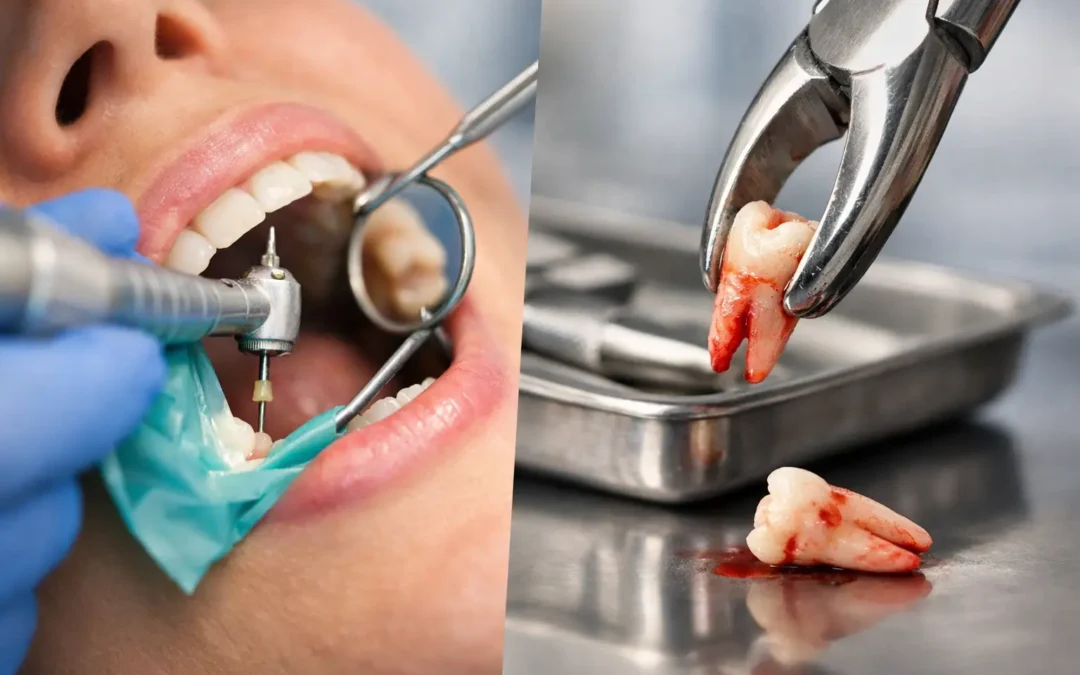
A toothache that keeps you awake, pain when you bite, or swelling near a damaged tooth can make the root canal vs extraction decision feel urgent. While both treatments can stop pain and protect your oral health, they take very different paths. One aims to save your natural tooth. The other removes it when saving it is no longer the healthiest or most predictable option.
The right choice is not about choosing the “easier” procedure. It depends on the condition of the tooth, the health of the surrounding gums and bone, your overall health, and what will give you the best long-term result. A careful exam and digital imaging help your dentist see what is happening below the gumline before recommending treatment.
Root Canal vs Extraction: The Main Difference
A root canal treats an infection or inflammation inside a tooth. The dentist removes damaged pulp tissue, cleans and disinfects the small inner canals, then seals the tooth to prevent bacteria from returning. In most cases, a crown is placed afterward to restore strength and protect the tooth from cracking.
An extraction removes the entire tooth, including its roots. This may be necessary when decay, infection, fracture, gum disease, or trauma has left too little healthy tooth structure to repair. Removing the tooth resolves the immediate problem, but it also creates a space that often needs to be addressed later with an implant, bridge, or partial denture.
Whenever a natural tooth can be saved predictably, preserving it is usually the preferred approach. Your natural tooth helps maintain normal chewing, supports the jawbone, and keeps neighboring teeth in their proper positions. Still, saving a tooth is not always the right answer. A treatment plan should be based on long-term health, not just a short-term fix.
When a Root Canal May Be the Better Choice
Root canal treatment may be recommended when the tooth is infected or severely inflamed but still has enough healthy structure and bone support to function well. Deep decay, a large untreated cavity, a cracked tooth, repeated dental work, or an injury can all allow bacteria to reach the pulp inside the tooth.
Common signs include lingering sensitivity to hot or cold, pain with chewing, a persistent toothache, swelling, or a small bump on the gums. Sometimes, however, there are no obvious symptoms. An exam and X-rays can reveal infection near the root before it becomes more painful or spreads.
Many patients worry that a root canal will be painful. With modern local anesthesia and gentle techniques, the procedure is designed to relieve the pain caused by infection, not create more of it. Most patients describe the experience as similar to receiving a filling. If anxiety is a concern, ask your dentist about comfort options, including sedation dentistry when appropriate.
After a root canal, the tooth can often serve you for many years with good home care and regular checkups. A crown is particularly important for back teeth and teeth with significant loss of structure because it helps prevent a future fracture. The goal is to keep the tooth functional, comfortable, and natural-looking.
When Extraction Is the Healthier Option
An extraction may be the best recommendation when a tooth cannot be restored reliably. For example, a crack that extends below the gumline or into the root often cannot be repaired. Severe periodontal disease can also weaken the bone and tissues supporting a tooth, making it too loose to save.
Extraction can also be appropriate when decay has destroyed most of the tooth, a prior root canal has failed and retreatment is unlikely to succeed, or an impacted wisdom tooth is causing problems. In certain orthodontic treatment plans, removing a tooth may create the space needed to improve crowding and bite alignment.
Choosing extraction does not mean giving up on your smile. It means addressing a tooth that may be putting surrounding teeth, gums, or bone at risk. The next conversation is usually about replacement. Leaving an open space can allow nearby teeth to shift, alter the bite, and make chewing less efficient. Over time, the jawbone in that area can also lose volume because it no longer receives stimulation from a tooth root.
For many adults, a dental implant is a strong replacement option because it replaces the missing root as well as the visible tooth. A bridge or partial denture may also be appropriate depending on your oral health, budget, timeline, and goals. A dentist and implant specialist can explain which option fits your situation.
Comparing Comfort, Healing, and Time
Both procedures are performed with anesthesia, so you should not feel pain during treatment. It is normal to have some tenderness afterward. Root canal recovery is often mild, although the tooth and surrounding area may feel sensitive for several days. Following your dentist’s instructions and taking recommended medication can make recovery more comfortable.
Extraction healing is different because the body must close and heal the socket where the tooth was removed. Initial healing commonly takes one to two weeks, while deeper bone healing continues for longer. Avoiding smoking, using a straw, or vigorous rinsing after an extraction is especially important because these actions can disturb the blood clot needed for proper healing.
A root canal may require one or more visits depending on the tooth and level of infection, followed by a permanent crown. An extraction can sometimes be completed in one appointment, but replacing the tooth may add months to the overall process. If an implant is planned, healing time may be needed before or after placement so the bone can support it properly.
Cost Is More Than the First Appointment
It is understandable to compare the immediate cost of a root canal with an extraction. An extraction is often less expensive at the first visit. But if you need to replace the missing tooth with an implant, bridge, or denture, the total cost can become higher than preserving the tooth.
A root canal usually involves the treatment itself and a crown, especially for a molar. That can feel like a larger commitment upfront, but it may be a worthwhile investment when the tooth has a good prognosis. Insurance benefits, available financing, and the expected lifespan of each option all deserve consideration.
The lowest initial price is not always the best value. A clear treatment discussion should include what is needed now, what may be needed later, and the consequences of delaying care. Treating an infection promptly can prevent greater pain, swelling, and more complex treatment.
Questions to Ask Before You Decide
A confident decision starts with an honest conversation. Ask whether the tooth has a good long-term prognosis after root canal treatment, whether a crown is necessary, and what could happen if you wait. If extraction is recommended, ask about bone preservation and which replacement choices are suitable for your smile and bite.
It also helps to discuss practical concerns: How many appointments are likely? What will recovery be like? Will the treatment affect work, school, or travel plans? What portion may be covered by insurance? Your dentist should explain the recommendation in plain language and give you space to ask questions.
At Smile Perfection Dental & Orthodontics, families can receive a complete evaluation and discuss restorative, extraction, and tooth-replacement options in one familiar practice. That continuity matters when the goal is not simply to treat one painful tooth, but to protect your whole smile.
Frequently Asked Questions
Is a root canal better than pulling a tooth?
When a tooth can be restored predictably, saving it with a root canal is often preferred because it preserves your natural bite and helps maintain bone levels. However, an extraction can be the better choice for a tooth with a severe fracture, advanced bone loss, or damage that cannot be repaired.
Can an infected tooth be extracted instead of treated with a root canal?
Yes. Extraction removes the infected tooth and is sometimes necessary. If the tooth is restorable, though, a root canal can remove the infection while allowing you to keep the tooth. The best option depends on the tooth’s condition, not just the presence of infection.
What happens if I do nothing?
Dental infections and fractures do not heal on their own. Pain may temporarily fade if the nerve dies, but infection can remain and spread into the bone and surrounding tissues. Prompt care gives you more treatment options and can make treatment simpler.
The best next step is a timely examination, especially if you have swelling, fever, facial pain, or trouble swallowing. Relief is possible, and a thoughtful treatment plan can help you move forward with comfort, confidence, and a smile built to last.