
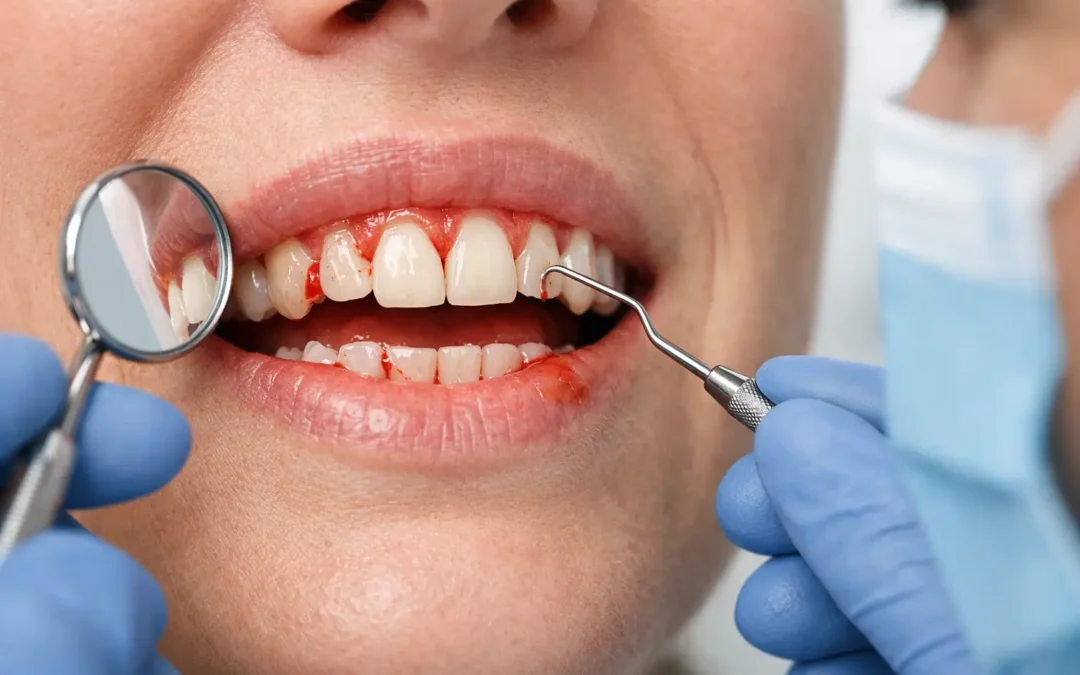
A little blood in the sink after brushing may seem easy to dismiss, especially when life is busy. But periodontal disease symptoms often begin quietly, and bleeding gums are one of the clearest signals that your mouth needs professional attention. Gum disease is common, treatable, and far easier to manage when it is found early.
Periodontal disease affects the gums and the bone that supports your teeth. It can progress without severe pain, which is why regular dental visits matter even when your smile feels fine. Knowing what to watch for can help you protect your teeth, your comfort, and your confidence.
What Periodontal Disease Is
Periodontal disease, also called gum disease, begins when plaque builds up along and below the gumline. Plaque is a sticky film of bacteria that forms throughout the day. When it is not thoroughly removed through brushing, flossing, and professional cleanings, it can harden into tartar.
Early gum inflammation is called gingivitis. At this stage, gums may be red, puffy, or prone to bleeding, but the bone supporting the teeth has not yet been damaged. With timely care and consistent home hygiene, gingivitis can often be reversed.
When inflammation continues, it can develop into periodontitis. The gums may pull away from the teeth, creating pockets where bacteria can collect. Over time, the infection can damage the tissue and bone that hold teeth in place. This is why gum disease is a leading cause of adult tooth loss, even though it often starts with symptoms that seem minor.
Early Periodontal Disease Symptoms to Watch For
Healthy gums generally look pink, feel firm, and do not bleed during normal brushing or flossing. If something has changed, it is worth paying attention rather than waiting for it to go away.
Bleeding, swollen, or tender gums
Bleeding while brushing or flossing is not something to simply accept as normal. It can happen when plaque irritates the gum tissue, causing inflammation. Gums may also look darker red than usual, appear swollen around the teeth, or feel sensitive when you brush.
Some people stop flossing when they see blood. That can allow more plaque to remain between the teeth and make inflammation worse. Continue gentle daily flossing, but schedule a dental evaluation so the cause can be identified and treated.
Persistent bad breath or an unpleasant taste
Bad breath after garlic or coffee is one thing. Breath that stays unpleasant even after brushing, flossing, and using mouthwash can be different. Bacteria associated with gum disease can produce odors and leave a lingering bad taste in the mouth.
Dry mouth, certain foods, sinus concerns, and other health factors can also contribute to bad breath. A dental exam helps separate a temporary issue from a concern involving the gums, teeth, or tongue.
Receding gums or teeth that look longer
Gum recession occurs when gum tissue pulls back from the tooth surface. You may notice more tooth near the gumline, new sensitivity to cold drinks, or a small notch where the tooth and gum meet. Recession can be related to periodontal disease, but aggressive brushing, grinding, and naturally thin gum tissue may also play a role.
The cause matters because treatment depends on what is driving the change. A dentist or periodontist can measure the gums and recommend a plan that protects your smile.
Changes in how your teeth fit together
As periodontal disease advances, the support around teeth can weaken. Teeth may begin to shift, feel loose, or develop new spaces between them. You may also notice that your bite feels different, that chewing is uncomfortable, or that a partial denture no longer fits the same way.
These changes deserve prompt care. They do not automatically mean a tooth will be lost, but they can indicate that the supporting bone and gum tissue need attention.
Symptoms That Can Be Easy to Miss
Not every sign is dramatic. Gum disease can develop in one area of the mouth or affect several teeth at once. You may have little discomfort while inflammation is still causing damage below the gumline.
Pay attention to a pimple-like bump on the gums, pus near a tooth, recurring tenderness in one spot, or gums that appear to be separating from the teeth. These can be signs of infection or periodontal pockets. If you have diabetes, smoke or vape, take medications that cause dry mouth, are pregnant, or have a family history of gum disease, regular periodontal screenings are especially valuable. Those factors do not guarantee gum disease, but they can raise the risk or make it harder for the gums to heal.
It is also possible to have periodontal disease without obvious bleeding. Smoking can mask bleeding by changing blood flow in the gum tissue, so an absence of blood is not always proof that the gums are healthy.
When to Schedule a Dental Visit
Call for an appointment if your gums bleed repeatedly, remain swollen for more than a few days, or if bad breath persists despite careful home care. Make an appointment promptly if you notice loose teeth, gum recession that seems to be progressing, pus, facial swelling, or pain when biting.
Facial swelling, fever, trouble swallowing, or difficulty breathing require urgent medical or dental attention. An infection in the mouth should never be ignored.
At a periodontal evaluation, your dental team may review your health history, examine your gums, measure the space between your teeth and gums, and use digital X-rays to check the bone supporting the teeth. These findings provide a clearer picture than symptoms alone. They also help determine whether you need a routine cleaning, a deeper periodontal cleaning, ongoing maintenance visits, or care from a periodontist.
What Treatment Can Look Like
Treatment is based on the stage of disease, not just one symptom. For early gingivitis, a professional cleaning and improved daily brushing and flossing may be enough to help the gums return to health. Your dental team can show you where plaque is collecting and suggest tools that fit your routine, such as an electric toothbrush, floss holders, or interdental brushes.
For periodontitis, treatment often begins with scaling and root planing. This deep cleaning removes plaque and tartar from below the gumline and smooths root surfaces so the gums can heal more closely around the teeth. Local anesthetic can be used to keep you comfortable.
More advanced cases may require periodontal therapy, medication, or procedures to manage deep pockets and rebuild or protect supporting tissue. If a tooth cannot be saved, restorative options such as dental implants, bridges, or dentures may be discussed. The right choice depends on your gum health, bone support, overall health, goals, and budget.
The goal is not simply to make gums look better for a few weeks. It is to control infection, preserve natural teeth whenever possible, and create a maintenance plan that works long term. Periodontal disease can be managed successfully, but it requires consistent professional care and home habits after treatment.
Protecting Your Gums Between Visits
Brush twice a day with a soft-bristled toothbrush and fluoride toothpaste, cleaning gently along the gumline. Clean between your teeth every day with floss or another tool recommended by your dental team. Mouthwash can be a helpful addition for some patients, but it does not replace removing plaque mechanically with brushing and interdental cleaning.
Avoid tobacco products, stay hydrated, and keep regular checkups even if your gums feel better. The schedule for cleanings varies. Someone with a history of periodontitis may benefit from periodontal maintenance more often than someone with consistently healthy gums.
If you are concerned about periodontal disease symptoms, a timely visit can replace uncertainty with a clear plan. At Smile Perfection Dental & Orthodontics, our team can help you understand what your gums are telling you and take the next comfortable step toward a healthier smile.