
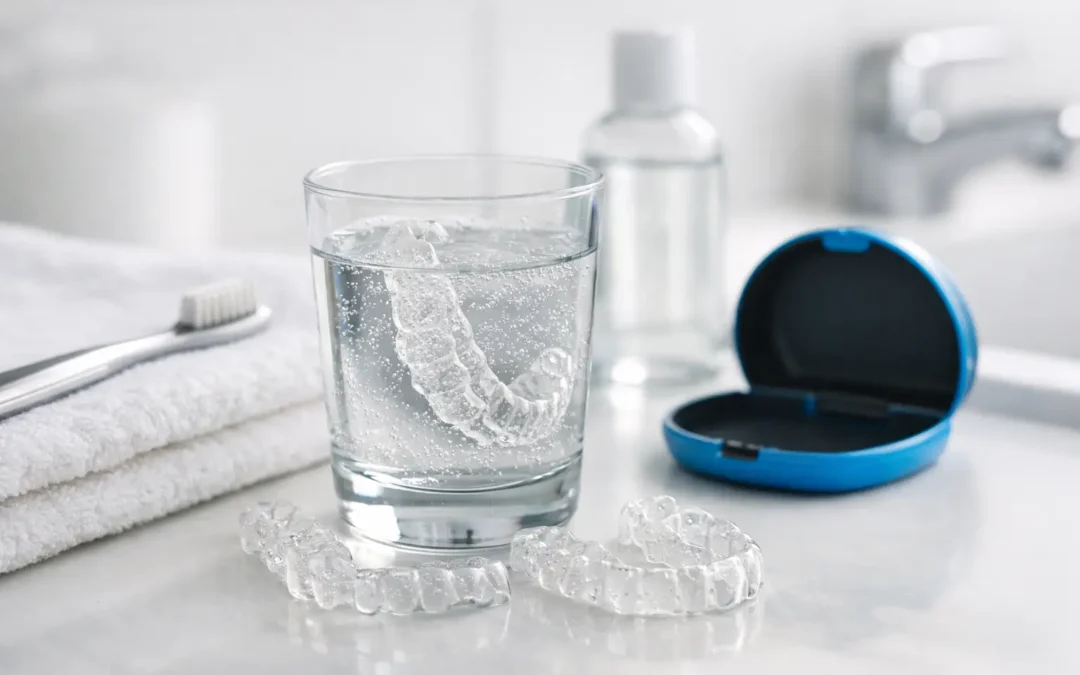
A clear aligner can look almost invisible when it is fresh from its case. After a few days of coffee, lunch breaks, and normal wear, it can start to look cloudy or develop an odor if it is not cleaned the right way. Knowing how to clean clear aligners helps protect the appearance of your trays and supports a healthier smile throughout treatment.
The goal is simple: remove plaque, saliva, and food particles without scratching, warping, or staining the plastic. A consistent routine takes only a few minutes and can make wearing aligners more comfortable and discreet.
How to Clean Clear Aligners Every Day
Rinse your aligners with cool or lukewarm water every time you take them out. This prevents saliva and plaque from drying onto the plastic, where they become harder to remove. Rinsing is especially helpful after meals, snacks, coffee, or other drinks besides water.
At least once a day, gently brush the inside and outside of each aligner using a soft toothbrush reserved for this purpose. Use clear, mild liquid soap and cool or lukewarm water. Brush lightly, paying attention to the grooves that fit around your teeth. Rinse thoroughly before placing the aligners back in your mouth.
A dedicated soft brush is a smart choice because toothpaste and an ordinary toothbrush can be more abrasive than they appear. Even tiny scratches can make clear trays look dull and can create places where buildup collects.
Your orthodontist may also recommend an aligner-cleaning tablet or crystal solution. These products can be useful for a deeper clean, particularly if the trays begin to look cloudy or develop an odor. Follow the product instructions and your orthodontic team’s recommendations, since cleaning methods can vary slightly by aligner system.
What Not to Use on Clear Aligners
Clear aligners are durable enough for daily wear, but they are not indestructible. A few common cleaning shortcuts can damage the plastic or change how the aligner fits.
Do not use hot water. Heat can warp the tray, and even a small change in shape may affect how it moves your teeth. Stick with cool or lukewarm water, even when you are tempted to soak away stubborn buildup.
Avoid toothpaste, whitening toothpaste, baking soda, and abrasive household cleaners. These can scratch the surface and leave aligners looking hazy rather than clear. You should also skip colored or heavily dyed mouthwash. It may stain the trays, and some mouthwashes contain ingredients that are not intended for prolonged contact with orthodontic plastic.
Bleach, alcohol-based cleaners, and denture products are not automatically safe choices either. Some may be too harsh for clear aligner material. When in doubt, use a mild, clear soap or ask your orthodontist which cleaner is appropriate for your specific trays.
Clean Your Teeth Before Reinserting Your Trays
Cleaning the aligners is only half of the routine. Before you put them back in, brush your teeth and floss whenever possible. Placing trays over food particles, sugar, or plaque can trap them against your teeth for hours. That increases the risk of bad breath, cavities, and gum irritation.
This matters even more when you are eating or drinking something sweet, acidic, or strongly colored. A quick rinse is better than nothing if you are away from home, but brushing and flossing before reinserting the aligners is the best habit.
For South Florida patients with busy workdays, school schedules, or time on the road, a small aligner care kit can make the routine easier. Keep a travel toothbrush, floss, a small case, and cleaning supplies in a bag, desk drawer, or car. Never wrap your aligners in a napkin. They are easy to throw away by accident, especially at restaurants.
Remove Aligners for Meals and Most Drinks
Water is generally the safest drink to have while wearing clear aligners. For coffee, tea, soda, sports drinks, juice, wine, and other beverages, remove the trays first. Dark drinks can stain the plastic, while sugary and acidic drinks can sit against your teeth beneath the aligner.
If you do drink something other than water while wearing them, rinse your mouth and trays as soon as you can. Do not let a busy afternoon turn into several hours of trapped sugar or discoloration. Clear aligners are designed to be worn for most of the day, often 20 to 22 hours, but meal and oral hygiene breaks are part of successful treatment.
There can be exceptions depending on your orthodontic plan, attachments, and provider instructions. Always follow the wear schedule and care guidance you receive from your orthodontist.
How to Remove Cloudiness and Odor
Cloudiness usually comes from dried saliva, plaque, mineral deposits, or fine scratches. Start by soaking the aligners in an orthodontist-approved cleaning solution, then brush them gently with a soft brush and rinse well. Do not try to scrub cloudiness away with toothpaste or a stiff brush. That often makes the problem worse.
Odor can be a sign that bacteria and residue have built up on the aligners. Daily brushing, rinsing after removal, and cleaning before bedtime usually resolve it. If the odor persists despite good care, make sure you are brushing and flossing thoroughly before reinserting your trays. Persistent odor can also be a reason to contact your dental or orthodontic office for personalized guidance.
If a tray becomes cracked, warped, heavily stained, or no longer fits snugly, do not force it into place. Call your orthodontic provider. A damaged aligner may not apply the intended pressure, and continuing to wear it without advice can interfere with treatment progress.
A Simple Morning and Night Routine
In the morning, remove your aligners, rinse them, and brush your teeth before putting them back in. If you prefer, this is also a convenient time to give the trays a gentle brush with clear soap.
At night, clean your teeth thoroughly, floss, and give the aligners their deeper daily clean before reinserting them. This routine keeps the trays fresher during the long overnight wear period and helps you begin the next day with a clean, comfortable fit.
Do not forget the case. Rinse it regularly and let it dry when possible. A clean aligner placed into a dirty, damp case can pick up bacteria and odors quickly. Keep the case closed when you are not using it so your trays stay protected from loss and damage.
When to Ask Your Orthodontist for Help
Most aligner care questions have straightforward answers, but professional advice is valuable when something feels off. Contact your orthodontic team if you notice a sudden fit change, sharp edge, crack, severe discoloration, ongoing odor, or mouth irritation. It is also wise to ask before using a new cleaning product, particularly if it contains whitening agents, alcohol, or strong chemicals.
At Smile Perfection Dental & Orthodontics, our orthodontic team helps patients understand the practical habits that keep clear aligner treatment on track. A clean tray, healthy gums, and consistent wear all work together to support the confident smile you are building.
A few careful minutes each day can keep your aligners clear, comfortable, and ready to do their job. Treat them like the precision-made orthodontic appliances they are, and let your daily routine protect the progress behind your new smile.