
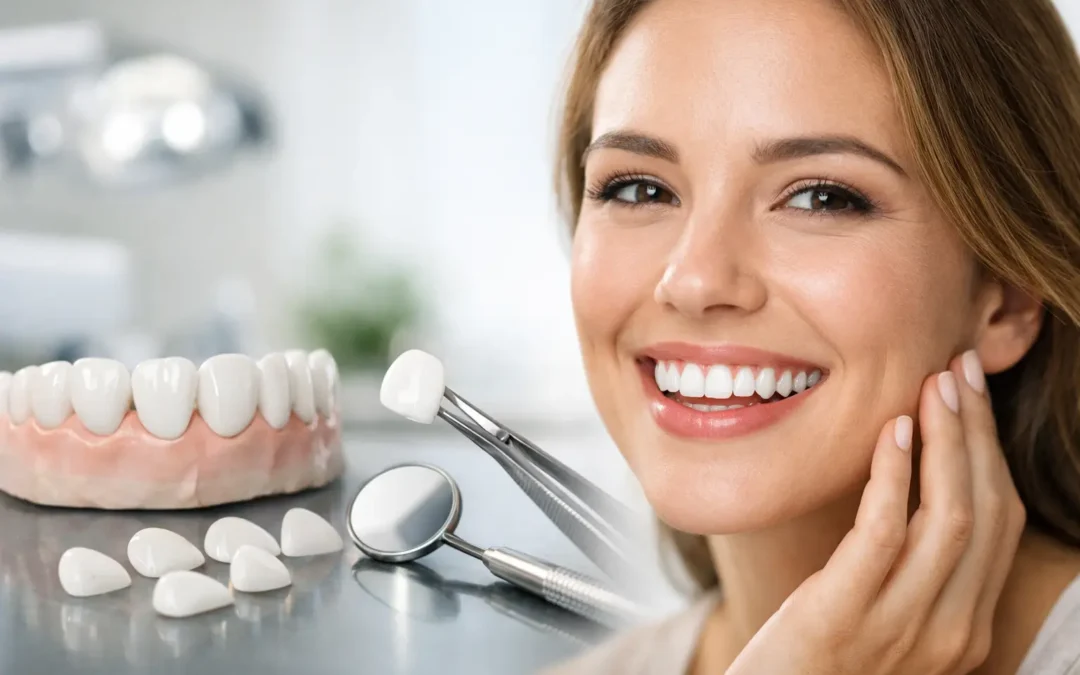
A single chipped tooth can make you think twice before smiling in photos. Teeth that look uneven, worn, stained, or slightly misshapen can have the same effect, even when they are otherwise healthy. This guide to dental veneers explains how veneers work, who may be a good candidate, and what to consider before choosing treatment.
Veneers can create a noticeably more balanced, natural-looking smile, but they are not a one-size-fits-all cosmetic solution. The best results begin with a careful exam, an honest conversation about your goals, and a treatment plan designed around your oral health.
Your Guide to Dental Veneers
Dental veneers are thin, custom-made coverings placed on the front surface of teeth. They are designed to improve the visible shape, color, size, or alignment of a tooth while blending with the rest of your smile.
Veneers are commonly used to address teeth that are deeply discolored, chipped, worn down, unevenly shaped, or separated by small gaps. They can also help create a more consistent smile when a few teeth look shorter, narrower, or different from neighboring teeth.
Because every veneer is custom created, your dentist considers more than the color of your teeth. Facial features, gumline appearance, bite, lip movement, and the proportions of surrounding teeth all affect what will look natural. The goal is not a generic “perfect” smile. It is a smile that looks healthy, polished, and like it belongs to you.
Porcelain vs. Composite Veneers
The two most common types of veneers are porcelain and composite resin. Both can improve the appearance of teeth, but they differ in longevity, appearance, preparation, and cost.
Porcelain veneers
Porcelain veneers are crafted in a dental laboratory and are known for their lifelike translucency. They resist stains better than composite material, which can be especially appealing for patients who enjoy coffee, tea, red wine, or richly colored foods. With attentive home care and regular dental visits, porcelain veneers can often last for many years.
In many cases, a small amount of enamel must be reshaped to create room for the veneer. This allows the restoration to sit naturally against the tooth rather than looking bulky. Because enamel is removed, porcelain veneer treatment is generally considered irreversible. A veneer may need replacement in the future, but the tooth will continue to need coverage.
Composite veneers
Composite veneers use tooth-colored resin that is sculpted directly onto the teeth or prepared outside the mouth and bonded in place. They are often completed more quickly and may require less tooth preparation than porcelain veneers.
Composite can be a good option for minor chips, small shape corrections, or patients looking for a more budget-conscious cosmetic improvement. The trade-off is that composite resin can stain, wear, or chip more easily than porcelain. It may need polishing, repair, or replacement sooner.
Your dentist can help you compare the materials based on the changes you want, your bite, your timeline, and your long-term expectations.
Are Veneers Right for You?
Healthy teeth and gums provide the strongest foundation for veneer treatment. Before moving forward, your dentist will check for tooth decay, gum disease, cracked teeth, old fillings, and bite concerns. Cosmetic work should not cover an underlying problem that needs care first.
You may be a strong candidate if your teeth are generally healthy but you want to improve visible discoloration, chips, minor gaps, or uneven shapes. Veneers can be especially helpful when whitening cannot change certain internal stains caused by trauma, medication, or older dental work.
Veneers may not be the first recommendation for every concern. If teeth are significantly crooked or crowded, orthodontic treatment such as Invisalign or braces may be a healthier way to improve alignment before considering cosmetic refinements. If a tooth has extensive damage, a crown may provide the support it needs. For a small chip or isolated discoloration, bonding or whitening may be enough.
Grinding or clenching also deserves attention. People who grind their teeth can still be candidates for veneers, but a custom nightguard may be recommended to protect the new restorations. An accurate bite assessment helps prevent excess pressure that could lead to chips or fractures.
What Happens During the Veneer Process?
The veneer process is planned around precision, comfort, and communication. It often takes more than one visit for porcelain veneers, while some composite cases can be completed in a single appointment.
At the consultation, your dentist will discuss what you would like to change and evaluate your teeth, gums, and bite. Digital imaging, photographs, and impressions or digital scans may be used to plan the shape and appearance of the veneers. This is the time to share reference photos, ask about shade options, and explain whether you prefer a subtle refresh or a more dramatic change.
For porcelain veneers, the teeth are usually prepared by removing a minimal amount of enamel from the front surface. An impression or scan is then sent to the laboratory, where your custom veneers are made. Temporary veneers may be placed while the final restorations are being created.
At the final visit, your dentist checks the fit, color, and overall appearance before bonding the veneers into place. Small adjustments can be made to ensure your bite feels comfortable. Once bonded, the veneers become a durable part of your smile, although you may need a short adjustment period as you get used to the new contours.
What Do Dental Veneers Cost?
The cost of veneers varies because treatment is highly customized. The number of teeth being treated, material selected, amount of preparation needed, laboratory work, and any dental care required beforehand can all affect the total investment.
A consultation provides the clearest estimate because it allows the dentist to evaluate your individual needs rather than offering a one-price-fits-all answer. Ask whether the plan includes diagnostic records, temporary veneers, follow-up visits, and any recommended protective appliance such as a nightguard.
Dental insurance often does not cover veneers when treatment is primarily cosmetic. However, your dental team can explain available payment options and help you understand which parts of treatment may or may not be eligible for benefits.
How to Care for Veneers
Veneers do not require complicated maintenance. They do require the same consistent attention as natural teeth. Brush twice daily with a non-abrasive toothpaste, floss daily, and keep up with professional cleanings and exams.
Porcelain itself does not decay, but the natural tooth beneath and around a veneer still can. Healthy gums are also essential for keeping the edges of veneers looking their best. Regular visits allow your dentist to monitor the fit, polish restorations when needed, and catch concerns early.
Avoid using your teeth as tools to open packages, tear tags, or bite hard objects. Chewing ice, pen caps, and hard candy can damage natural teeth as well as veneers. If you play contact sports, wear a mouthguard. If you clench or grind at night, wear the nightguard recommended by your dentist.
While porcelain is stain resistant, the natural teeth around veneers can still darken over time. Whitening may be considered before veneer treatment so the final shade can be matched thoughtfully. After veneers are placed, whitening products will not change their color, so speak with your dentist before starting any whitening routine.
Questions Worth Asking at Your Consultation
A cosmetic consultation should feel informative, never rushed. Ask how much enamel may need to be removed, whether your bite puts veneers at added risk, and what alternatives could meet your goals. You can also ask to see examples of similar cases and discuss how many teeth should be treated for a balanced result.
It is helpful to talk about longevity realistically. Veneers are durable, but they are not permanent. They can eventually need repair or replacement, particularly if you experience trauma, grinding, gum recession, or normal wear over time. Understanding that commitment before treatment helps you feel more confident in your decision.
A beautiful smile should feel comfortable to wear, easy to maintain, and appropriate for your health needs. At Smile Perfection Dental & Orthodontics, a personalized veneer consultation can help you explore your options with the clarity and care you deserve.