
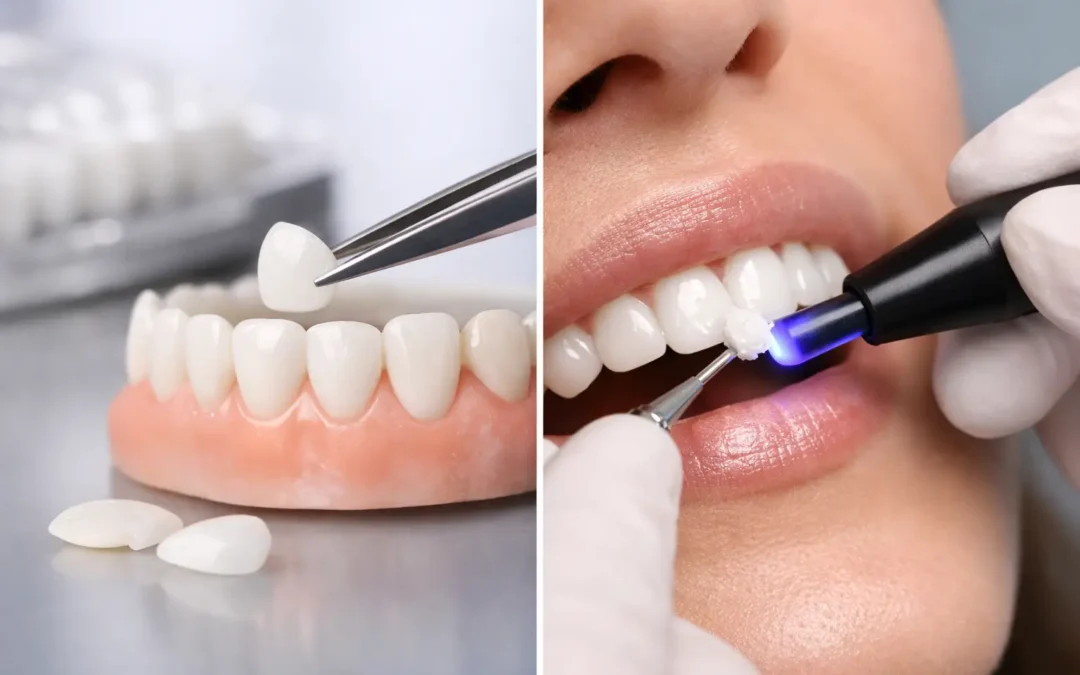
A small chip on a front tooth can feel much bigger than it looks. For many patients, that one detail changes how often they smile in photos, at work, or even during everyday conversations. When people ask about veneers vs teeth bonding, they are usually asking a very practical question: what will look natural, last well, and make me feel confident without choosing more treatment than I really need?
The answer depends on your goals, your teeth, and your timeline. Both options can improve the appearance of chipped, worn, uneven, stained, or slightly misshapen teeth. But they work differently, and one may be a better fit than the other depending on how dramatic a change you want and how long you want it to last.
Veneers vs Teeth Bonding: The Basic Difference
Teeth bonding uses a tooth-colored composite resin that is shaped directly onto the tooth. Your dentist places the material, sculpts it carefully, hardens it with a special light, and polishes it to blend with your natural smile. Bonding is often a conservative treatment because little to no tooth structure may need to be removed.
Veneers are thin shells, usually made of porcelain, that are custom created to cover the front surface of a tooth. They are designed to improve color, shape, size, and overall symmetry. Veneers usually require more planning and more preparation than bonding, but they can also create a more dramatic and longer-lasting cosmetic result.
If you want the simplest comparison, bonding is often best for smaller touch-ups, while veneers are often chosen for larger smile makeovers. Still, there is a lot of overlap, which is why a personalized exam matters.
When Teeth Bonding Makes Sense
Bonding is a strong option for patients who want to fix a minor cosmetic issue without extensive treatment. It is commonly used for small chips, narrow gaps, slightly uneven edges, or a tooth that needs a subtle shape correction.
One reason patients like bonding is that it can often be completed in a single visit. That makes it appealing if you want a noticeable improvement quickly. It is also typically more affordable upfront than veneers, which matters for many families trying to balance cosmetic goals with a budget.
Bonding can be especially helpful for younger adults or patients who are not ready to commit to a more comprehensive cosmetic treatment. If the concern is limited to one or two teeth, bonding may offer exactly the right level of improvement without doing more than necessary.
That said, bonding does have limits. Composite resin is durable, but it is not as stain-resistant or as strong as porcelain. Patients who drink coffee, tea, or red wine regularly may notice discoloration over time. Bonding can also chip or wear down sooner, especially if you bite your nails, chew ice, or grind your teeth.
When Veneers Are the Better Choice
Veneers are often the better fit when the goal is a more polished, longer-term cosmetic transformation. They can be used to improve several concerns at once, including deep discoloration, worn teeth, uneven spacing, minor alignment issues, and inconsistent tooth shapes.
Porcelain veneers are known for their lifelike appearance. They reflect light in a way that closely resembles natural enamel, which is one reason they are popular for front teeth. They also resist staining better than bonding, so they tend to maintain their color well over time.
Patients who want a more uniform smile often prefer veneers because the final result is highly customized. The shape, shade, and proportions are planned in advance, giving your dentist more control over the finished appearance.
Veneers usually involve removing a small amount of enamel from the front of the tooth. That makes them a more permanent decision than bonding. For many patients, that trade-off is worthwhile because veneers can offer excellent longevity and a more comprehensive cosmetic upgrade.
Appearance: Which Looks More Natural?
Both treatments can look natural when done well. The quality of the result depends heavily on planning, materials, and your dentist’s eye for detail.
Bonding can look beautiful for small corrections. In the right situation, it blends so well that most people would never notice it. But because it is shaped by hand directly on the tooth, the result is especially technique-sensitive.
Veneers often have the advantage when patients want a very refined finish across multiple front teeth. Porcelain tends to hold its polish and translucency better over time, which can make it look more like natural enamel in different lighting.
This is one of those areas where it depends on the size of the change. For a single chip, bonding may look just as natural as a veneer. For a full smile upgrade, veneers often create a more consistent result.
Cost and Long-Term Value
Cost is one of the biggest reasons patients compare veneers vs teeth bonding so carefully. Bonding usually costs less at the start, which makes it attractive for minor cosmetic improvements or for patients who want to improve their smile without a larger financial commitment.
Veneers cost more because they involve custom fabrication, more detailed treatment planning, and premium materials. Even so, higher upfront cost does not always mean higher overall cost in the long run. If bonding needs touch-ups or replacement more often, the total investment over time may begin to approach the cost of veneers.
That does not mean veneers are automatically the better value. If your concern is small and bonding can address it beautifully, paying for veneers may not be necessary. The right choice is the one that fits both your smile goals and your practical priorities.
Durability and Maintenance
Veneers generally last longer than bonding. Porcelain is strong, stain-resistant, and less likely to lose its surface shine. With good oral hygiene and regular dental visits, veneers can last many years.
Bonding can also last well, but it usually requires more maintenance. The material is more prone to staining, chipping, and wear. That does not make bonding a poor option. It simply means patients should go into treatment with realistic expectations.
No cosmetic treatment is maintenance-free. Whether you choose veneers or bonding, you still need to brush, floss, avoid using your teeth as tools, and keep up with exams and cleanings. If you grind your teeth at night, your dentist may recommend a night guard to protect your investment.
Who Is a Good Candidate?
Healthy teeth and gums are the starting point for both treatments. If you have active decay, gum disease, or untreated bite issues, those concerns should usually be addressed first.
Bonding may be a great fit if your teeth are generally in good shape and you want a small cosmetic correction. Veneers may be the better option if you are looking for a broader change in color, shape, and symmetry across visible teeth.
Your bite matters too. If you clench or grind heavily, either treatment could be at higher risk of damage. In some cases, orthodontic treatment or bite adjustment may be recommended before cosmetic work. That is one reason many patients appreciate choosing a practice that offers comprehensive care in one place. At Smile Perfection Dental & Orthodontics, patients can get guidance that considers appearance, function, and long-term oral health together.
Questions to Ask Before You Decide
A good cosmetic consultation should feel clear, not rushed. You should understand what each option can realistically accomplish and where the limitations are.
Ask how much tooth structure needs to be changed, how long the result is expected to last, what kind of maintenance may be needed, and whether your habits could affect the outcome. If you are comparing one chipped tooth to a full smile enhancement, that should also shape the conversation. The best treatment plan is rarely the most aggressive one. It is the one that solves the problem well and fits your life.
The Right Choice Is Personal
Some patients come in convinced they need veneers and learn that bonding will do the job beautifully. Others start by asking for bonding and realize veneers are the better path because they want more than a minor fix. That is normal.
Cosmetic dentistry works best when the treatment matches the person. Your smile, your budget, your habits, and your expectations all matter. A thoughtful dentist will help you weigh the trade-offs instead of pushing a one-size-fits-all answer.
If you are considering a change, start with a conversation and a clear exam. The best smile improvements do not just look better on day one. They feel right every time you laugh, speak, and see yourself in the mirror.