
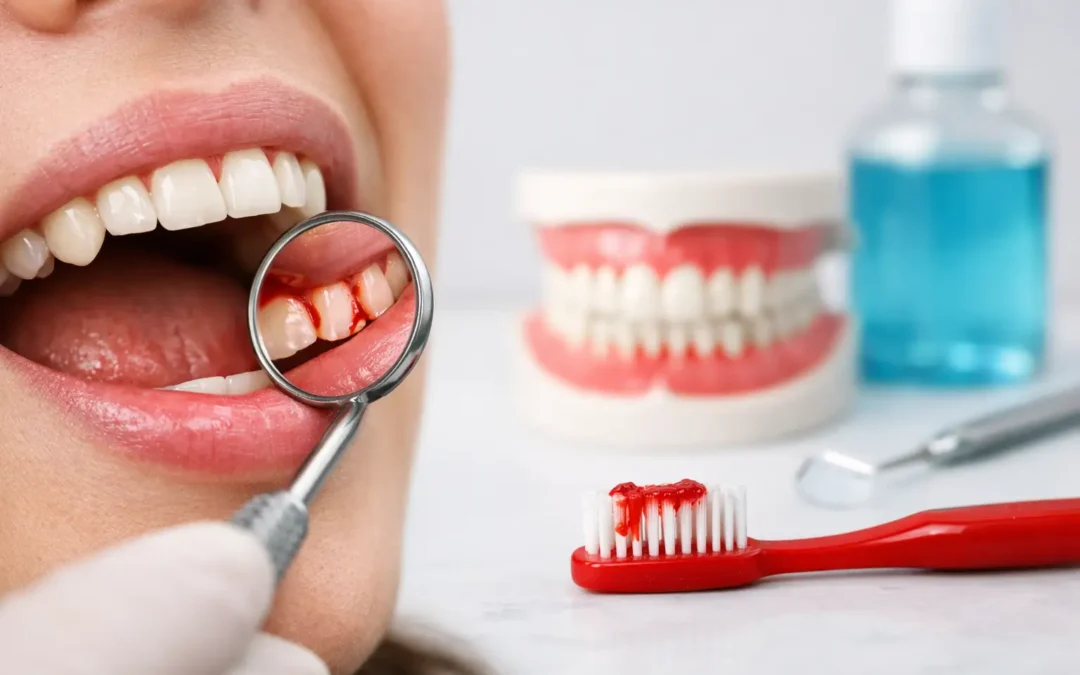
You spit into the sink after brushing and see pink in the foam. It is easy to shrug that off once or twice, but if you are asking, why are my gums bleeding, your mouth is telling you something worth paying attention to. Bleeding gums are common, but they are not something to ignore, especially when the cause is easy to treat early and harder to fix later.
Why are my gums bleeding when I brush or floss?
The most common reason gums bleed is inflammation caused by plaque buildup along the gumline. Plaque is a sticky film of bacteria that forms on teeth every day. If it is not removed well, it irritates the gums and can lead to gingivitis, the earliest stage of gum disease. One of the first signs of gingivitis is bleeding during brushing or flossing.
This surprises a lot of people because they assume bleeding means they should stop flossing. In many cases, the opposite is true. If your gums are inflamed because plaque has been sitting between the teeth, gentle daily flossing is part of what helps them recover. The key word is gentle. Snapping floss into the gums or using a hard-bristled toothbrush can make the problem worse.
Gingivitis is common, treatable, and reversible when addressed early. That is the good news. The catch is that if it is ignored, it can progress to periodontitis, a more serious form of gum disease that affects the bone and supporting structures around the teeth.
Common causes of bleeding gums
Gum disease is the leading cause, but it is not the only one. Bleeding can happen for a few different reasons, and sometimes more than one factor is involved.
Gingivitis and early gum disease
When plaque and tartar collect near the gums, bacteria trigger inflammation. Gums may look red, swollen, tender, or shiny instead of firm and pale pink. They may bleed when you brush, floss, or bite into firm foods. Bad breath can show up too.
The earlier gingivitis is treated, the simpler care usually is. A professional cleaning, improved home care, and regular checkups are often enough to get things back on track.
Brushing too hard or using the wrong toothbrush
A firmer toothbrush does not clean better. In fact, brushing aggressively can irritate gum tissue and wear down enamel near the gumline. If your gums bleed mostly after brushing and you are using a medium or hard brush, technique may be part of the issue.
A soft-bristled toothbrush and small circular motions are usually the better choice. If you are unsure whether your technique is helping or hurting, your dental team can show you a gentler approach that still cleans effectively.
Starting flossing after a long break
If you have not flossed regularly in a while, your gums may bleed when you start again. This can happen because the tissue is already inflamed from plaque buildup between the teeth. In many cases, consistent gentle flossing leads to less bleeding within a week or two.
If the bleeding continues beyond that, or if your gums are sore and puffy, it is time for a closer look.
Hormonal changes
Hormone shifts can make gums more sensitive and more likely to bleed. This is common during pregnancy, puberty, menstruation, and menopause. Pregnancy gingivitis, in particular, is well known because increased blood flow and hormone changes can exaggerate the body’s response to plaque.
That does not mean bleeding is normal and should be ignored. It means the gums may need extra attention during those times.
Certain medications
Blood thinners can make bleeding more noticeable, even when the gums are only mildly irritated. Some medications can also reduce saliva flow, creating a drier mouth where bacteria thrive more easily. Others may contribute to gum overgrowth, which can trap plaque and make gums inflamed.
If you have noticed a change after starting a medication, tell your dentist. Do not stop taking prescribed medication on your own, but do share your full medication list during your visit.
Vitamin deficiencies or health conditions
Less commonly, bleeding gums can be linked to vitamin deficiencies, especially low vitamin C or vitamin K, or to medical conditions that affect clotting or immune function. Diabetes can also increase the risk of gum inflammation and infection.
This is one reason dentists pay attention to patterns. Occasional light bleeding from irritated gums is one thing. Frequent bleeding with swelling, loose teeth, or delayed healing may point to a larger issue.
When bleeding gums may be a sign of gum disease
If you are still wondering, why are my gums bleeding, it helps to look at the full picture. Bleeding alone matters, but bleeding combined with other symptoms raises more concern.
Watch for gums that are red, swollen, tender, or pulling away from the teeth. Persistent bad breath, a bad taste in the mouth, teeth that feel loose, or discomfort while chewing can all point to gum disease. Some people notice their teeth looking longer because the gums have started to recede.
The tricky part is that gum disease is not always painful in the beginning. Many patients assume that if it does not hurt, it cannot be serious. Unfortunately, that is not how periodontal problems work. Gum disease can progress quietly for a long time.
What you can do at home right away
If your gums are bleeding, better home care can help, but it should be the right kind of home care. Be gentle and consistent rather than aggressive.
Use a soft-bristled toothbrush twice a day and angle the bristles toward the gumline. Floss once a day carefully, hugging each tooth instead of forcing the floss down abruptly. If regular floss is difficult, floss picks, interdental brushes, or a water flosser may help, though the best option depends on your teeth and gums.
An antibacterial or fluoride mouth rinse may be useful in some cases, but it is not a substitute for brushing and cleaning between the teeth. It also helps to stay hydrated and limit tobacco use, since smoking and vaping can worsen gum problems and slow healing.
That said, home care has limits. If tartar is already present, it cannot be brushed away at home. It needs to be removed professionally.
When to schedule a dental visit
If your gums bleed more than once or twice, it is smart to get them checked. You do not need to wait until the bleeding is severe. In fact, the best time to come in is when the issue still seems small.
A dental exam can identify whether the cause is simple irritation, gingivitis, or a more advanced periodontal issue. Your provider may recommend a routine cleaning, a deeper periodontal cleaning, updated home care instructions, or further evaluation if something more complex is going on.
This is especially important if you have not had a cleaning in several months, if you smoke, if you have diabetes, or if gum disease runs in your family. These factors can increase risk and make small symptoms more meaningful.
At a family-focused practice like Smile Perfection Dental & Orthodontics, patients often feel relieved once they understand what is happening. Bleeding gums sound alarming, but in many cases, the answer is straightforward and treatable when caught early.
Why acting early matters
Healthy gums should not bleed regularly. That does not mean every episode is an emergency, but it does mean your body is asking for attention. Early gingivitis can often be reversed. Advanced gum disease can require ongoing treatment to control, and it may lead to bone loss or tooth loss if left untreated.
There is also a whole-body angle to consider. Gum inflammation has been associated with broader health concerns, and while every case is different, keeping your gums healthy is part of taking care of yourself overall.
If you have been seeing blood in the sink and hoping it will stop on its own, this is a good moment to act. A simple dental visit can often answer the question, ease the worry, and help you get back to a healthier, more comfortable smile.