
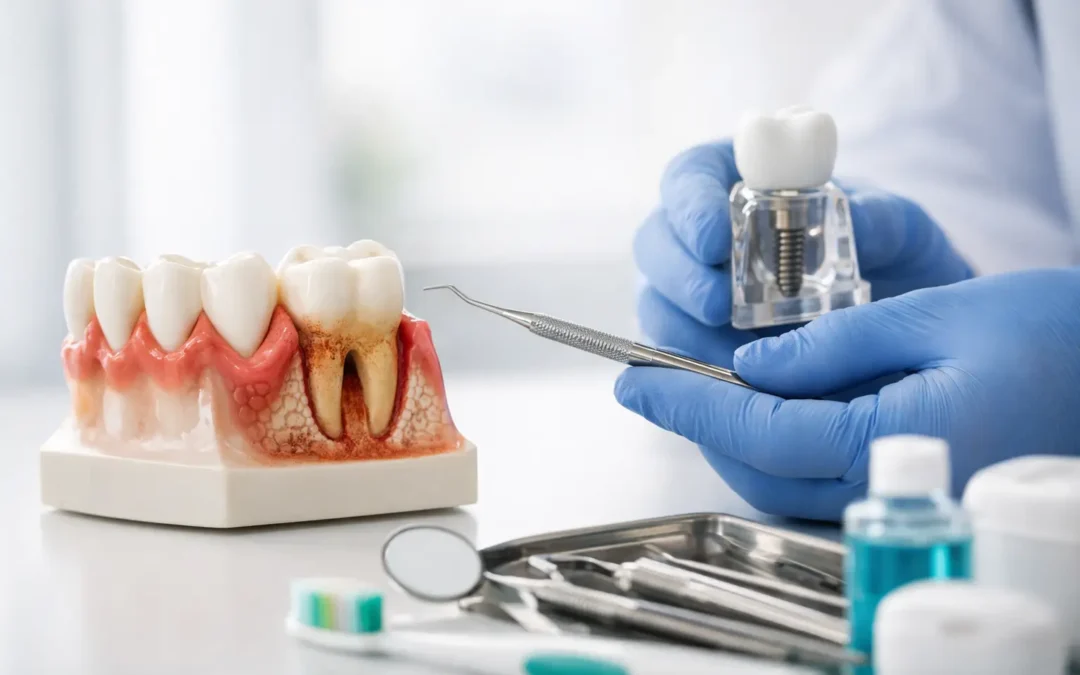
Bleeding gums when you brush can seem minor – until the tenderness lingers, your breath stays off, or your teeth begin to feel different. That is often when patients start asking about gum disease treatment options and whether the problem can still be reversed. The answer depends on how far the disease has progressed, but early treatment can make a major difference.
Gum disease is common, and it does not always cause dramatic pain at first. In many cases, it starts as gingivitis, which is the earliest stage. You may notice redness, puffiness, or bleeding when flossing. At this point, the infection is limited to the gums, and with professional care plus better home habits, it is often reversible.
When gum disease advances into periodontitis, the situation changes. The infection begins affecting the tissues and bone that support your teeth. Gums may pull away, pockets can form around the teeth, and bacteria settle deeper below the gumline. Treatment is still very effective, but it usually becomes more involved and more personalized.
How dentists choose gum disease treatment options
There is no one-size-fits-all answer. Dentists look at several factors before recommending treatment, including how much plaque and tartar are present, how deep the gum pockets are, whether bone loss has started, and whether certain teeth are already loose or sensitive.
Your overall health matters too. Conditions like diabetes, smoking history, dry mouth, certain medications, and even stress can affect how quickly gum disease progresses and how well your gums heal. That is why a careful exam, periodontal measurements, and dental imaging are so important before deciding on the next step.
The first step: professional cleaning and early intervention
For mild gum inflammation, a routine professional cleaning may be enough to remove the plaque and tartar irritating the gum tissue. This is usually recommended when the issue is still gingivitis and there is no significant pocketing or bone damage.
A professional cleaning reaches areas that brushing and flossing at home cannot fully manage. Once those irritants are removed, the gums often respond well, especially if patients improve daily brushing, flossing, and follow-up care. This is the best-case scenario because treatment is simpler, more comfortable, and less costly than waiting.
Still, it is worth being realistic. If bleeding and inflammation have been going on for a while, a regular cleaning may not be enough. In that case, your dentist may recommend a deeper periodontal treatment.
Scaling and root planing for deeper infection
One of the most common gum disease treatment options for periodontitis is scaling and root planing. Patients often hear this called a deep cleaning, but it is more thorough than a standard preventive visit.
Scaling removes plaque, tartar, and bacteria from below the gumline. Root planing smooths the root surfaces of the teeth so the gums can reattach more easily and bacteria have fewer places to collect. This treatment is often done in sections of the mouth and may involve local anesthesia to keep you comfortable.
For many patients, scaling and root planing is the turning point. It can reduce inflammation, improve pocket depths, and help stop the disease from progressing. That said, results depend on the severity of the infection and how well home care is maintained afterward. Deep cleaning is effective, but it is not a one-time fix if the underlying habits do not change.
Antibiotic therapy and medicated support
Sometimes mechanical cleaning alone is not enough, especially when pockets are deeper or bacterial activity is more aggressive. In those cases, dentists may recommend antibiotics or antimicrobial treatment as part of the plan.
This can include localized antibiotics placed directly into the pockets or prescription antimicrobial rinses to help reduce bacteria during healing. In select cases, oral antibiotics may be used, though they are not necessary for every patient.
The trade-off is that medication can support healing, but it does not replace the need to physically remove tartar and plaque. Patients sometimes hope for a rinse or pill to solve the problem, but gum disease is usually managed best through a combination of professional treatment and daily maintenance.
Ongoing periodontal maintenance matters
One of the most overlooked gum disease treatment options is not a single procedure at all – it is periodontal maintenance. After active treatment, many patients need more frequent cleanings than the typical six-month schedule.
These visits are designed to keep harmful bacteria under control and monitor whether pockets are stable, improving, or worsening. If you have already had gum disease, you are at higher risk for it returning. Maintenance care helps protect the progress made during treatment.
This is where a long-term relationship with a dental office really matters. Patients benefit when their care team tracks changes over time, explains what is happening clearly, and adjusts treatment if new concerns appear.
When surgical treatment is recommended
If periodontitis is advanced, non-surgical care may not be enough on its own. Surgical treatment may be recommended when pockets remain too deep to clean effectively, when significant gum recession is present, or when bone loss threatens the stability of the teeth.
One option is pocket reduction surgery, sometimes called flap surgery. In this procedure, the gums are gently lifted so deeper buildup can be removed, then repositioned to reduce pocket depth. This can make the area easier to clean and help control ongoing infection.
Gum grafting may be recommended if recession has exposed too much root surface. This can improve comfort, protect the tooth, and improve the appearance of the gumline. In some cases, regenerative procedures may be used to encourage bone or tissue repair in areas damaged by periodontal disease.
Hearing the word surgery can make people nervous, but it is often the most predictable way to save teeth that might otherwise be lost. The right approach depends on the extent of the damage, your goals, and how your gums have responded to initial care.
What about loose teeth or tooth loss?
When gum disease becomes severe, some teeth may loosen because the supporting bone has been compromised. At that stage, treatment focuses on controlling the infection first and then deciding whether the teeth can be stabilized or need to be replaced.
Sometimes a tooth can be saved with periodontal care and close monitoring. Other times, removal is the healthier choice if the tooth can no longer function properly or if it puts surrounding structures at risk. If tooth loss occurs, restorative options such as dental implants, bridges, or dentures may be part of the conversation after the gums are healthier.
This can feel overwhelming, but patients often find relief once there is a clear plan. A team that offers both periodontal and restorative care can make the process feel much more manageable.
What treatment feels like for patients
A lot of people delay care because they assume gum treatment will be painful. In reality, comfort is a major part of modern dental care. Numbing options, gentle techniques, and clear communication can make treatment much easier than expected.
Recovery depends on the procedure. A regular cleaning may leave the gums feeling fresher the same day. Deep cleaning can cause mild soreness or sensitivity for a short time. Surgical treatment usually involves a longer healing period, but patients are given instructions to help them recover comfortably and protect results.
At a patient-focused practice like Smile Perfection Dental & Orthodontics, the goal is not only to treat the infection but also to make sure patients feel informed and supported throughout the process.
How to know when it is time to schedule an exam
If your gums bleed often, feel swollen, look darker than usual, or have started pulling away from your teeth, it is time to get checked. Persistent bad breath, tenderness when flossing, and teeth that seem to be shifting can also point to periodontal problems.
The earlier you come in, the more conservative treatment can often be. That matters for your comfort, your budget, and your long-term oral health. Gum disease is treatable, but it does not usually improve on its own.
Healthy gums do more than frame a nice smile. They support every bite, every conversation, and every ounce of confidence that comes with feeling good about your oral health. If something feels off, getting answers now is one of the kindest things you can do for your future self.