
A wedding photo, a school presentation, a job interview, or simply the wish to smile without covering your mouth can make orthodontic treatment feel more urgent. When comparing clear aligners vs braces, most patients want a straight answer: Which option will work best, look best, and fit real life? The right choice depends on your bite, the movement your teeth need, and how comfortably you can commit to treatment.
Both braces and clear aligners can create healthy, confident smiles. Neither is automatically better for every person. An orthodontic evaluation gives you the clearest recommendation because it looks beyond what is visible in the mirror and considers how your teeth and jaws function together.
Clear Aligners vs Braces: The Main Difference
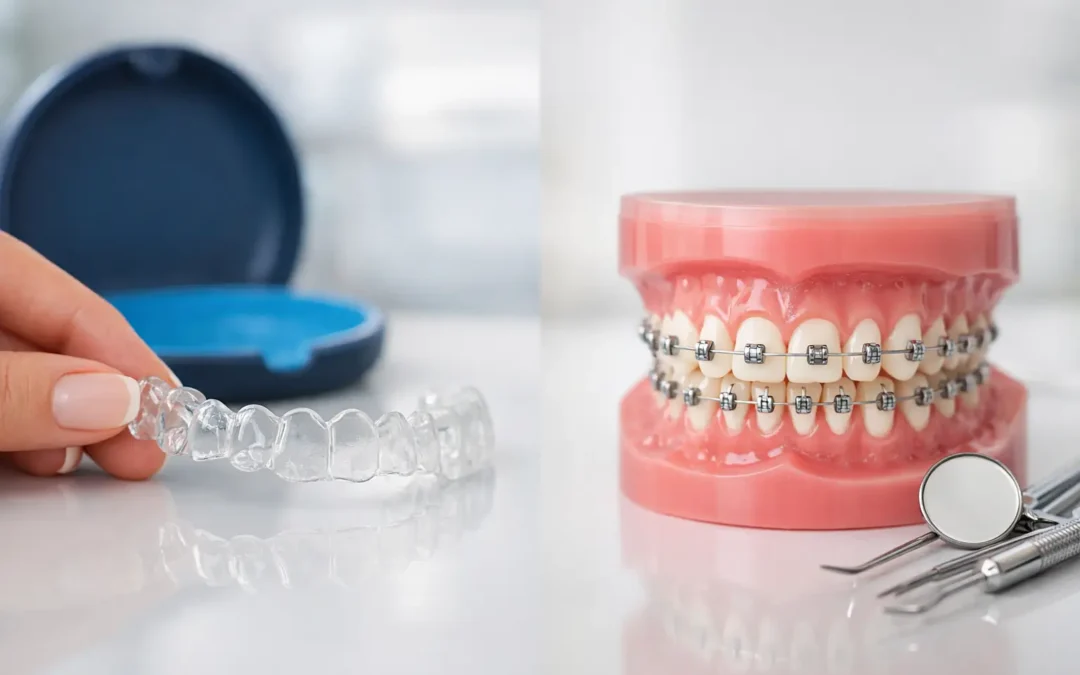
Traditional braces use brackets attached to the teeth and a wire that is adjusted over time. Those carefully controlled adjustments guide teeth into healthier positions. Braces stay in place throughout treatment, so they are working around the clock without relying on daily patient habits.
Clear aligners are a series of custom-made, removable trays. Each set is worn in sequence and applies gentle pressure to move teeth gradually. They are designed to be discreet and can be removed for meals, brushing, flossing, and special occasions.
The difference is not only cosmetic. Braces and aligners place force on teeth in different ways, and that can affect which cases they handle most predictably. Your orthodontist will consider crowding, spacing, bite concerns, tooth rotation, jaw development, gum health, and past dental work before recommending a path.
When Clear Aligners May Be a Good Fit
Clear aligners are popular with adults and teens who want orthodontic treatment to blend more naturally into work, school, and social life. The trays are clear, smooth, and custom fitted, making them less noticeable than brackets and wires from a normal conversation distance.
Because aligners come out, there are no food restrictions. You can enjoy popcorn at the movies, crunchy vegetables, and your favorite South Florida restaurant meal without worrying about a bracket coming loose. Brushing and flossing are also more familiar because you remove the trays first.
Aligners often work well for mild to moderate crowding, gaps, and many bite concerns. They can also be an excellent option for patients who have already had braces but notice that their teeth have shifted over time.
The key requirement is consistency. Aligners generally need to be worn about 20 to 22 hours each day. Taking them out frequently, forgetting to put them back in after meals, or losing trays can slow progress and affect results. For a responsible teen or busy adult who can build that habit into the day, clear aligners can be a very convenient choice.
What daily life with aligners looks like
You will remove your aligners before eating or drinking anything other than water. After meals, brush your teeth when possible and place the trays back in. You will also clean the aligners regularly to help keep them fresh and clear.
This routine is manageable for many patients, but it does require planning. If you sip coffee throughout the workday or snack often, you may need to adjust those habits. Aligners are flexible, but successful treatment still asks for discipline.
When Braces May Be the Better Choice
Braces remain one of the most reliable orthodontic treatments available, particularly for more complex cases. They can provide precise control for significant crowding, teeth that need substantial rotation, larger gaps, certain bite problems, and situations where teeth need to move vertically or in coordinated directions.
For children and younger teens, braces can be especially practical because they do not need to be removed and remembered. Once braces are placed, treatment does not depend on whether a child wore a tray during lunch, sports practice, or a sleepover. Parents often appreciate that built-in consistency.
Braces can also be a strong choice for patients who know they would struggle to wear aligners as directed. There is no judgment in that. Choosing the treatment that matches your habits is often the smartest way to reach the finish line efficiently.
Today’s braces are smaller and more comfortable than many people remember. Patients may choose traditional metal braces or, in appropriate cases, ceramic brackets that are less noticeable. Your orthodontist can explain which appliances are suitable for your treatment goals.
What daily life with braces looks like
Braces require a few food adjustments. Hard, sticky, and chewy foods can damage brackets or bend wires, which may lead to extra appointments and treatment delays. Patients should also brush carefully around brackets and under wires, then use flossing tools or a water flosser to clean between teeth.
There may be a short adjustment period after braces are placed or tightened. Mild soreness is common as teeth begin to move, and orthodontic wax can help if a bracket rubs against the inside of your cheek. Most patients adapt quickly and learn a routine that keeps their mouth comfortable and clean.
Appearance, Comfort, and Confidence
Appearance is often the first concern in a clear aligners vs braces conversation, especially for adults. Clear aligners are usually the more discreet choice. They are removable for important events and photos, although they should still be worn as prescribed for treatment to stay on track.
Braces are more visible, but they are not something patients need to hide. Many teens enjoy choosing colored elastic bands, and plenty of adults wear braces with confidence because they know each adjustment brings them closer to a healthier smile.
Comfort varies from person to person. Clear aligners have smooth edges and no wires, but each new tray can create temporary pressure. Braces can cause tenderness after adjustments and may occasionally irritate soft tissue. Neither option should cause ongoing severe pain. If something feels wrong, your orthodontic team can help.
Treatment Time and Results
Treatment time is based more on the complexity of your case and your cooperation than on the appliance alone. Some patients finish in several months, while others need 18 to 24 months or longer. Clear aligner treatment can take longer than planned if trays are not worn consistently. Braces can be delayed by missed appointments, broken brackets, or difficulty maintaining oral hygiene.
A good orthodontic plan is not about rushing. It is about moving teeth safely, protecting the roots and gums, and creating a bite that is comfortable and stable. Once active treatment ends, retainers are essential with both options. Teeth naturally try to shift, so retainers help protect the time and investment you put into your smile.
Cost, Insurance, and Your Treatment Plan
The cost of braces and clear aligners can overlap, but there is no universal price because every smile needs a different level of care. Complexity, estimated treatment time, required appliances, and insurance benefits all play a role.
During a consultation, ask for a clear explanation of your recommended treatment, anticipated timeline, payment options, and what insurance may cover. It is also helpful to ask what happens if an aligner is lost or a bracket breaks. Understanding those details early helps families make a confident decision without surprises.
At Smile Perfection Dental & Orthodontics, orthodontic care is planned with the whole smile in mind. That means considering healthy gums, routine dental needs, existing restorations, and the goals that matter most to you or your child.
How to Decide Between Aligners and Braces
Start with the outcome, not the appliance. If your orthodontist says both options can achieve a healthy result, then your lifestyle and preferences become meaningful deciding factors. Aligners may suit someone who values discretion and can wear trays faithfully. Braces may suit someone with a more complex case, a growing smile, or a schedule that makes removable trays difficult to manage.
It is also reasonable to care about both appearance and predictability. Ask to see how each approach would address your specific concerns. A treatment recommendation should feel understandable, never pressured.
The best orthodontic choice is the one that can safely create the smile you want and that you can realistically follow every day. A thoughtful consultation can turn a confusing decision into a clear, comfortable next step toward smiling more freely.