
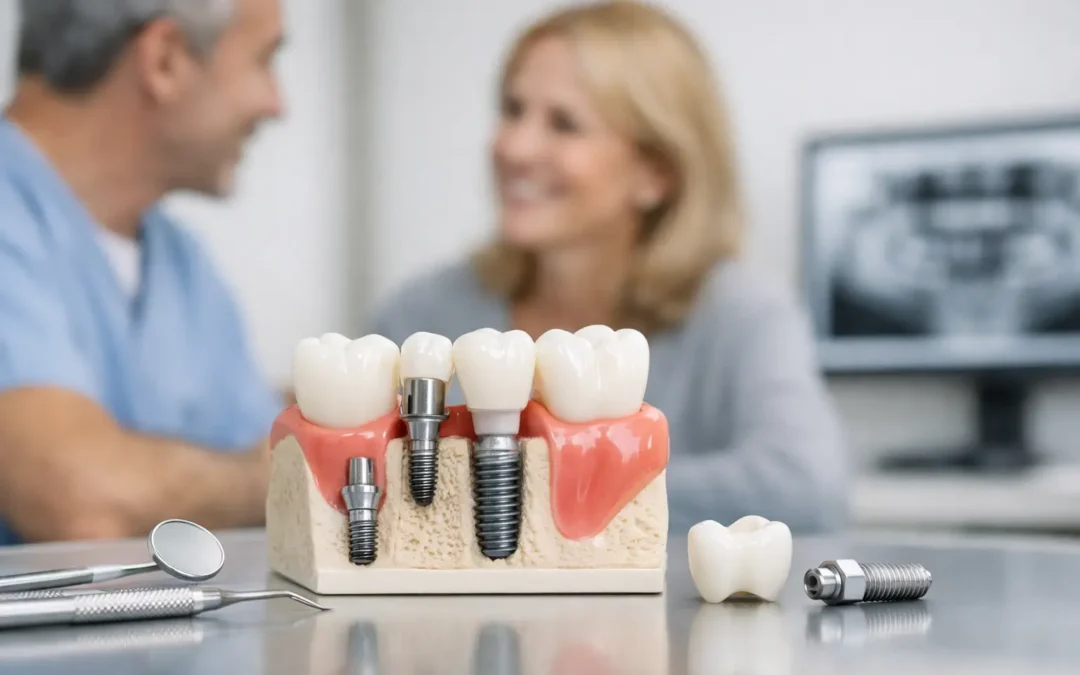
A missing tooth can affect much more than a photograph. It can make chewing less comfortable, change the way you speak, and leave nearby teeth without the support they need. This complete guide to dental implants explains how implants replace missing teeth, what treatment involves, and how to decide whether they are the right choice for your smile.
Dental implants are designed to feel stable, look natural, and support long-term oral health. For many adults, they are a welcome alternative to removable dentures or a traditional bridge. The best option, however, depends on your health, bone structure, goals, timeline, and budget. A personal consultation is the right place to get answers tailored to you.
What Is a Dental Implant?
A dental implant is a small post, usually made of biocompatible titanium, that is placed in the jawbone where a tooth root once was. Over time, the bone can grow around the implant in a process called osseointegration. That connection gives the implant a secure foundation for a replacement tooth.
The visible tooth is not the implant itself. A complete restoration generally has three parts: the implant post beneath the gumline, an abutment that connects the post to the restoration, and a custom crown that is visible when you smile. Depending on how many teeth are missing, implants can also support a bridge or a full arch of replacement teeth.
Unlike a bridge, an implant does not require reshaping healthy teeth on either side of the gap. Unlike many removable dentures, it stays fixed in place. Those differences can be meaningful for patients who want a more stable, natural-feeling solution.
Who Is a Good Candidate for Dental Implants?
Many adults with one or more missing teeth may be candidates for implants. A healthy mouth and adequate jawbone are important because the implant needs a stable place to heal. Your dentist or implant specialist will evaluate your teeth, gums, bite, medical history, and bone levels with a detailed exam and digital imaging.
Gum disease needs attention before implant placement. Active infection can compromise the tissue and bone that support the implant. Likewise, untreated decay in neighboring teeth should be addressed so your new restoration begins in the healthiest possible environment.
Bone loss does not automatically rule out implants. When a tooth has been missing for a long time, the jawbone in that area can shrink. Some patients may benefit from bone grafting before or during treatment. Others may be candidates for a different implant approach. This is why a careful evaluation matters more than a one-size-fits-all answer.
Health factors also deserve an honest conversation. Diabetes, smoking, certain medications, teeth grinding, and conditions that affect healing may influence treatment planning. They do not always prevent implants, but they can affect timing, technique, and long-term maintenance. Your dental team may also coordinate with your physician when appropriate.
The Dental Implant Process Step by Step
The process begins with a consultation, not a procedure. Your provider will discuss what you want to improve, examine the area, review imaging, and explain whether an implant, bridge, denture, or another treatment would best serve your needs. You should leave this visit understanding the recommended plan, expected timeline, and cost factors.
Preparing Your Smile
Before placing an implant, any needed periodontal treatment, extraction, bone grafting, or temporary tooth replacement is planned. If a damaged tooth must be removed, an implant may sometimes be placed at the same visit. In other cases, the site needs time to heal first. The safest approach depends on the condition of the bone, gums, and surrounding teeth.
Placing the Implant
During implant placement, the specialist creates a precise space in the jawbone and positions the implant post. Local anesthesia is commonly used, and sedation options may be available for patients who feel anxious or need more extensive care. Most patients are surprised by how manageable the appointment feels when they know what to expect and have a compassionate team guiding them.
Mild swelling, tenderness, and temporary dietary changes are common after surgery. Your provider will give clear instructions for medication, oral hygiene, food choices, and follow-up visits. Plan on softer foods while the area begins to heal.
Healing and Restoring the Tooth
The implant needs time to bond with the jawbone. Healing can take several months, although timing varies by patient and treatment plan. A temporary restoration may be used in some situations so you are not left with an obvious gap.
Once the implant is stable, an abutment and custom crown are placed. The crown is designed to blend with your surrounding teeth in color, shape, and size. Your dentist will also check your bite carefully, because a beautiful crown should feel comfortable when you chew and speak.
Benefits and Trade-Offs to Consider
Dental implants can restore strong chewing function and help preserve jawbone after tooth loss. They can also prevent nearby teeth from shifting into an empty space. Because implant crowns are custom made, they can provide a natural-looking result that supports confidence in everyday conversations, meals, and photos.
Still, implants are a commitment. Treatment takes longer than receiving a removable appliance, particularly if grafting or healing time is needed. Surgery is involved, and the upfront investment can be higher than other replacement options. Insurance coverage varies widely, with some plans covering portions of related treatment but not the implant itself.
A bridge can be a practical choice when neighboring teeth already need crowns, when a patient prefers a shorter treatment timeline, or when an implant is not medically advisable. Modern dentures can also be an effective solution for multiple missing teeth. The right treatment is the one that fits your oral health and your life, not simply the most advertised option.
Cost Factors for Dental Implants
There is no single price for an implant because every smile has different needs. The total investment may include imaging, extraction, bone grafting, the surgical implant, the abutment, and the final crown. The number of teeth being replaced and the complexity of the case also matter.
Ask for a written treatment plan that separates each stage and explains what is included. It is also helpful to ask about insurance assistance, financing options, and whether temporary teeth are part of the plan. Clear information helps you make a decision without surprises.
At Smile Perfection Dental & Orthodontics, patients can receive implant consultations with a team that understands how restorative treatment, gum health, and long-term smile care work together. For families in Pembroke Pines, Boynton Beach, and Royal Palm Beach, having comprehensive care in one trusted practice can make treatment coordination easier.
Caring for Dental Implants Long Term
An implant cannot develop a cavity, but the gums and bone around it still need consistent care. Plaque buildup can lead to inflammation around an implant, which may threaten its support if ignored. Brushing twice daily, cleaning between teeth every day, and keeping regular professional visits are essential.
Your dental team may recommend a specific floss, interdental brush, or water flosser based on your restoration. If you grind or clench your teeth, a nightguard can help protect both the implant crown and your natural teeth from excess force. Avoiding tobacco is another important step for healthier gums and better long-term outcomes.
Call your dentist if you notice bleeding gums, persistent discomfort, a loose-feeling crown, changes in your bite, or swelling around the implant. Early attention often prevents a small concern from becoming a more complex problem.
Questions Patients Commonly Ask
Are dental implants painful?
The procedure is performed with anesthesia, so you should not feel pain during placement. Soreness afterward is expected but is often manageable with the care instructions and medications recommended by your provider. Anxiety should never keep you from asking about comfort options before treatment.
How long do dental implants last?
With healthy gums, good home care, and regular dental visits, the implant post can last many years and often much longer. The crown may eventually need repair or replacement because it experiences normal chewing wear. Your habits, bite, and overall health all play a role.
Can an implant replace more than one tooth?
Yes. One implant can replace a single tooth, while multiple implants can support a bridge or a full-arch restoration. Your specialist will determine the number and placement of implants needed to support a stable result.
Choosing a tooth replacement is personal, but you do not have to make the decision alone. A thoughtful consultation can turn a missing-tooth concern into a clear plan for eating comfortably, smiling freely, and caring for your health for years ahead.