
Losing a tooth changes more than your smile. It can affect how you chew, how clearly you speak, and even how confident you feel in everyday moments. If you are weighing the best ways to replace teeth, the right answer depends on where the tooth is missing, your oral health, your budget, and what you want your long-term result to look like.
For some patients, the priority is stability and a natural feel. For others, it is affordability, speed, or avoiding surgery. That is why tooth replacement should never be a one-size-fits-all decision. The best treatment is the one that fits your health needs and your life.
Best ways to replace teeth: what are your options?
Most patients are choosing between three main solutions: dental implants, dental bridges, and dentures. Each option can restore appearance and function, but they do it in different ways.
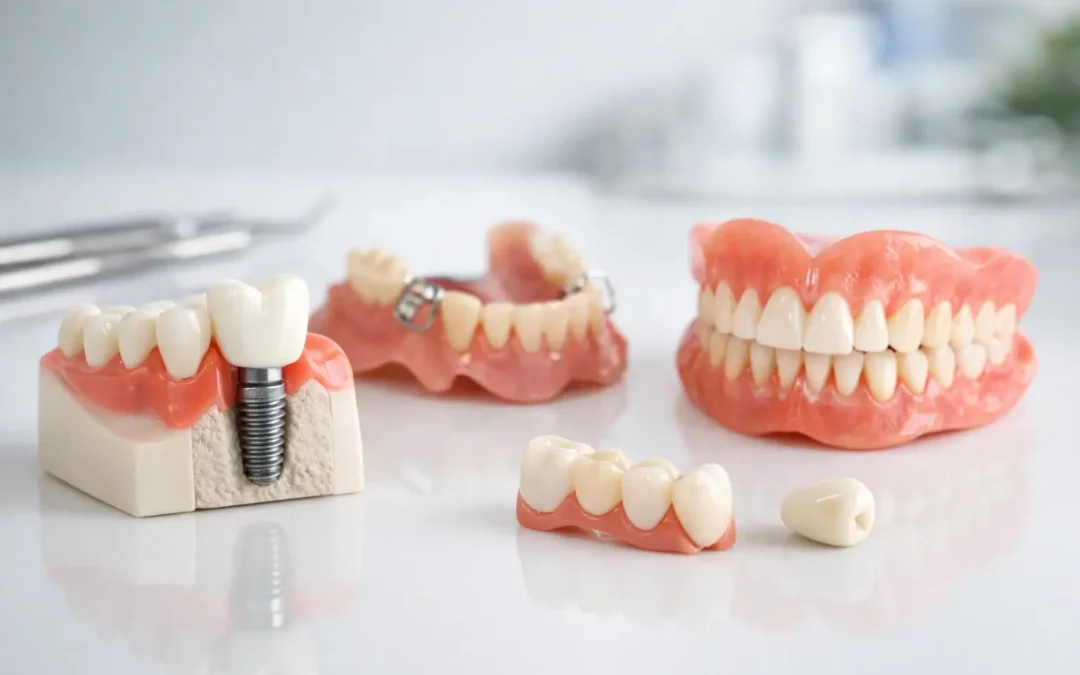
Dental implants replace the tooth root as well as the visible tooth. A small titanium post is placed in the jawbone, and after healing, it supports a crown, bridge, or denture. Bridges replace one or more missing teeth by anchoring an artificial tooth to the teeth next to the gap. Dentures are removable appliances that can replace several teeth or a full arch.
None of these is automatically the best for every patient. Age alone does not decide it, and neither does whether you are missing one tooth or many. Bone support, gum health, bite alignment, medical history, and personal preference all matter.
Dental implants: the closest match to a natural tooth
When people ask about the best ways to replace teeth, implants are often at the top of the list for one simple reason: they function most like natural teeth. Because the implant is placed in the jawbone, it provides support that helps keep the bone active. That matters because bone loss often begins after a tooth is lost.
An implant can replace a single tooth without relying on neighboring teeth. It can also support multiple teeth or even a full arch in certain cases. Many patients like that implants feel secure and do not need to be removed for cleaning like traditional dentures.
The trade-off is that implants usually take more time and involve a surgical procedure. Some patients also need bone grafting before placement if they have lost bone in the area. Cost can be higher upfront than other options, but many people see implants as a long-term investment because of their durability and stability.
When implants tend to make sense
Implants are often an excellent choice for patients with healthy gums, good overall oral health, and enough jawbone support. They are also appealing for adults who want to protect adjacent healthy teeth rather than preparing them for a bridge.
That said, implants are not always the immediate answer. If someone has active periodontal disease, uncontrolled health issues, or significant bone loss, treatment may need to happen in stages. A careful exam and digital imaging help determine whether implants are the right fit now or later.
Dental bridges: a reliable fixed option
A bridge is another common answer when discussing the best ways to replace teeth, especially when one or a few teeth are missing in a row. A traditional bridge uses the teeth on either side of the gap for support, with a replacement tooth in the middle.
For many patients, bridges are attractive because they are fixed in place and typically take less time than implants. They can restore chewing function and improve the look of your smile without surgery. If the neighboring teeth already need crowns, a bridge can sometimes be a very practical choice.
The main consideration is that a traditional bridge depends on adjacent teeth. Those supporting teeth usually need to be shaped to hold crowns, even if they are otherwise healthy. Bridges also do not replace the tooth root, so they do not stimulate the jawbone in the same way an implant does.
When a bridge may be the better choice
A bridge can be a strong option when the surrounding teeth need restoration anyway, when a patient prefers to avoid surgery, or when the timeline needs to be shorter. In some cases, anatomy or medical factors also make a bridge more appropriate than an implant.
This is a good example of why the best treatment is not always the newest or most talked about one. It is the one that solves the problem predictably and comfortably for your specific situation.
Dentures: practical, affordable, and more comfortable than many expect
Dentures have come a long way. Modern full and partial dentures are designed with better materials, improved fit, and a more natural appearance than many people realize. For patients missing multiple teeth, dentures can be one of the most accessible ways to restore their smile.
A partial denture fills in gaps when some natural teeth remain. A full denture replaces an entire upper or lower arch. These options are removable, which some patients appreciate because cleaning is straightforward and treatment is generally less invasive than implants.
The biggest advantage is affordability. Dentures are often the most budget-friendly solution for replacing several missing teeth. They can also be completed more quickly in many cases.
The trade-off is stability. Traditional dentures may shift while eating or speaking, especially as the shape of the jaw changes over time. That does not mean they cannot work well, but it does mean fit and maintenance matter. Some patients also notice that dentures feel less like natural teeth than bridges or implants.
Implant-supported dentures: a middle ground many patients love
If you want more security than a traditional denture but need to replace many teeth, implant-supported dentures may be worth considering. These use dental implants to help anchor a denture in place, improving stability and comfort.
For patients frustrated by slipping dentures, this option can be a major improvement. Chewing often feels easier, and many people feel more confident speaking and smiling. Depending on the design, the denture may be removable or fixed.
This approach can balance function and cost better than replacing every missing tooth with an individual implant. It still requires enough bone and a treatment plan that supports implant placement, but for many people it offers a very practical path forward.
How to choose among the best ways to replace teeth
The decision usually comes down to five factors: how many teeth are missing, the condition of your gums and bone, your budget, your timeline, and how important fixed versus removable teeth feel to you.
If you are missing one tooth and want the most natural standalone solution, an implant is often the leading option. If you are missing one or two teeth and want a fixed result without surgery, a bridge may be the better fit. If you are missing many teeth and need the most affordable way to restore function, dentures may make the most sense. If you want more denture stability, implant support can change the experience significantly.
There is also the question of long-term planning. Sometimes a patient chooses a bridge or denture now, with implants later after additional treatment or budgeting. Good dental care is not about pressure. It is about creating a realistic plan that protects your health and works for your life.
What to expect at a consultation
A thorough consultation should do more than identify the missing tooth. It should look at the full picture, including your bite, gum health, bone levels, and goals. Digital imaging can help show what is happening below the surface, and that makes treatment recommendations more precise.
You should also expect a clear conversation about pros and cons. A trustworthy dental team will explain not just what can be done, but why one option may serve you better than another. At Smile Perfection Dental & Orthodontics, that patient-first approach matters because replacing teeth is not only about restoring a space in your smile. It is about restoring comfort, confidence, and long-term oral health.
If you have been putting off treatment, this is worth knowing: missing teeth rarely become less complicated with time. Teeth can shift, bite problems can develop, and bone loss can continue. Getting answers early gives you more options, not fewer.
The best next step is a simple one. Ask questions, get a personalized exam, and choose the solution that feels right for your health, your family, and your future smile.