
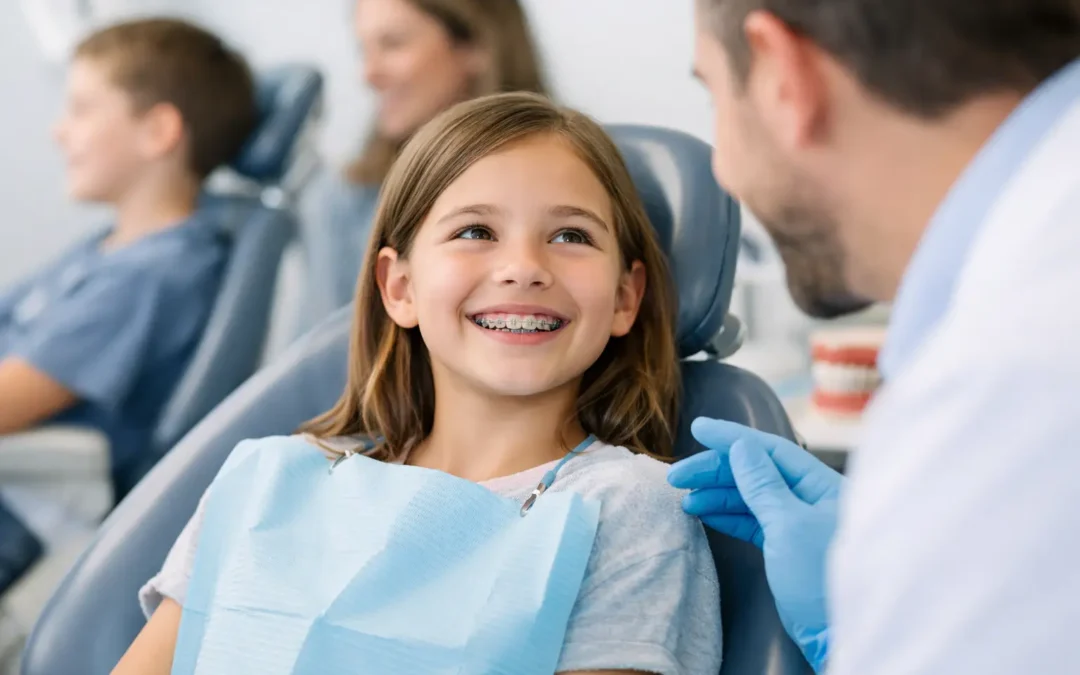
A lot of parents notice the same thing around age 7 or 8 – adult teeth are coming in, the smile looks a little crowded, and the big question follows fast: when do kids need braces? The honest answer is not “as soon as possible” and not “wait until all the baby teeth are gone.” It depends on how the teeth, jaws, and bite are developing.
For many children, the best first step is not braces right away. It is an orthodontic evaluation at the right time so any concerns can be caught early, monitored, or treated before they become more complicated.
When do kids need braces evaluation?
Most children should have their first orthodontic evaluation by age 7. That does not mean every 7-year-old needs braces. In fact, many do not. What it does mean is that by this age, enough permanent teeth have usually come in to show whether the bite is developing normally.
An early exam gives the orthodontist a chance to check for crowding, spacing, crossbites, overbites, underbites, jaw growth concerns, and habits like thumb-sucking that may be affecting the smile. Sometimes the recommendation is simply to watch growth and recheck later. Sometimes early treatment makes a real difference.
This is where timing matters. Starting too early can mean treatment lasts longer than necessary. Waiting too long can let certain bite problems become harder to correct. A child who looks “too young” for braces may still benefit from a professional evaluation.
Signs your child may need braces
Parents usually notice the cosmetic signs first, but orthodontic issues are not only about appearance. Braces are often recommended because they help improve function, comfort, and long-term oral health.
Crowded or overlapping teeth are a common reason children need orthodontic treatment. If there does not seem to be enough room for permanent teeth, braces or other early orthodontic appliances may help guide better alignment.
You may also notice large spaces, teeth that erupt in unusual positions, or top and bottom teeth that do not fit together properly. Some children bite their cheeks often, struggle to chew comfortably, or have jaws that seem to shift when they close their mouth.
Speech issues can sometimes be related to bite alignment, though not always. Mouth breathing, prolonged thumb-sucking, and early or late loss of baby teeth can also signal that an orthodontic check is worthwhile.
Other signs include:
- An overbite where the upper front teeth stick out too far
- An underbite where the lower teeth sit in front of the upper teeth
- A crossbite where some upper teeth sit inside the lower teeth
- Teeth that do not touch properly when biting down
- Noticeable jaw asymmetry or popping
Not every one of these signs means braces are needed immediately, but they are good reasons to have your child evaluated.
The most common age kids get braces
Most children who need full braces begin treatment between ages 9 and 14. That is often the ideal window because many permanent teeth are in place, while the mouth and jaws are still growing.
This growth can help orthodontic treatment work more efficiently. Teeth are generally easier to guide into place during these years than in adulthood, and some bite issues respond better while jaw development is still active.
That said, there is no single perfect age for every child. One child may be ready for braces at 9, while another may be better off waiting until 12 or 13. The decision depends on the stage of tooth eruption, the type of alignment problem, and whether jaw growth needs to be guided.
When early orthodontic treatment makes sense
Some children benefit from what is often called Phase 1 treatment. This is early orthodontic care done before all permanent teeth have erupted. It is not necessary for every child, but it can be very helpful in the right situation.
Early treatment may be recommended for severe crowding, crossbites, underbites, protruding front teeth, or jaw growth concerns. In some cases, it can create room for incoming permanent teeth, reduce the risk of trauma to teeth that stick out, or improve how the upper and lower jaws relate to each other.
There is a trade-off, though. Early treatment can mean a child eventually needs a second phase of braces later on after more adult teeth come in. For families, that can sound frustrating at first. But if the early phase prevents more serious problems or reduces the need for extractions or more complex treatment later, it can be well worth it.
This is why individualized planning matters. The goal is not to put every child in braces early. The goal is to choose the timing that gives the healthiest and most efficient result.
When it is okay to wait
Parents are sometimes surprised to hear that the best recommendation is to wait. If the bite is developing well and the concern is mild crowding or spacing, monitoring growth may be the smartest approach.
Waiting can allow more permanent teeth to erupt, which gives the orthodontist a clearer picture and may shorten treatment later. Starting braces before a child is ready can lead to longer treatment time, more appointments, and more fatigue for both kids and parents.
A good orthodontic team will not rush treatment just because a child is old enough for an exam. They will explain what they see, what can wait, and what should be addressed sooner.
Are braces the only option?
Not always. When parents ask when do kids need braces, they are often also asking what treatment will look like. In some cases, traditional braces are the best choice. In others, an orthodontist may recommend a palatal expander, space maintainer, partial braces, or simply observation over time.
For older teens, clear aligners may be an option depending on the case and the child’s level of responsibility. But for many growing children, braces remain one of the most effective and predictable ways to correct alignment and bite problems.
The right appliance depends on the problem being treated. A child with jaw development concerns has different needs than a child with mild crowding in the front teeth.
What happens at the first orthodontic visit?
The first visit is usually simple and reassuring. It often includes an exam, digital imaging, and a discussion about how the teeth and jaws are developing. Parents can expect clear explanations, not pressure.
This appointment helps answer practical questions. Is treatment needed now, later, or not at all? Is the issue cosmetic, functional, or both? Would early intervention help, or is it better to monitor growth for a while?
For families juggling school schedules, sports, and regular dental care, this kind of clarity matters. One of the advantages of a practice like Smile Perfection Dental & Orthodontics is that families can get guidance in one familiar, patient-friendly setting.
How parents can support healthy orthodontic development
You cannot prevent every orthodontic issue, since genetics play a big role in jaw size, bite pattern, and tooth position. Still, a few habits can help support healthy development.
Routine dental visits matter because they help catch eruption issues early. Paying attention to thumb-sucking, mouth breathing, or speech concerns can also make a difference. If a baby tooth is lost very early or an adult tooth seems delayed, it is worth asking about it rather than assuming everything will sort itself out on its own.
Just as important, try not to compare your child’s smile to a sibling’s or a classmate’s. Kids develop at different rates, and two children the same age can have very different orthodontic needs.
So, when do kids need braces?
Kids need braces when tooth alignment or bite development is causing, or is likely to cause, problems with function, comfort, oral health, or confidence. For some, that means early treatment around age 7 or 8. For many, it means braces later, usually between 9 and 14. And for others, it means keeping an eye on growth until the timing is right.
The best next step is not guessing based on photos or waiting for all the baby teeth to fall out. It is having your child’s smile evaluated by an experienced orthodontic team that can explain what is happening now and what to expect next.
If you are wondering about your child’s teeth, trust your instincts and ask. A quick evaluation can bring a lot of peace of mind, and sometimes that reassurance is just as valuable as treatment itself.