
Missing teeth can change more than your smile. They can affect how you eat, how clearly you speak, and how comfortable you feel in everyday moments. When patients ask about dentures vs implants, they are usually trying to answer one bigger question: what will help me feel like myself again?
The right choice depends on your health, your goals, your budget, and how much treatment you are comfortable with. Both options can restore function and appearance. But they do it in very different ways, and those differences matter.
Dentures vs implants: the biggest difference
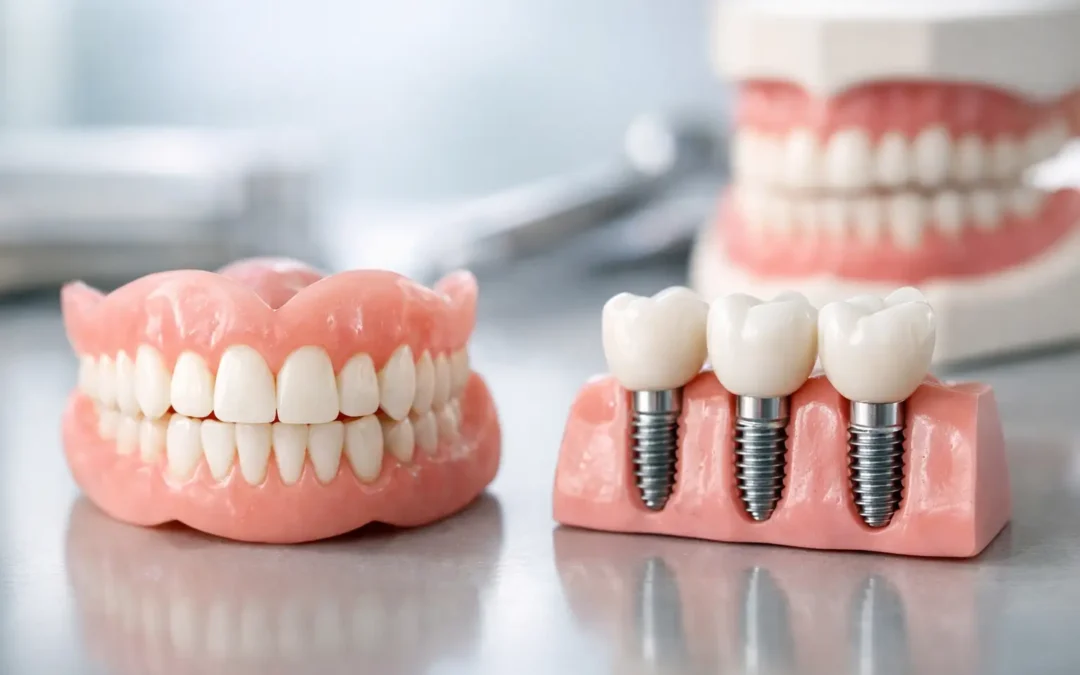
Dentures are removable replacements for missing teeth. They sit on top of the gums and can replace a few teeth or a full arch. Traditional dentures have helped many patients regain a more complete smile, especially when they want a non-surgical and lower upfront cost option.
Dental implants are small titanium posts placed in the jawbone to act like artificial tooth roots. After healing, they support a crown, bridge, or even a full set of teeth. Because implants are anchored in the bone, they tend to feel more secure and function more like natural teeth.
That one distinction drives almost every other difference between the two. Dentures rest on the gums. Implants integrate with the jaw.
How each option feels day to day
For many patients, comfort is the deciding factor. Dentures can look very natural, but they may take time to get used to. Some people notice pressure spots, movement while eating, or a bulky feeling at first. Adhesives can help in some cases, and adjustments often improve the fit, but traditional dentures are still removable appliances.
Implants usually feel closer to natural teeth because they stay fixed in place. You do not remove them at night, and they do not slide when you chew. That added stability can make a real difference if you enjoy foods that are harder to eat with dentures, like steak, apples, or crusty bread.
Speech can improve with either option, but some denture wearers need an adjustment period while the tongue and cheeks adapt. With implants, that adaptation is often simpler because the teeth are not shifting on the gums.
Appearance and facial support
Both dentures and implants can improve the appearance of your smile. A well-made denture can restore fullness to the lips and cheeks and give the face a healthier look. For patients who have lost many or all teeth, that change can be dramatic.
Implants offer an added advantage beneath the surface. Because they stimulate the jawbone the way tooth roots do, they help reduce the bone loss that often follows tooth loss. Over time, that can support facial structure more effectively.
This is one reason some long-time denture wearers notice that their dentures fit differently as the years go on. The jawbone can shrink gradually, which changes the shape of the mouth. That does not mean dentures are a poor choice. It simply means they often need relines, adjustments, or replacement as your mouth changes.
Cost matters, and so does value over time
It is completely reasonable to ask about cost early in the process. Traditional dentures usually cost less upfront than implants. For many families, that makes them more accessible, especially when multiple teeth need to be replaced.
Implants have a higher initial investment because they involve surgery, healing time, and custom restorations. In some cases, bone grafting or additional procedures may also be needed. That said, implants can offer long-term value because they are designed to be durable and do not rely on neighboring teeth for support.
A lower starting cost does not always mean lower cost over the years. Dentures may need periodic adjustments, relines, repairs, or replacement. Implants also require maintenance and regular dental visits, but they generally provide a more stable long-term foundation.
The better question is often not just what costs less today, but what fits your needs best over the next five, ten, or fifteen years.
Who may be a better fit for dentures
Dentures can be an excellent option for patients who want to replace many missing teeth without surgery. They may also be the right choice for people with significant bone loss, health conditions that make surgery less ideal, or financial concerns that make implants less realistic right now.
They can also work well as part of a phased treatment plan. Some patients start with dentures and later transition to implant-supported solutions when the timing is better. Others do very well with modern dentures and never feel the need to change.
There is no one-size-fits-all answer here. A good denture, made and adjusted properly, can restore confidence and function in a meaningful way.
Who may be a better fit for implants
Implants are often the preferred choice for patients who want the closest thing to natural teeth in look, feel, and function. They can be ideal for replacing one missing tooth, several missing teeth, or supporting a more secure full-arch restoration.
A patient may be a strong implant candidate if they have healthy gums, adequate bone support, and are comfortable with a surgical procedure. Good daily oral hygiene is also important, because implants still need consistent care to protect the surrounding gums and bone.
If stability is your top priority, implants usually stand out. Patients who are active, social, or simply tired of removable appliances often appreciate the confidence that comes with a fixed solution.
What about maintenance?
Dentures need daily cleaning and should be handled with care. Full dentures are typically removed at night, and they must be kept clean to help protect the gums and oral tissues. Even with excellent care, fit changes over time are common.
Implants are not maintenance-free, but the routine is more like caring for natural teeth. Brushing, flossing, and regular professional cleanings remain essential. The difference is that implants are fixed, so many patients find them simpler to manage in daily life.
What matters most is your willingness to keep up with the care your restoration requires. The best dental solution is the one you can maintain comfortably and consistently.
Dentures vs implants for full-mouth replacement
When all or most teeth are missing, the conversation becomes more nuanced. Traditional full dentures remain a trusted option for many patients and can provide a major improvement in appearance and basic chewing ability.
However, implant-supported dentures offer a middle ground that many people find appealing. These restorations combine the broader tooth replacement of a denture with the added stability of implants. Depending on the design, they may snap into place securely or be fixed more permanently by the dentist.
This option can reduce slipping, improve chewing power, and create a more confident fit without requiring an implant for every missing tooth. For some patients, it is the best balance of function, comfort, and overall investment.
Why a consultation matters more than online comparisons
Articles can help you understand the basics, but they cannot examine your gums, check your bone levels, or learn what matters most to you. That is where a personal consultation becomes so valuable.
An experienced dental team can evaluate your oral health, review imaging, and explain whether dentures, implants, or an implant-supported denture makes the most sense. They can also talk through sedation options, healing timelines, and realistic expectations so you are not left guessing.
At Smile Perfection Dental & Orthodontics, that conversation is centered on education and comfort. Patients deserve clear answers, honest guidance, and treatment recommendations that fit real life, not just textbook scenarios.
If you are weighing dentures against implants, try not to think only in terms of replacement teeth. Think about how you want to eat, speak, smile, and maintain your oral health in the years ahead. The right choice should support your confidence as much as your bite.
A restored smile should make daily life easier, not more complicated. The best next step is a conversation that meets you where you are and helps you move forward with confidence.