
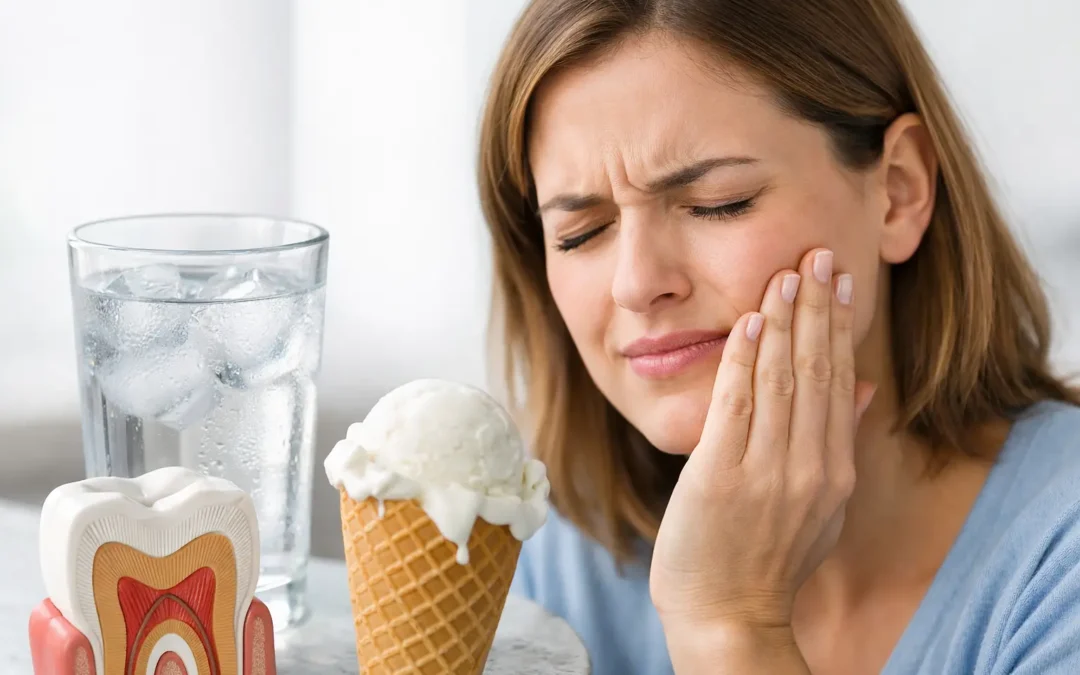
That sharp zing when you sip iced water or bite into something sweet can stop you in your tracks. If you have been wondering what causes tooth sensitivity, the answer is not always as simple as one problem or one tooth. Sensitive teeth can happen for several reasons, and the right treatment depends on what is happening beneath the surface.
For some people, sensitivity shows up once in a while and fades quickly. For others, it becomes a daily frustration that makes eating, drinking, and even brushing uncomfortable. The good news is that tooth sensitivity is common, treatable, and often a sign that your teeth are asking for a little attention before a bigger problem develops.
What causes tooth sensitivity in the first place?
Most tooth sensitivity starts when the protective outer layers of the tooth are weakened or when the root surface becomes exposed. Under the enamel is dentin, a layer filled with tiny tubules that connect to the nerve inside the tooth. When cold, heat, sweets, or even air reach those tubules, you feel that sudden jolt.
That means sensitivity is usually not the condition itself. It is a symptom. The real question is what changed enough to expose the tooth or irritate the nerve.
Common causes of sensitive teeth
One of the most common causes is enamel wear. Enamel is strong, but it is not indestructible. Over time, brushing too aggressively, using a hard-bristled toothbrush, grinding your teeth, or regularly consuming acidic foods and drinks can wear it down. Citrus, soda, sports drinks, wine, and even frequent sparkling water can contribute if they are part of your routine.
Gum recession is another frequent reason. Healthy gums cover and protect the roots of your teeth, but when gums pull back, the root surface is left exposed. Roots do not have the same enamel protection as the crowns of your teeth, so they are naturally more sensitive. Receding gums can happen because of periodontal disease, brushing too hard, genetics, or simply age-related changes.
Cavities can also trigger sensitivity. A small cavity may start as mild discomfort with sweets or cold foods, but as decay gets deeper, the sensitivity often becomes more noticeable and more persistent. If a crack or chip is present, the tooth may react in a similar way because the inner layers are less protected.
Recent dental treatment can cause temporary sensitivity too. Teeth whitening is a good example. Many patients notice mild sensitivity during or shortly after whitening because the ingredients used to brighten teeth can temporarily affect the nerve. Fillings, crowns, deep cleanings, and other procedures may also leave a tooth a little reactive for a short time while it settles.
What causes tooth sensitivity to get worse over time?
Sometimes sensitivity starts small and gradually becomes harder to ignore. That usually happens when the underlying issue is continuing. For example, if acid erosion is wearing enamel down a little more each month, the tooth has less and less protection. If gum recession is progressing, more root surface becomes exposed. If decay is deepening, the nerve becomes more irritated.
Teeth grinding is another reason symptoms can worsen. Many people clench or grind at night without realizing it. Over time, that pressure can wear down enamel, create tiny fractures, and leave teeth more responsive to temperature and pressure. Stress often plays a role here, which is why sensitivity sometimes seems to flare up during busy or difficult periods.
Dry mouth can make the problem worse as well. Saliva helps protect teeth by neutralizing acids and washing away food particles and bacteria. When your mouth is dry, your enamel is more vulnerable and your risk for decay increases. Certain medications, medical conditions, and mouth breathing can all contribute.
The difference between normal sensitivity and a problem that needs care
A brief twinge that comes and goes is not always an emergency, but it should not be ignored if it keeps happening. Mild sensitivity after whitening or a recent filling may be temporary. Sensitivity that lasts for weeks, becomes more intense, or is focused on one specific tooth deserves a closer look.
If pain lingers after the hot or cold trigger is gone, that can suggest the nerve is more inflamed than it should be. If biting down hurts, there may be a crack, cavity, or issue with a filling. If the tooth throbs on its own, especially at night, that is often a sign that professional treatment is needed sooner rather than later.
The challenge is that different dental issues can feel surprisingly similar at home. What seems like simple sensitivity might actually be a cavity, gum disease, a damaged restoration, or an infection developing inside the tooth. That is why an exam matters. Finding the cause early can often mean simpler treatment.
What you can do at home
If your sensitivity is mild, a few changes may help calm things down. Switching to a toothpaste made for sensitive teeth is often a good first step. These products are designed to reduce the tooth’s response to triggers over time, but they usually need consistent use for a few weeks to make a noticeable difference.
Your brushing technique matters too. Use a soft-bristled toothbrush and gentle pressure. Scrubbing harder does not clean better, but it can irritate your gums and wear away enamel near the gumline. If you are unsure whether you are brushing too aggressively, your dentist or hygienist can show you a safer technique.
It also helps to be mindful of acidic foods and drinks. You do not have to give up everything you enjoy, but constant exposure can take a toll. Drinking water after acidic beverages, using a straw when appropriate, and waiting a little while before brushing can reduce extra enamel wear.
If you grind your teeth, especially during sleep, a custom night guard may help protect your enamel from further damage. And if whitening products seem to trigger sensitivity, it may be worth pausing them until you have had your teeth evaluated.
When treatment at the dentist makes the biggest difference
Home care can help with symptoms, but lasting relief usually comes from treating the cause. If enamel wear is the issue, fluoride treatments or bonding may help protect the area. If a cavity is responsible, a filling can stop the sensitivity and prevent the decay from spreading.
When gum recession is involved, treatment depends on why it is happening. Sometimes a change in brushing habits and periodontal care can keep it from getting worse. In more advanced cases, specialized gum treatment may be recommended. If an old filling or crown is leaking or damaged, replacing it can restore the tooth’s protection.
For cracked teeth, the right solution might be bonding, a crown, or another restorative option depending on the size and location of the damage. If the nerve inside the tooth is significantly inflamed or infected, root canal treatment may be the best way to relieve pain and save the tooth.
This is where seeing a practice that offers comprehensive care can make things much easier. At Smile Perfection Dental & Orthodontics, patients and families can get clear answers and a treatment plan that fits what is actually causing the discomfort, whether the issue is preventive, restorative, or periodontal.
What causes tooth sensitivity after dental work?
This question comes up often, and in many cases the answer is simple inflammation. After a filling, crown, deep cleaning, or whitening treatment, the tooth and surrounding tissues may need a little time to settle. Mild sensitivity to temperature or pressure can be normal for a few days or even a couple of weeks, depending on the procedure.
That said, there is a point where follow-up is important. If the sensitivity is getting worse instead of better, if your bite feels off, or if the tooth is painful without a trigger, your dentist should check it. Sometimes a simple adjustment is all that is needed. Other times, the tooth may need additional treatment.
Don’t wait for sensitive teeth to make daily life harder
Sensitive teeth have a way of sneaking into your routine. You start avoiding cold drinks, chewing on one side, or brushing around a spot that hurts. Those workarounds may get you through the day, but they do not solve the problem.
A better next step is to find out why the sensitivity is happening. Once the cause is identified, relief is often much more straightforward than people expect. If your teeth have been sending you those sharp little warnings, listening now can help you stay comfortable and protect your smile for the long term.