
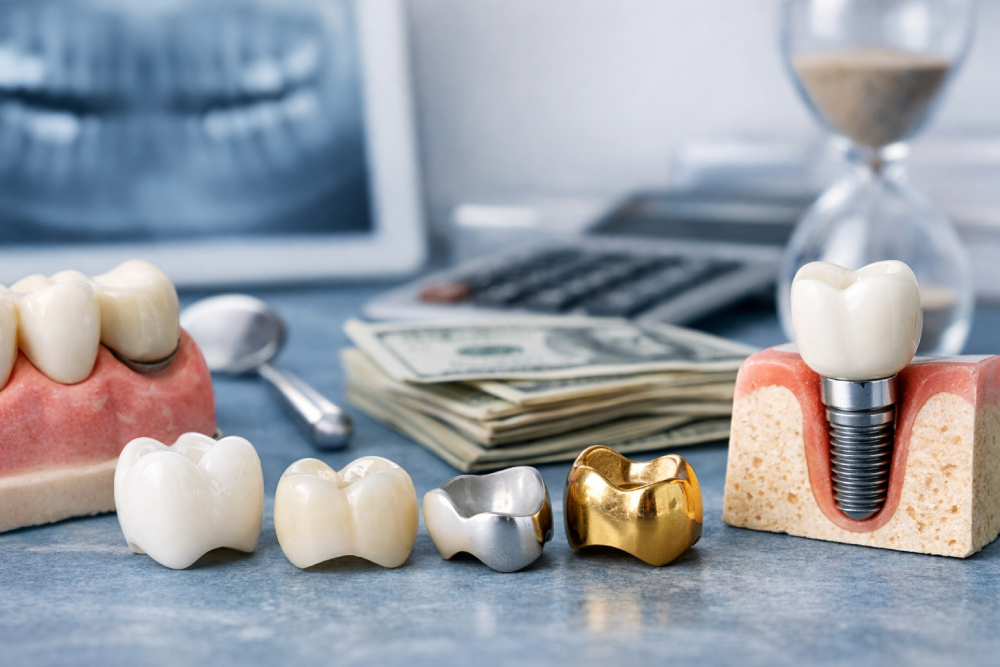
Considering a dental crown and unsure where to start? You are not alone. Crowns are common, reliable, and versatile. Still, it helps to know when a crown is recommended, which materials make sense for your smile, how long they last, and what to expect for cost and insurance. This guide keeps it clear, friendly, and practical so you can feel confident about your next step.
When a Crown Is Recommended
A crown is a custom cap that covers your tooth to restore strength, shape, and appearance. Your dentist may recommend a crown when:
- A tooth has a large cavity or fracture that a filling cannot support.
- A root canal treated tooth needs protection from cracking.
- An old filling or crown has failed and the tooth underneath is weak or decayed.
- You want to improve the look of a misshapen or discolored tooth.
- A dental implant needs a realistic, durable top.
If you are unsure whether a crown is necessary, ask for a digital imaging review. Seeing the crack line, decay, or wear pattern helps you understand why a crown might be the safest long term option.
Comparing Crown Materials
There is no one best crown for everyone. The right choice depends on where the tooth sits, how you chew, your esthetic goals, and your budget.
Porcelain or ceramic
- Looks very natural and blends with surrounding teeth.
- Great for front teeth and many back teeth.
- Gentle on opposing teeth.
- Typical cost sits in the mid to higher range.
Zirconia
- Very strong and fracture resistant.
- Good for back teeth that take heavier bite forces.
- Newer translucent zirconia options look much more natural than older versions.
- Often similar in cost to porcelain, sometimes slightly higher due to strength and custom shading steps.
Porcelain fused to metal (PFM)
- A metal base layered with tooth colored porcelain.
- Strong track record and still a good choice in some cases.
- Can show a faint gray line at the gum over time, especially if gums recede.
- Often priced in the mid range.
All metal (gold or other noble alloys)
- Highly durable and gentle on opposing teeth.
- Excellent for back molars where appearance is less critical.
- Not tooth colored, which limits use for visible areas.
- Cost varies with metal market prices; sometimes comparable to other options.
Which is the cheapest dental crown? In many markets, PFM or certain monolithic zirconia options come in lowest, but it varies by lab fees, metal costs, and whether your case can be completed with a same day workflow. The least expensive option is not always the best value if it does not match your esthetic needs or bite.
How Long Do Dental Crowns Last?
Most crowns last 10 to 15 years with good care. Many last longer. Lifespan depends on:
- Fit and materials.
- Oral hygiene and gum health.
- Nighttime grinding or clenching.
- Diet and habits like chewing ice or using teeth as tools.
- Regular checkups to catch small issues early.
A nightguard for grinders and consistent cleanings can add years to a crown’s life. If you notice looseness, a chip, or a line at the margin, schedule a check. Early fixes prevent bigger problems.
Cost Basics in Florida
What is the average cost of a dental crown in Florida? While every case is unique, typical private pay ranges often fall between roughly $1,000 and $1,800 per tooth depending on material, prep complexity, whether build up is needed, and if a same day crown is appropriate. If you need a core build up, a root canal, or a crown lengthening procedure, the total will be higher. We provide an itemized estimate before treatment and discuss alternatives whenever possible.
Can I negotiate the price of a crown? It never hurts to ask about options. Our team reviews your estimate, applies any plan allowances, and can discuss in house financing or split scheduling when it makes sense. If you have flexibility in materials, we will explain those differences clearly so you can choose the best mix of value and longevity.
Insurance, Coverage, and Why It Gets Confusing
Why are crowns not covered by insurance? Many plans do cover crowns, but often at 50 percent after your deductible, and only up to the plan’s annual maximum. Some plans deny coverage if they consider a crown cosmetic or if a filling could suffice by their criteria. Others impose a waiting period for major services or have frequency limits on replacing older crowns.
To avoid surprises, we verify benefits, submit pre authorizations when helpful, and estimate your out of pocket costs before you decide. Final coverage depends on your insurer’s processing, but we do everything we can to give you a clear picture in advance.
What If You Cannot Afford a Crown Right Now?
What if I cannot afford a crown? You have options:
- Ask about phased care and temporary measures to stabilize the tooth.
- Consider in house financing or third party payment plans with predictable monthly payments.
- Use HSA or FSA funds if available.
Delaying too long can turn a fixable tooth into one that needs extraction. If cost is a barrier, tell us. We aim for the most durable solution your budget allows today.
Is It Cheaper to Pull a Tooth or Get a Crown?
Upfront, extraction usually costs less than a crown. Long term, replacing a missing tooth with a bridge or implant raises the overall cost and adds time. Missing teeth can also shift your bite, affect chewing, and stress nearby teeth. Sometimes extraction is the right call, such as when a tooth is cracked under the gum or cannot predictably hold a crown. We will compare crown, onlay, and extraction options, including total costs and expected lifespan, so you can make an informed choice.
If you are exploring implants after extraction, you can learn more about dental implants pembroke pines. Our restorative team explains every step with digital imaging and plain language.
Onlays vs Crowns
An onlay covers only the damaged part of a tooth while preserving healthy enamel. Onlays can be a great middle path when the tooth has enough structure left. They often cost slightly less than a crown and keep more natural tooth, but they are not right for every fracture pattern. Digital imaging helps us decide together.
Comfort First, Every Step
Dental anxiety is real. We take a comfort first approach with gentle numbing, clear explanations, and options to help you relax. If you are in pain or have a broken crown, we offer prompt visits through our emergency dentist pembroke pines team. Same day or next day care is available in many cases.
How We Estimate Your Costs
- Digital exam and images to confirm what your tooth needs.
- A side by side breakdown of materials, pros, and cons.
- A benefits check so you know your estimated insurance share.
- A written estimate for your out of pocket portion.
- Payment plan options and timing that fits your budget.
This process removes guesswork and lets you choose with confidence.
Ready for a Second Opinion or a Crown Consult?
If you are weighing porcelain, zirconia, or PFM, wondering how long your current crown will last, or comparing crown vs extraction, we would love to help. Schedule a consult or second opinion with a digital imaging review. We will explain your options, answer cost and insurance questions, and map out a plan that protects your smile and your budget.
Prefer to talk about timing or replacing an older restoration? Explore options to replace crowns in pembroke pines. Our team is here to make the process smooth, comfortable, and clear.